
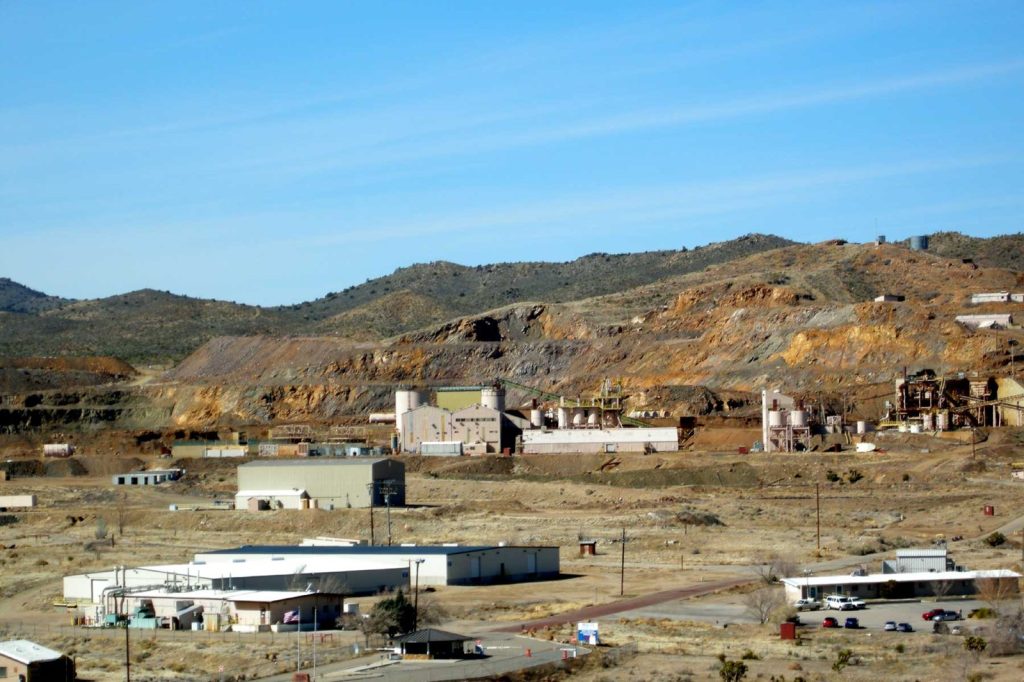
MOUNTAIN PASS, Calif., July 9 — The only operating rare earth mine in the United States sits in the California desert, and under the hood, its technical reality is a story of strategic vulnerability slowly being unwound. The Mountain Pass mine, in San Bernardino County, has a long history: opened in 1952 by the Molybdenum Corporation of America, it dominated global supply from the 1960s through the 1980s before ceasing operations in 2002 under environmental and economic pressures.
The mine’s revival began in 2017, when MP Materials, a company backed by private equity, acquired the site and restarted production. As of 2023, Mountain Pass produces approximately 43,000 metric tons of rare earth oxides annually.
That makes it the second-largest rare earth mine globally, trailing only China’s Bayan Obo deposit. The detail that matters here is that rare earths are not a single commodity; they are a basket of seventeen elements critical for everything from F-35 fighter jet magnets to the permanent magnets in electric vehicle motors. Yet for years, Mountain Pass’s output faced a bottleneck that undercut its strategic value.
MP Materials initially shipped its concentrate to China for processing. The mine was producing raw material, but the value-added step—separating the individual rare earth oxides—happened overseas.
That is the technical reality that has long vexed Pentagon planners and clean energy strategists alike.
Processing, the Critical Step
The separation and processing of rare earths is chemically intensive, requiring dozens of solvent extraction stages to isolate individual elements like neodymium, praseodymium, and dysprosium. Without domestic capability, the U.S. remained dependent on Chinese processing infrastructure even as it mined its own ore. As ever, the supply chain’s weakest link was not the digging but the refining.
In 2021, MP Materials announced plans to build its own processing facilities in the United States. The U.S. Department of Defense awarded the company a $35 million grant in 2022 to support domestic separation capabilities.
That is a modest sum by Pentagon standards, but the signal was clear: the defense establishment views rare earth independence as a national security imperative. The mine’s output is critical for U.S. defense and clean energy supply chains. Rare earth magnets are used in precision-guided munitions, radar systems, and the electric drivetrains of wind turbines and EVs.
A single wry observation: the same elements that help a Tomahawk missile find its target also help a Tesla motor turn its wheels.
What Comes Next
In 2023, MP Materials opened a processing facility at Mountain Pass, aiming to produce separated rare earth oxides by 2024. That timeline, if met, would mark the first time in decades that the United States has a fully domestic rare earth supply chain—from mine to separated oxide—operating on its own soil. The question that hangs over Mountain Pass is one of scale.
Producing 43,000 metric tons of rare earth oxides annually is significant, but global demand, particularly from the defense and clean energy sectors, continues to grow. The facility’s processing capacity, the purity of its separated oxides, and the cost competitiveness against Chinese processors will determine whether this is a genuine strategic breakthrough or a symbolic step.
For now, Mountain Pass remains the sole operating rare earth mine in the United States. Its trajectory—from 1952 opening to 2002 closure to 2017 revival to the 2023 processing milestone—tracks the broader American struggle to rebuild industrial capacity in a sector that Beijing has dominated for decades. The next year will show whether the technical reality matches the strategic ambition.




