
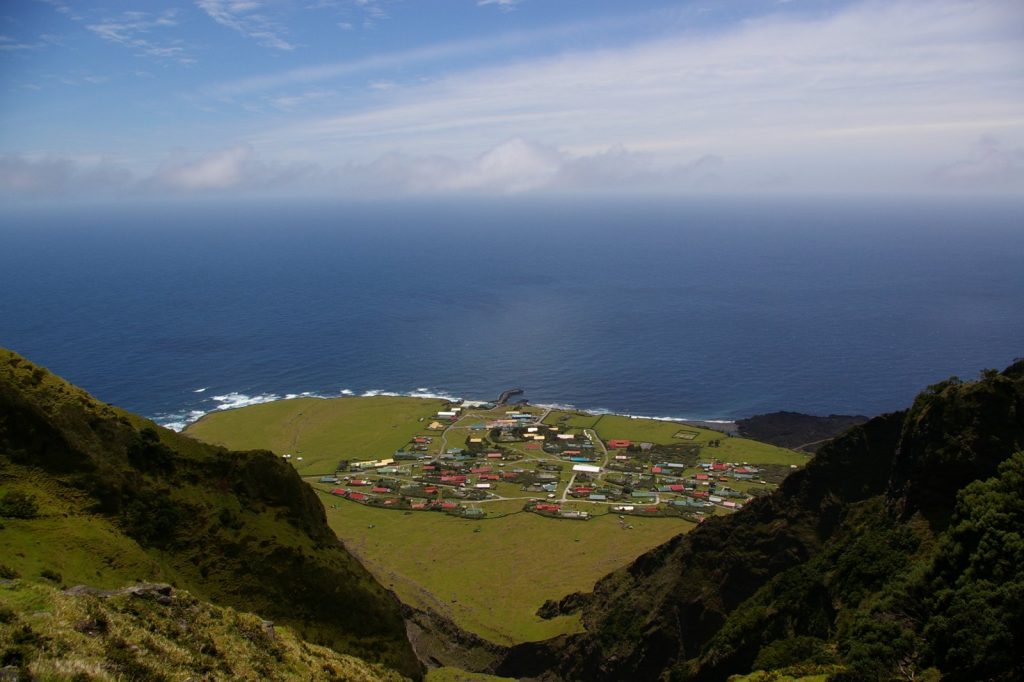
TRISTAN DA CUNHA, July 26 — A magnitude 5.1 earthquake struck the Tristan da Cunha region early Sunday, the U.S. Geological Survey reported. The quake occurred at 01:32 UTC at a depth of 10 kilometres, a shallow event that typically produces stronger shaking at the surface than deeper earthquakes of the same magnitude. No tsunami warning was issued in connection with the quake, the USGS confirmed through its real-time global seismic monitoring network.
The agency detected the event and released initial parameters within a short window, allowing observers and regional authorities to assess any local impact.
Shallow depth and moderate strength
At 10 kilometres deep, this earthquake falls into the shallow category — seismologists classify anything shallower than 70 kilometres as shallow. Such events tend to transmit more of their energy to the surface, meaning shaking can be more pronounced near the epicentre compared with a deeper quake of identical magnitude. Earthquakes in the magnitude 5 range are considered moderate.
They are capable of causing minor to moderate damage in areas close to the epicentre, particularly where building standards are less stringent. The precise level of damage depends on local geology, construction quality, and distance from the rupture point.
Early findings suggest structures nearest the epicentre may have experienced noticeable shaking, though no reports of casualties or structural harm have yet emerged from the remote region.
A seismically active corner of the Atlantic
The Tristan da Cunha archipelago sits atop an active seismic zone. The USGS records show that at least 43 earthquakes of magnitude 5.0 or greater have occurred within about 300 kilometres of this area over the past two decades. The largest among them was a magnitude 7 event in 2015, underscoring the region’s capacity for significant seismic energy release.
The area lies along the Mid-Atlantic Ridge, a divergent tectonic boundary where the South American Plate and the African Plate are pulling apart. This spreading centre generates frequent earthquakes, most of them moderate in size, but occasionally producing larger events capable of being felt across the islands themselves.
Aftershocks likely in coming days
Seismologists monitoring the event caution that aftershocks are common following an earthquake of this size. The USGS typically advises that such secondary tremors may continue for days or even weeks after the main shock. While most aftershocks are smaller than the original quake, they can still rattle nerves and present risks to already compromised structures.
People in the affected area are generally advised to remain alert and be prepared for further shaking. The encouraging part is that aftershocks tend to diminish in both frequency and intensity over time.
For those living in seismically active zones, the best approach is to have a plan in place — secure heavy objects, know safe spots indoors, and keep an emergency kit accessible. The USGS continues to monitor the region through its global seismic network, which detects and locates earthquakes in near real-time around the clock. As with any event of this kind, seismologists will review the data carefully in the days ahead to refine their understanding of the rupture mechanics.
The overall picture, based on current data, points to a moderate seismic event in an area familiar with such activity, with no immediate cause for undue alarm.




