
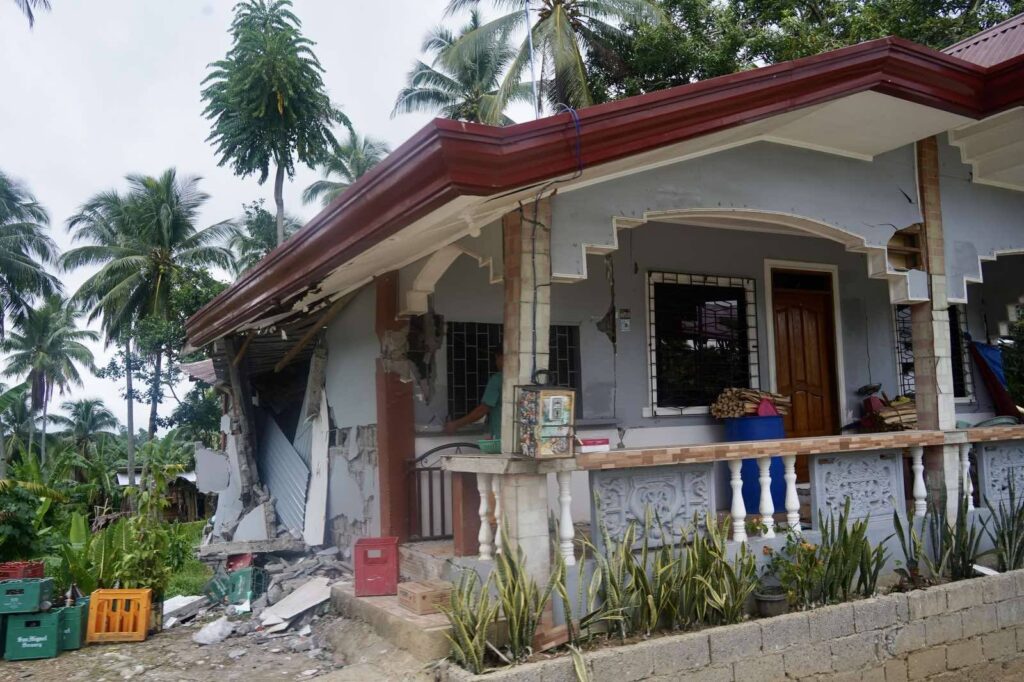
On 10 October 2025, the town of Manay in Davao Oriental was struck by a rare doublet earthquake. The first tremor registered a magnitude of 7.4, followed shortly by a second shock measured at 6.7‑6.8. The twin events together caused extensive damage across the municipality and neighboring areas.
Authorities confirmed that eight people lost their lives and more than 400 sustained injuries. Buildings, homes and critical infrastructure suffered severe damage, prompting the rapid deployment of search‑and‑rescue teams, medical personnel and temporary shelters for those displaced.
Doublet earthquakes—sometimes called twin or multiple earthquakes—occur when two main shocks of comparable size happen close together in time and space. Unlike typical aftershocks, which are usually at least 1.2 magnitude units smaller than the primary quake and diminish in frequency, the two shocks in a doublet are similar in size, often differing by less than 0.4 magnitude. This characteristic makes the phenomenon distinct and particularly challenging for emergency responders.
The Philippines sits on the Pacific Ring of Fire, a tectonic belt notorious for frequent and powerful seismic activity. The Manay event underscores the nation’s ongoing need for robust disaster‑preparedness strategies and resilient construction practices capable of withstanding such forces.
In the immediate aftermath, local and national officials focused on lifesaving measures: rescuers combed through rubble, hospitals treated the injured, and relief agencies distributed food, water and emergency kits. Temporary shelters were erected for families whose homes were rendered unsafe.
Beyond the urgent response, the quake has sparked discussion about longer‑term mitigation. Experts highlighted the role of sustainable, disaster‑resilient infrastructure, noting that investments in renewable energy—such as solar and wind—could reduce reliance on fossil fuels and improve energy security for communities recovering from natural disasters.
Energy independence is seen as a component of broader resilience. By adopting cost‑effective, clean‑energy solutions, regions like Davao Oriental can better sustain essential services during and after emergencies, while also contributing to global climate goals.
International cooperation has also been emphasized. The scale of the disaster has prompted offers of assistance from neighboring countries and global organizations, with calls for shared expertise, resources and technology to aid the recovery effort.
As the situation evolves, attention is shifting from emergency relief to reconstruction. Government plans include rebuilding homes and public facilities to higher, earthquake‑resistant standards, as well as restoring damaged roads and utilities.
The Manay doublet earthquake serves as a stark reminder of the vulnerabilities faced by communities in seismically active zones. It reinforces the importance of integrating sustainable development, renewable energy and stringent building codes into disaster‑risk reduction strategies.
While the road to full recovery will be long and demanding, coordinated action from local authorities, the national government and international partners aims to rebuild Manay with greater resilience, ensuring that future generations are better protected against similar seismic threats.




