
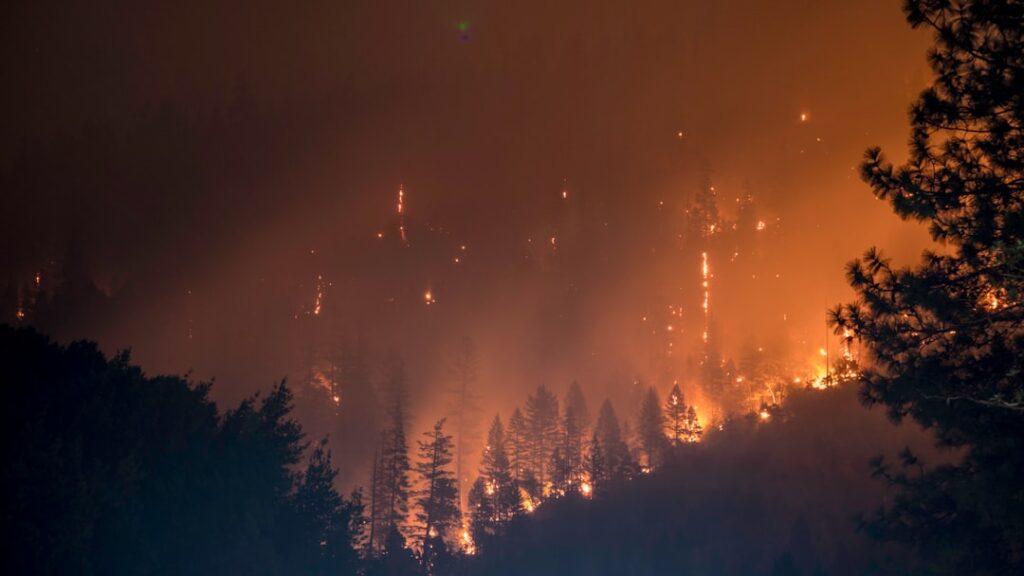
Five villages along Greece’s northeastern frontier with Turkey stand empty as residents have been ordered to leave their homes. The mass evacuation follows a wildfire that continues to burn unchecked, destroying houses and scorching large swaths of land. Greek authorities initiated the evacuations as a precautionary measure aimed at safeguarding lives. So far, no casualties have been reported, marking the only positive aspect of a day dominated by smoke, heat and loss.
Emergency crews—including firefighters, police officers and medical teams—are on the ground attempting to bring the blaze under control, but the fire remains beyond containment. The displacement has inflicted a severe economic blow on families who rely on agriculture and tourism.
Fields that required years of cultivation are now aflame, and guesthouses that generate seasonal income have been reduced to ash. The immediate loss of property and livelihood will have lasting repercussions, with the full economic impact expected to unfold over months and years. Environmental damage is equally stark.
Vast areas of natural landscape, which have traditionally drawn visitors and supported local farming, are now charred. Recovery of the ecosystem will be a slow process, and the scars left by the fire will likely be visible for a generation.
The fire’s proximity to the Turkish border adds logistical challenges. The remote location hampers access for firefighting equipment and supplies, complicating efforts to halt the blaze. Local officials are working with national authorities to account for every resident, urging calm and strict adherence to evacuation orders.
Despite the deployment of significant government resources, the situation on the ground continues to deteriorate hour by hour. Shifts in wind direction or breaches in containment lines could allow the fire to spread further, threatening additional villages and homes.
For now, the primary objective remains the protection of human life, a goal achieved through the successful evacuation. The secondary, and still uncertain, priority is to extinguish the fire. The coming hours are critical; any change in weather conditions could exacerbate the disaster.
The ongoing destruction underscores that this is not a short‑term incident that will be resolved tomorrow. The economic fallout will ripple through families dependent on the land, while the environmental toll will persist long after the flames are out.
As night falls, the five villages remain deserted, the wildfire continues to rage, and the final outcome remains unwritten.




