
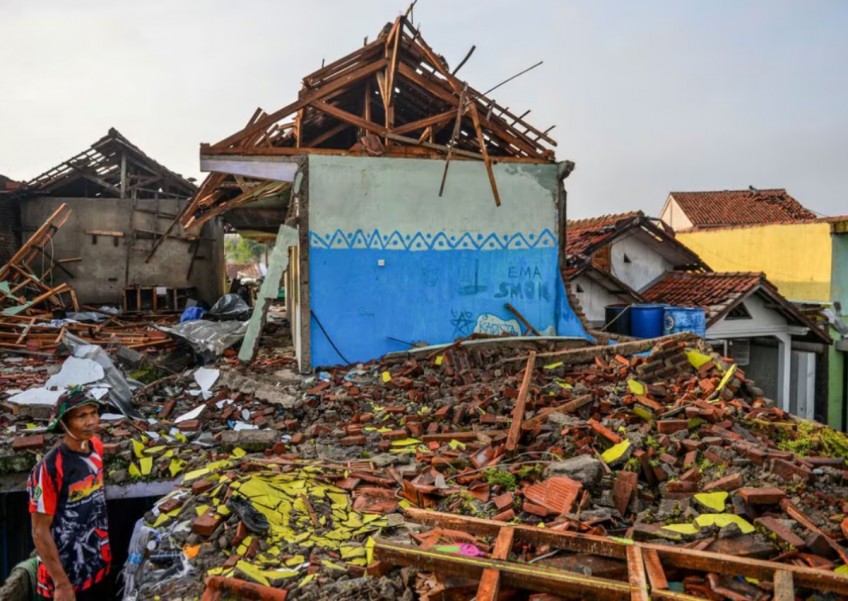
A tornado struck the district of Rancaekek in Bandung, West Java, on February 21, 2024, injuring at least 33 people. Officials indicated the number of casualties could increase as rescue operations continue. West Java’s geographic location makes it particularly vulnerable to natural disasters.
The province is bordered by the Java Sea to the north and the Indian Ocean to the south, while sitting along the Pacific Ring of Fire. This positioning exposes the region to earthquakes, volcanic eruptions, and now tornadoes.
The area is home to the Sundanese people, Indonesia’s second-largest ethnic group, and its dense population increases the number of people at risk when severe weather occurs. Emergency response efforts are currently focused on providing relief to affected residents. Aid workers are delivering medical care to the injured and assessing damage to homes and buildings.
The tornado’s impact on Bandung, a major urban center known for its cultural heritage and role as a manufacturing and tourism hub, has highlighted gaps in disaster planning. Bandung is a key driver of West Java’s economy through industry, agriculture, and tourism.
The disruption from the tornado extends beyond physical injuries to affect supply chains, tourism, and local production. The Indonesian government has promoted renewable energy sources such as solar and wind power, citing reduced dependence on fossil fuels, improved energy security, and lower costs. The tornado has added new urgency to discussions about infrastructure rebuilding.
Officials face a choice between reconstructing vulnerable systems or investing in more resilient infrastructure. Renewable energy systems, including rooftop solar panels, could maintain power during grid failures.
Distributed power networks are harder to disable entirely. West Java’s geography, while prone to disasters, also provides strong sunlight and steady winds that could support renewable energy generation. Residents of Rancaekek are currently focused on immediate needs, including rescuing neighbors, finding shelter, and assessing damages.
The national government has established policy goals for disaster resilience and clean energy. The tornado tests whether these policies translate into effective action on the ground.
The Sundanese people have lived in West Java for generations, adapting to eruptions and earthquakes. Tornadoes are less frequent in the region, but the need for adaptation remains. Future efforts will require improved building standards, better warning systems, and energy infrastructure that remains operational after severe weather events.




