
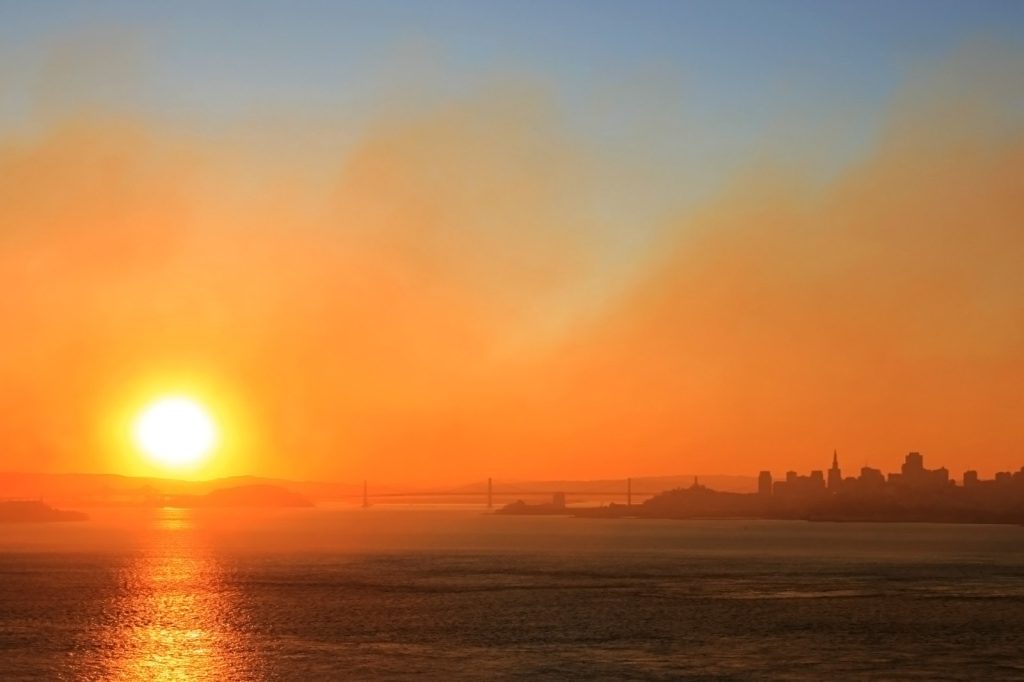
The U.S. Department of Health and Human Services declared a public health emergency for California on Tuesday, formally recognizing the severe health consequences of the ongoing wildfires. The declaration unlocks federal resources to address both the physical and psychological toll on affected communities. Air quality across large portions of California has deteriorated sharply. Fine particulate matter, which can penetrate deep into lung tissue, now permeates the air in communities both near and distant from active fire zones.
The HHS declaration specifically identifies smoke inhalation and heat-related illness as primary concerns. Emergency rooms in impacted counties are already treating patients with respiratory distress.
Children, elderly individuals, and people with pre-existing respiratory conditions face the greatest risk. The emergency status enables state and local health authorities to more easily request federal medical supplies, personnel, and mobile health units. The United States Public Health Service Commissioned Corps is expected to deploy.
These uniformed officers are trained to establish field hospitals, test drinking water for contamination, and monitor disease outbreaks during disasters. Their mission, according to HHS, involves identifying specific health threats created by the disaster and preventing their spread.
In California, current priorities include monitoring for chemical runoff from burned structures, testing wells for ash and toxins, and addressing the mental health crisis that follows when people lose homes, jobs, and entire neighborhoods. This marks the third major wildfire season in five years to trigger a federal public health emergency in the state. The pattern has become routine rather than exceptional.
Water contamination represents a specific danger the declaration aims to address. When fire moves through a watershed, it destroys vegetation that stabilizes soil.
Rain then carries ash, heavy metals, and toxic debris into reservoirs and groundwater. The HHS emergency status allows federal environmental health teams to test drinking water supplies quickly. Without this authority, testing can be delayed, and people may unknowingly consume contaminated water for days or weeks.
The mental health component is central to the declaration. HHS language specifically mentions impacts on mental well-being.
People who have fled flames, watched their homes burn, or spent nights in evacuation centers carry trauma that persists after evacuation orders end. The federal declaration enables funding and staffing for crisis counseling teams and mental health hotlines. This matters in a state where wildfire season now extends year-round, keeping residents in a state of constant vigilance.
The HHS declaration is a tool rather than a solution. It does not stop the fires or rebuild homes.
However, it ensures that when a child cannot breathe, a family cannot drink their tap water, or a firefighter cannot sleep, a federal apparatus exists to respond. That apparatus has a name, a chain of command, and a history of working in disasters. The question remains whether it can move fast enough to match the speed of the flames.




