
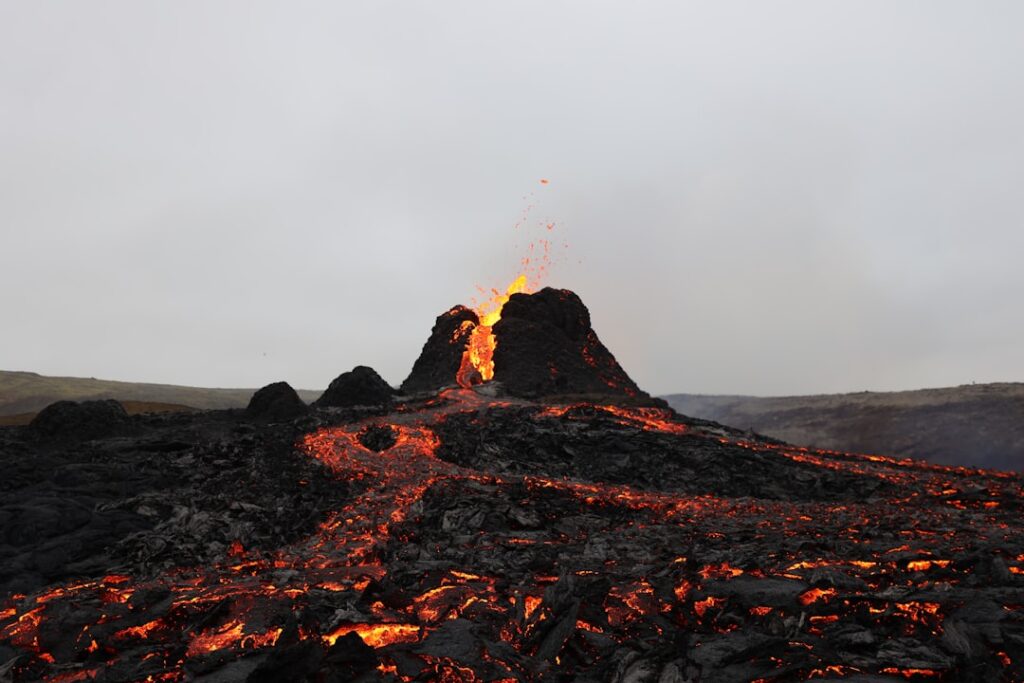
Ruang Volcano Eruption Triggers Mass Evacuation
On April 17, 2024, the Ruang volcano in North Sulawesi erupted, sending ash and gas into the atmosphere and prompting local authorities to move hundreds of residents from the surrounding area. The eruption was not unexpected to experts who study the region’s volcanic behavior. Ruang is a stratovolcano that forms part of the Sangihe Islands arc.
The island it occupies measures roughly four kilometres by five kilometres, with its summit reaching an elevation of 725 metres. A fragmented lava dome caps the peak, and on clear days the view extends to Klabat to the south, Siau to the north and Ternate to the east.
That panorama is now hidden beneath a blanket of volcanic ash. The primary health concern stems from inhalation of fine ash and toxic gases, which can aggravate respiratory conditions. Recognizing the risk, officials issued evacuation orders swiftly, and emergency teams were deployed to the island to assist displaced persons and begin damage assessments.
The Indonesian government is coordinating the response, with safety remaining the immediate priority. Beyond the urgent relief effort, the event highlights a longer‑term challenge: how communities cope with living on a tiny, isolated landmass dominated by an active volcano.
Ruang sits within the Pacific Ring of Fire, a zone notorious for tectonic volatility. The Sangihe chain itself results from the Philippine Sea Plate sliding beneath the Eurasian Plate, a process that regularly generates magma and fuels eruptions. In this setting, eruptions are not anomalies; they are part of the geological rhythm.
The island’s size compounds the danger. With the volcano positioned at its centre, there is no terrain capable of shielding inhabitants from a direct blast, pyroclastic surge or lava flow.
Consequently, evacuation remains the only viable protective measure when activity intensifies. This eruption underscores the persistent tension between human settlement and volcanic forces in Indonesia, a nation that hosts more active volcanoes than any other country—over 120 in total. Millions of Indonesians reside in the shadow of these peaks, relying on agriculture, fishing and other livelihoods that bind them to the land.
Indonesia maintains a national monitoring network led by the Center for Volcanology and Geological Hazard Mitigation. The agency continuously tracks seismic deformation, gas emissions and other precursors, issuing warnings when thresholds are crossed.
Nevertheless, a stratovolcano such as Ruang can escalate rapidly, propelling ash plumes into the stratosphere, disrupting aviation, contaminating water sources and spawning lahars—volcanic mudflows that can sweep down slopes and bury everything in their path. The successful relocation of hundreds of residents demonstrates that the warning and response system can function effectively when triggered. People reached safety, and relief operations commenced without delay. Yet the episode also exposes a limitation: evacuation addresses the immediate threat but does not reduce the underlying vulnerability of a population that has nowhere else to go.
Many islanders remain because they depend on the surrounding waters for fish, cultivate gardens on the fertile slopes, and maintain deep cultural ties to the locale. After an eruption subsides, they typically return to rebuild, only to face the prospect of another future blast.
The cycle of eruption, flight, temporary shelter and return is likely to repeat as long as the volcano remains active. The future trajectory of Ruang’s activity is uncertain. The current episode could be an isolated outburst or the opening phase of a more prolonged period of unrest.
Once the ash settles and gases disperse, the environment will begin to recover, homes will be repaired, and livelihoods will resume—but the hazard will persist.




