
Rescue teams are still combing the debris three days after a landslide in Chitwan District knocked two buses off the Madan Ashrit Highway. Officials confirm that 11 people have died, three survivors have been rescued, and 51 passengers remain unaccounted for. The buses were traveling along the highway when heavy rain triggered a massive slide that engulfed the road.
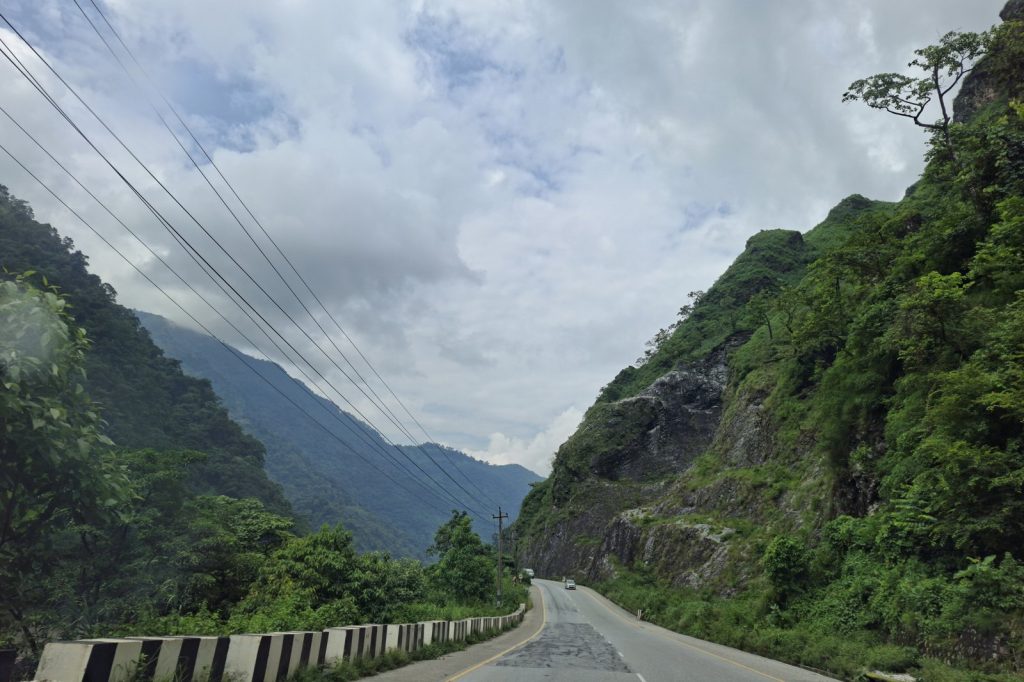
The incident forced the closure of the highway, a vital corridor that carries roughly 90 percent of Nepal’s international traffic. The 36‑kilometre stretch links Narayangadh with Mugling, connecting the Prithvi Highway at one end and the Mahendra Highway at the other.
It is a main route for trucks moving goods from India to Kathmandu and for buses carrying pilgrims, traders and families. Although the road was widened between 2015 and 2018—expanding a 33.2‑kilometre segment from a 5‑metre width to between 9 and 11 metres—the landslide demonstrated that the upgrades have not eliminated the area’s vulnerability. The terrain along the highway is steep and geologically unstable; even moderate rainfall can provoke slides, and the recent downpour was far beyond moderate. Search operations are hampered by the hazardous conditions.
Landslide debris is difficult to navigate, and bodies can be buried deep in mud or swept downstream by swollen rivers. Families from Narayangadh and Mugling are waiting for news that may never arrive, while the three injured survivors receive medical care.
The shutdown of the Madan Ashrit Highway has immediate economic repercussions. With the road closed, trucks cannot transport goods, disrupting supply chains that depend on this artery for international trade. Prolonged closure could tighten supplies and push up prices across the country, especially as the monsoon season continues and more rain is forecast.
Authorities face a choice between simply clearing the slide and addressing the underlying risks. Options under discussion include constructing retaining walls, installing early‑warning systems, or rerouting the most exposed sections of the highway.
The incident has reignited debate over Nepal’s rapid infrastructure expansion—roads, bridges and tunnels built to improve connectivity—against the backdrop of a landscape prone to landslides and flash floods. For the 51 missing passengers, the likelihood of recovery remains low given the difficulty of the terrain and the time elapsed. The death toll stands at 11, with three survivors confirmed.
These figures dominate the ongoing response and underscore the human cost of the disaster. As the monsoon persists, officials warn that additional slides are possible and that the highway may remain impassable for weeks.
Residents and commuters who rely on the road have limited alternatives, and many will eventually have to return to a route that remains partially buried and hazardous. The tragedy highlights the gap between infrastructure ambitions and the realities of Nepal’s mountainous environment. Whether the government will implement more robust protective measures or focus solely on debris removal will shape the safety of a road that, despite recent improvements, proved vulnerable once again.




