
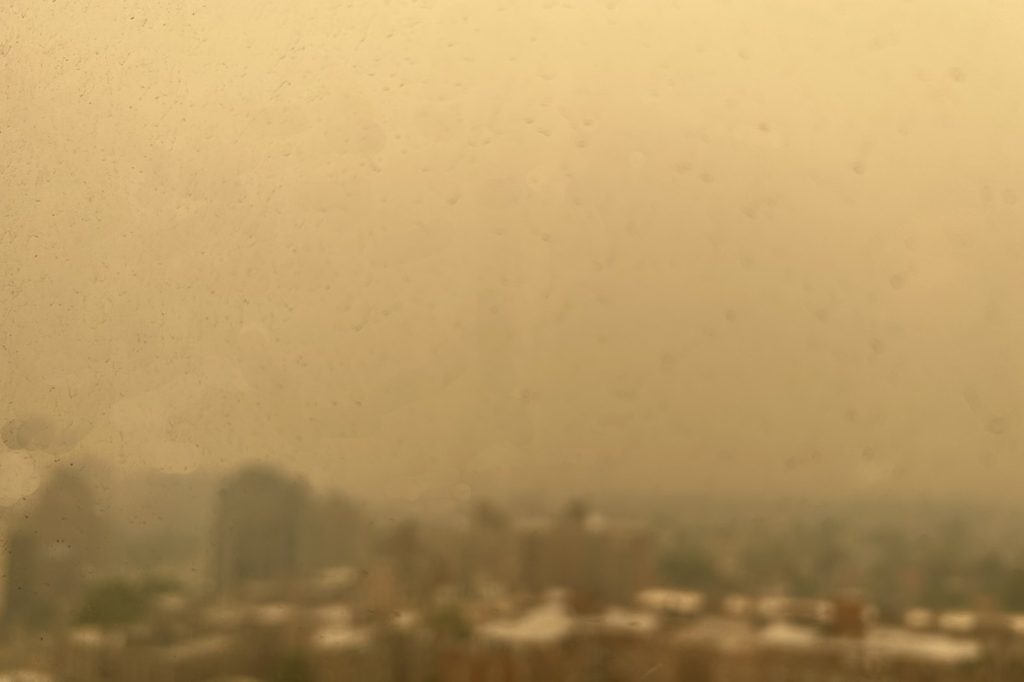
NEW YORK, July 17 — State authorities issued a health warning today as fine particulate matter from Canadian wildfires pushed air quality across the New York metro area and Long Island into the “unhealthy” category for all residents.
The pollutant at the center of the alert is PM2.5—airborne particles measuring 2.5 micrometers or smaller in diameter. Strategically, this is the size that poses the greatest public health threat: these microscopic particles can penetrate deep into lung tissue and enter the bloodstream, triggering both respiratory and cardiovascular complications.
The calculus for New Yorkers today is straightforward but serious. Health officials explicitly advised limiting outdoor activities and wearing masks when venturing outside. This is not a precaution limited to sensitive groups—the warning covers everyone.
Even worse conditions enveloped central and western regions of the state, according to the advisory. The broader stakes extend beyond today’s commute or outdoor plans. The Canadian wildfire season, now in full swing, has repeatedly sent plumes of smoke across the border, making air-quality management a recurring strategic challenge for northeastern states.
What PM2.5 Means for Public Health
PM2.5 refers to fine inhalable particles with a diameter of 2.5 micrometers or smaller—roughly 30 times smaller than a human hair. Because of their minute size, they bypass the body’s natural filtration mechanisms in the nose and throat.
Once inhaled, these particles can lodge in the deepest regions of the lungs and cross into the bloodstream. Medical research has linked short-term exposure to aggravated asthma, reduced lung function, and irregular heartbeat. Long-term exposure carries risks of chronic respiratory disease and cardiovascular mortality.
The state’s warning today signals that ambient concentrations have reached levels where even healthy individuals may experience symptoms during prolonged exposure. Officials did not specify the exact PM2.5 readings, but the “unhealthy” designation on the Air Quality Index typically triggers public health advisories for the general population.
Regional Impact and Response
The New York metro area and Long Island bore the brunt of today’s advisory, but the worst air quality settled over central and western New York. That geographic spread suggests the smoke plume is both dense and wide, carried by prevailing winds from Canadian fire zones.
What this signals to public health planners is a pattern. Recurring wildfire smoke events have forced state and local agencies to integrate air-quality protocols into routine emergency management. Mask distribution, public shelter-in-place guidance, and school activity restrictions have become recurring operational tools.
For residents, the immediate takeaway is tactical: limit time outdoors, keep windows closed, and wear a high-filtration mask if outdoor activity is unavoidable. The broader stakes remain on the geopolitical chessboard as cross-border smoke events become a seasonal fixture of life in the Northeast.
Consult your doctor for medical advice.




