
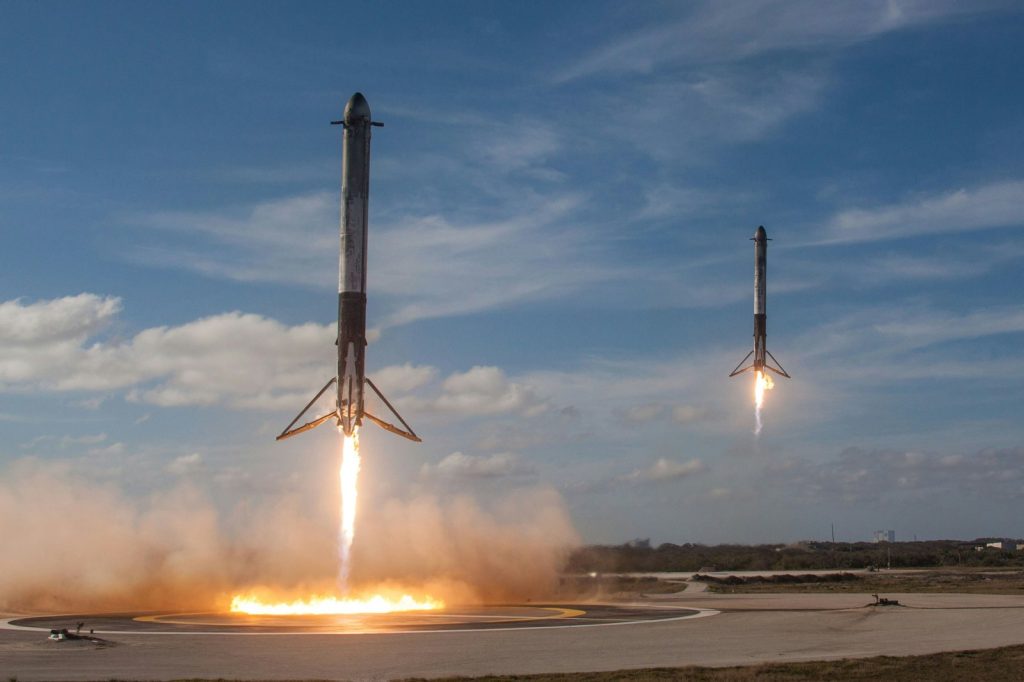
BEIJING, July 10 — On a launchpad in China, a rocket has just made history. The Long March 10B lifted off, delivered its payload, and then did something no Chinese liquid-fueled rocket has ever done before: it came back. The booster landed successfully, marking China’s first recovery of a liquid-fueled first stage.
It is a milestone that puts Beijing in the reusable rocket race. The Long March 10B uses a vertical takeoff and vertical landing (VTVL) architecture, the same fundamental approach SpaceX pioneered with the Falcon 9, which first recovered a booster in December 2015.
The Chinese rocket is a two-stage, medium-lift vehicle burning liquid oxygen and kerosene. Its first stage carries grid fins and landing legs for controlled descent, just as the Falcon 9 does. But the two rockets diverge in some ways.
The Falcon 9’s first stage is powered by nine Merlin 1D engines. The Long March 10B uses a cluster of four YF-100K engines, each producing about 120 tons of thrust.
That is a different engine cycle too — the YF-100K uses staged combustion, while the Merlin runs an open cycle. The landing sequence is also distinct, though the source material does not detail exactly how. The Falcon 9 had completed over 300 successful landings by early 2024.
SpaceX’s first successful booster recovery happened on December 21, 2015. China’s achievement is its first. The Long March 10B is estimated to carry about 14 metric tons to low Earth orbit in reusable mode, while the Falcon 9 can lift up to 22.8 metric tons to LEO in expendable mode.
The comparison highlights not just how far China has come, but how far it still has to go. The Long March 10B’s successful recovery is a genuine technical achievement — recovering a liquid-fueled booster is hard, and China is now one of the very few nations to have done it.
But SpaceX has been doing this for over a decade, with hundreds of landings under its belt and a higher success rate. The milestone matters because reusability is the key to lowering launch costs. Every booster that flies again is a booster that does not need to be built from scratch.
China’s space programme has long relied on expendable rockets; this landing opens the door to a future where it can compete on price as well as capability. What to watch next is whether the Long March 10B can match the Falcon 9’s reliability and cadence.
One successful landing is a proof of concept. A hundred is a revolution. China has taken the first step, but the path ahead is long, and SpaceX is not standing still.
{“@context”: “https://schema.org”, “@type”: “NewsArticle”, “headline”: “Long March 10B vs Falcon 9: Vertical Landing Design Compared”, “description”: “BEIJING, July 10 — On a launchpad in China, a rocket has just made history. The Long March 10B lifted off, delivered its payload, and…”, “datePublished”: “2026-07-10T09:30:00+00:00”, “author”: {“@type”: “Person”, “name”: “Henry Thomas”}, “publisher”: {“@type”: “Organization”, “name”: “InfoPulse Today”, “url”: “https://newsfeed.infopulsetoday.com/”}}




