
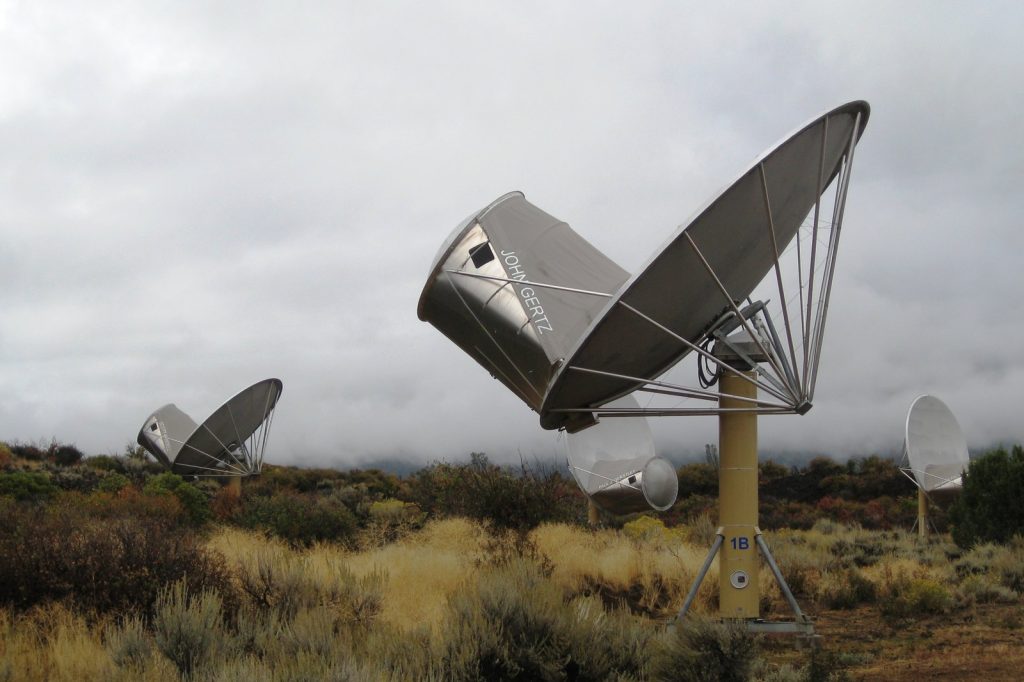
NEW YORK, June 25 — What happens if the silence ends? It is a question that has moved, in recent years, from the realm of science fiction into serious scientific planning, and it is the focus of the latest installment in the “Beyond Fermi’s Paradox” series. The core of the argument is straightforward: we have spent decades assuming we are alone, or at least that any contact would be a one-way broadcast we happen to catch.
But the practical upshot of recent thinking among astrobiologists and SETI researchers is that the moment of contact — if it ever comes — will not be a tidy, cinematic event. It will be messy, ambiguous, and almost certainly confusing.
Think of it like this. Imagine you are standing in a vast, empty desert. You have been listening for any sound for your entire life.
Then, one day, you hear a faint, rhythmic tapping. You have no idea what is making it, where it is coming from, or what it wants.
That is roughly the position we are in.
What the signal actually says
The series walks through several scenarios. One of the more grounded involves a simple detection of a non-human technological signature — a pulse, a modulation, a pattern that cannot be explained by any known natural or human-made source. In plain terms, it would be a piece of data that says “something made this,” but nothing more.
Here is what that means for the average person. The researchers who would handle such a detection have protocols.
They would verify, re-verify, and then share the data with observatories around the world. It would take weeks, possibly months, to confirm that the signal was real and not a glitch. The public would likely hear about it only after that confirmation.
And even then, the message — if it is a message — would almost certainly be indecipherable. The series notes that a truly alien intelligence would not share our mathematics, our physics, or our language in any recognizable way.
The practical upshot is that the first contact might be a long, frustrating process of trying to understand a single, cryptic transmission.
Who speaks for Earth?
Another scenario the series explores is the political and social dimension. There is no single global authority tasked with responding to an extraterrestrial signal. The United Nations has informal working groups, and various national space agencies have their own internal protocols, but there is no binding treaty that says “this is how we reply.” The series raises a pointed question: if a signal is detected tomorrow, who gets to decide what we send back?
The answer, for now, is no one. And that uncertainty, in some ways, is the most unsettling part of the Fermi Paradox’s possible resolution.
What to watch next: the series suggests that the real breakthrough may not be a dramatic arrival, but the slow, painstaking work of building the frameworks — scientific, diplomatic, and ethical — that would let us handle the news when it finally comes.
{“@context”: “https://schema.org”, “@type”: “NewsArticle”, “headline”: “Beyond Fermi’s Paradox XVIII: What if We Make Contact?”, “description”: “NEW YORK, June 25 — What happens if the silence ends? It is a question that has moved, in recent years, from the realm of…”, “datePublished”: “2026-06-25 20:01:33T09:30:00+00:00”, “author”: {“@type”: “Person”, “name”: “Erika Johnson”}, “publisher”: {“@type”: “Organization”, “name”: “InfoPulse Today”, “url”: “https://newsfeed.infopulsetoday.com/”}}




