
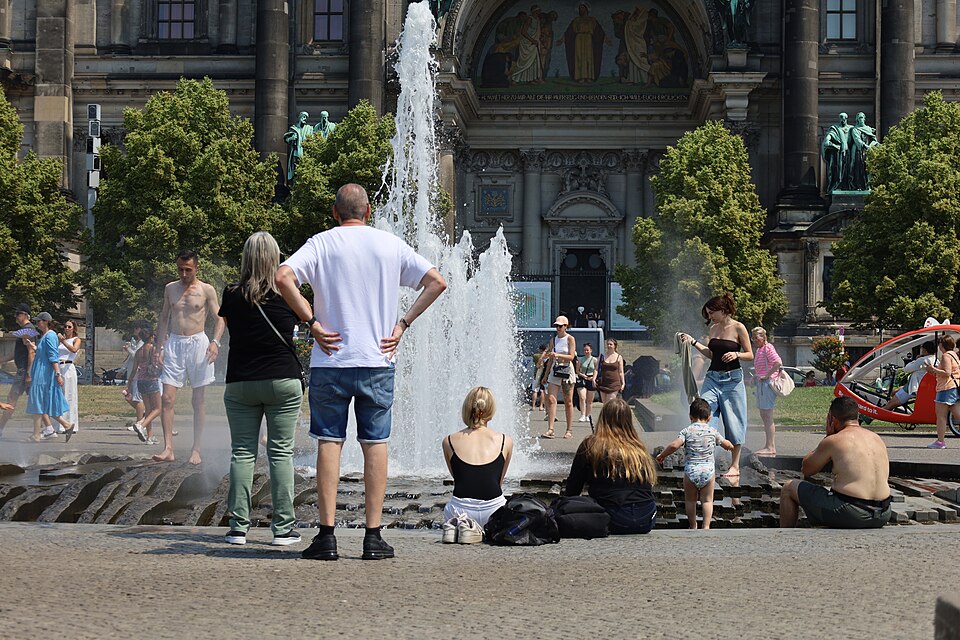
ROME, June 29 — Europe is counting the cost of a heatwave that has now claimed more than 1,300 excess deaths since June 21, according to the World Health Organization. The numbers are stark, but the mechanics behind them are what matter for policymakers. On Sunday, temperatures hit 40 degrees Celsius (104 degrees Fahrenheit) in parts of Germany, the Czech Republic and Poland.
The immediate impact was predictable: transport services disrupted, infrastructure buckling. France, meanwhile, reported 1,000 excess deaths alone — the number above what would normally be expected — as the heatwave took its toll.
French towns saw temperatures reach as high as 44C (111.2F) in one location, after days where the average sat at 29.8C (85.6F). Then came the storms. After the heat, parts of France were hit by severe weather, a pattern that is becoming familiar.
The catch is that early-summer heatwaves are arriving hotter than before, and the consequences — illness, death, infrastructure collapse — are compounding. The question for European governments is not whether another heatwave will come, but what the response costs.
On closer reading of the data, the 1,300 excess deaths figure is a warning, not a final tally. Excess deaths measure the gap between observed mortality and what would normally be expected for that period. When that gap widens, it signals systemic failure — in healthcare, in housing, in urban planning.
France’s 1,000 excess deaths are concentrated in a country that has had heatwave alert systems for years. The fact that the number is still that high suggests the alerts alone are not enough. The real work is in retrofitting buildings, ensuring cooling centres are accessible, and protecting outdoor workers.
Those are not quick fixes, and they cost money. But the alternative — repeated spikes in excess mortality — has its own price tag.
Germany, the Czech Republic and Poland all saw the mercury hit 40C on Sunday. Transport services were affected, which in turn hits commerce. The economic disruption from heatwaves is not just about lost productivity in the moment; it cascades through supply chains, insurance claims, and public health spending.
Follow the money, and the case for investment in heat resilience becomes less about climate ideology and more about fiscal prudence. European countries have options.
Expanding green spaces in cities lowers ambient temperatures. Installing reflective roofing and better insulation reduces indoor heat without air conditioning, which itself strains power grids. Early-warning systems can be paired with direct outreach to vulnerable populations — the elderly, the isolated, those with pre-existing conditions.
These are not speculative measures; they are proven interventions. The heatwave that began on June 21 is still unfolding. More than 1,300 excess deaths have been recorded so far.
The number will almost certainly rise before the next cold front arrives. What governments do between now and the next hot spell will determine whether that pattern repeats — or whether the death toll becomes a catalyst for change.
{“@context”: “https://schema.org”, “@type”: “NewsArticle”, “headline”: “Europe heatwave kills 1,300+; nations seek solutions”, “description”: “ROME, June 29 — Europe is counting the cost of a heatwave that has now claimed more than 1,300 excess deaths since June 21, according…”, “datePublished”: “2026-06-29 13:47:50T09:30:00+00:00”, “author”: {“@type”: “Person”, “name”: “Beatrice Ferrari”}, “publisher”: {“@type”: “Organization”, “name”: “InfoPulse Today”, “url”: “https://newsfeed.infopulsetoday.com/”}}




