
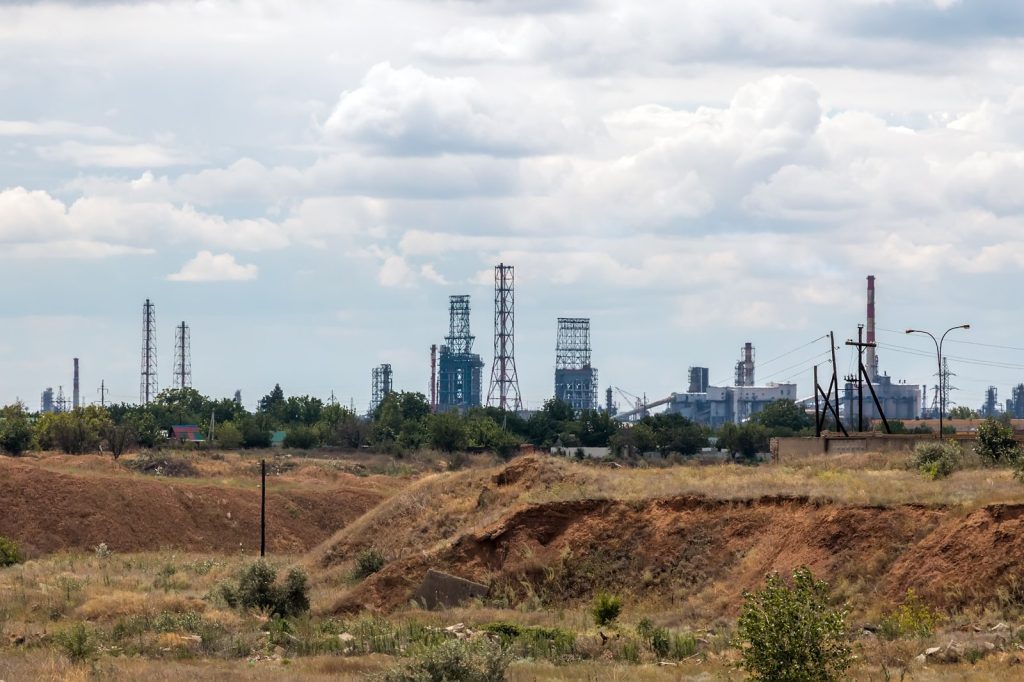
MOSCOW, July 7 — The shift is subtle but unmistakable: Russia’s refining machine, once a sprawling engine of export revenue, is showing cracks. A campaign of drone strikes in 2023 and 2024 has targeted key refineries, and industry analysts estimate that Russia’s refining output dropped by 5-10% in early 2024. The Russian government itself reported a 7% drop in gasoline production in January 2024 compared to the same month in 2023.
That’s not a collapse, but it’s a measurable dent in a system that had been humming for decades. Before the war, Russia’s total oil refining capacity sat at approximately 280 million tons per year.
The heavy hitters included the Omsk Refinery, built in 1955 and modernized in the 2000s, with a throughput of 21 million tons per year — the country’s largest. The Kirishi Refinery processed 17 million tons per year, and the Tuapse Refinery handled 12 million tons per year. These are the kinds of numbers that underpin a global energy player.
But drone strikes have damaged or disrupted operations at several of these sites, and the trend underneath is worth watching: a relatively low-cost weapon — each drone costs Ukraine an estimated $100,000 to $500,000 — can cause millions of dollars in damage to a refinery.
The Economics of Asymmetric Warfare
The math is stark. A single drone, costing at most half a million dollars, can knock out a processing unit worth many times that. The damage to a refinery can run into millions of dollars, according to industry analysts.
For Ukraine, this represents a high-return investment in disruption. For Russia, it means lost output, repair costs, and a tightening of domestic fuel supply.
The 7% drop in gasoline production in January 2024 is the kind of number that gets the attention of energy traders and logistics planners alike. Russia exported about 4.5 million barrels per day of crude oil and refined products in 2023, generating revenues of approximately $180 billion, according to the International Energy Agency. That’s a massive cash flow, but it depends on refineries actually running.
If strikes continue to degrade capacity, the export machine could start to sputter. Watch this space: the next few months will tell whether these disruptions are a temporary headache or a structural shift in Russia’s energy leverage.
What’s Changing on the Ground
The Omsk Refinery, Russia’s largest by throughput, is a symbol of the country’s refining might. Built in 1955 and modernized in the 2000s, it represents decades of investment. But even a modernized plant is vulnerable to precision strikes.
The Kirishi and Tuapse refineries, while smaller, are still critical nodes in the network. Damage to any of them ripples through the supply chain, from gasoline at the pump to diesel for military logistics.
The trend underneath is clear: Ukraine is using relatively cheap drones to impose expensive costs on Russia’s energy infrastructure. Each strike is a calculation — a few hundred thousand dollars for the drone versus millions in damage. And the cumulative effect is starting to show in the production numbers.
The 5-10% drop in refining output estimated by industry analysts in early 2024 is not yet a crisis, but it’s a warning signal.
Forward-Looking Close
What’s next? If the drone campaign continues at its current pace, Russia’s refining capacity could face further erosion. The country still exports 4.5 million barrels per day of crude and refined products, but every damaged refinery makes that number harder to sustain.
The shift is still early, but the trajectory is worth tracking. For energy markets, for policymakers, and for anyone watching the war’s economic dimensions, this is a story that is far from over.
{“@context”: “https://schema.org”, “@type”: “NewsArticle”, “headline”: “Russia’s Oil Refining Hit by Drone Strikes: Data Impact”, “description”: “MOSCOW, July 7 — The shift is subtle but unmistakable: Russia’s refining machine, once a sprawling engine of export revenue, is showing cracks. A campaign…”, “datePublished”: “2026-07-07T09:30:00+00:00”, “author”: {“@type”: “Person”, “name”: “Maria Romano”}, “publisher”: {“@type”: “Organization”, “name”: “InfoPulse Today”, “url”: “https://newsfeed.infopulsetoday.com/”}}




