
MILAN, July 17 — The shift is quiet, distant, and nearly 41 light-years away. But for planetary scientists, the TRAPPIST-1 system has just become one of the most compelling places in the galaxy to watch. This ultra-cool red dwarf star, discovered in 1999 by astronomer John Gizis and colleagues, sits in the constellation Aquarius.
It is small—its radius slightly larger than Jupiter’s, its mass about 9% of the Sun’s—and old, estimated at 7.6 billion years, older than our own Solar System. Its surface temperature is about 2,566 K.
But the real story is what orbits it.
Seven Worlds, One Plane
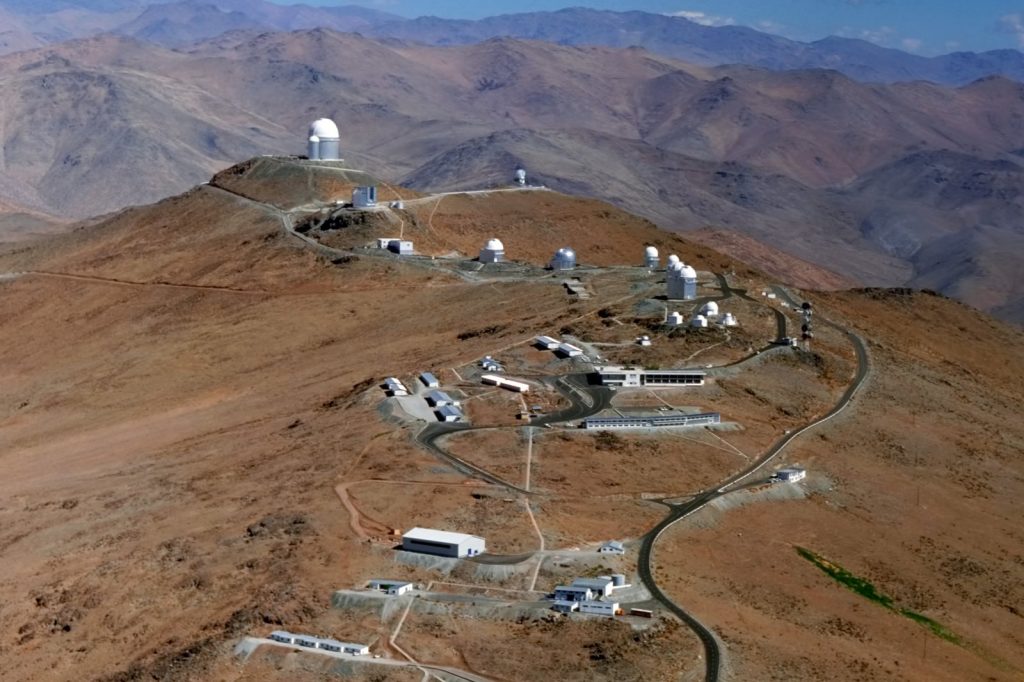
In 2016, a team led by Belgian astronomer Michaël Gillon at the University of Liege spotted something unusual in the light curves from the TRAPPIST–South telescope at La Silla Observatory in Chile. Initial observations in 2015 had shown anomalies. By 2016 and 2017, the team had confirmed seven terrestrial planets.
All seven planets orbit in the same plane. Their orbits are circular, taking between 1.5 and 19 days.
Their masses are comparable to Earth’s. And they are all likely tidally locked, meaning one side permanently faces the star while the other sits in eternal night. The discovery was a feat of coordinated observation.
The Spitzer Space Telescope played a key role, alongside TRAPPIST–South, TRAPPIST–North in Morocco, the South African Astronomical Observatory, Liverpool Telescopes, William Herschel Telescopes in Spain, the Himalayan Chandra Telescope, the United Kingdom Infrared Telescope, and the Very Large Telescope. The TRAPPIST project received funding from NASA and the European Research Council.
Where Water Could Exist
Four of these planets—designated d, e, f, and g—orbit in the habitable zone, the region where liquid water could exist on a rocky surface. That alone makes the system a primary target for habitability research. But the news is not all promising.
Observations have found no evidence of atmospheres. TRAPPIST-1b’s atmosphere has been ruled out entirely.
It remains unclear whether the star’s radiation would allow atmospheres to survive on the other planets. The planets have low densities, suggesting large amounts of volatile material—water, ice, or other compounds—rather than solid rock alone.
Watch This Space
The system has drawn significant research interest and even appeared in popular culture, driven by the tantalizing possibility that life could exist on one of those four worlds. But the lack of atmospheres is a sobering data point. The TRAPPIST-1 system remains the best laboratory we have.
Seven Earth-sized planets, four in the habitable zone, all in the same plane, all transiting their star. The data is there.
The question is what it will tell us next.
Sources
{“@context”: “https://schema.org”, “@type”: “NewsArticle”, “headline”: “TRAPPIST-1 System: Prime Target for Exoplanet Atmosphere Studies”, “description”: “MILAN, July 17 — The shift is quiet, distant, and nearly 41 light-years away. But for planetary scientists, the TRAPPIST-1 system has just become one…”, “datePublished”: “2026-07-17T09:30:00+00:00”, “author”: {“@type”: “Person”, “name”: “Maria Romano”}, “publisher”: {“@type”: “Organization”, “name”: “InfoPulse Today”, “url”: “https://newsfeed.infopulsetoday.com/”}, “citation”: [{“@type”: “CreativeWork”, “url”: “https://en.wikipedia.org/wiki/TRAPPIST-1”}]}




