
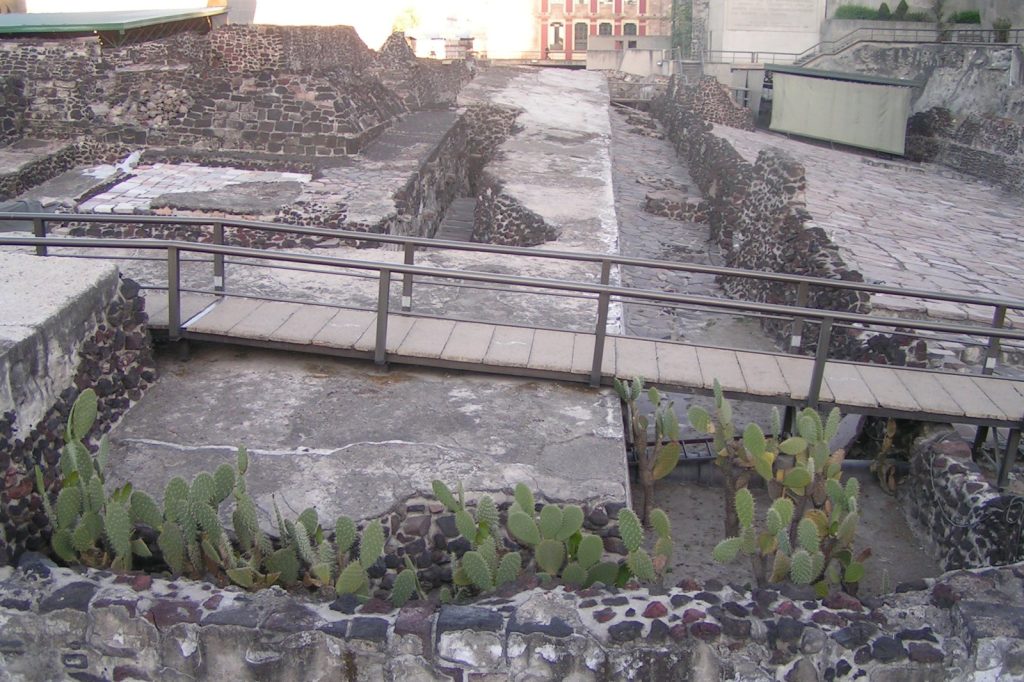
A Coalition of Conquest
Cortés formed pacts with local groups, including the Tlaxcalans, longstanding enemies of the Aztec Empire. This alliance provided the Spanish with thousands of additional fighters and critical intelligence about the terrain and enemy movements. The Aztec Empire itself was a political alliance of three Nahua city-states—Mexico‑Tenochtitlan, Tetzcoco, and Tlacopan—that had held power in the Valley of Mexico from 1428 until its defeat. It grew out of a civil war among local powers and later expanded through conquest across much of central Mexico. Rule was indirect: conquered communities kept their own leaders if they paid tribute and supplied fighters. Over time, Tenochtitlan came to dominate the alliance. The religious life of the empire blended a supreme deity with a wide pantheon and local cults. Understanding this background matters now because the fall of the empire reshaped the Americas, with earlier structures of alliance and tribute shaping later colonial rule.
Cortés entered the Aztec capital, Tenochtitlan, on November 8, 1519. He took Emperor Moctezuma II hostage, a move that gave the Spanish temporary control over the city’s administration. The situation deteriorated, however, leading to a series of conflicts. On June 30, 1520, Spanish forces were driven out of the capital during an event known as the Noche Triste. The retreat cost the Spanish many lives and much equipment.
The Siege and the Disease Factor
Cortés regrouped his forces and laid siege to Tenochtitlan in May 1521. The siege lasted 75 days, according to the record. The city fell on August 13, 1521. The conquest was aided significantly by the introduction of smallpox and other diseases to which the indigenous population had no immunity. These epidemics devastated the Aztec population, reducing their ability to resist the siege and the subsequent Spanish consolidation of power. Military analysts have noted that the disease factor was as decisive as any battle in the campaign. After the fall, the Spanish established the colony of New Spain, and Cortés was appointed its first governor. The establishment of New Spain marked the beginning of three centuries of Spanish colonial rule over what is now Mexico.
Lessons and Legacy
The strategic lesson drawn by some observers is that technological advantage, local alliances, and biological factors combined to produce a result that a purely military assessment would not have predicted. The Aztec Empire, which had expanded through conquest across central Mexico, relied on a system of indirect rule where conquered communities kept their own leaders in exchange for tribute and military support. Tenochtitlan’s dominance within the triple alliance had grown over time. The combination of Cortés’s alliances with disaffected groups—particularly the Tlaxcalans—and the devastating impact of introduced diseases fatally weakened the empire’s capacity to defend its capital. The fall of Tenochtitlan not only ended a powerful indigenous state but also set the template for Spanish colonial administration in the Americas, where tribute and alliance structures from the Aztec period were adapted to new imperial purposes. Analysts continue to study the campaign as a case study in how non‑military factors—epidemiology, diplomacy, and intelligence—can decide the fate of empires.




