
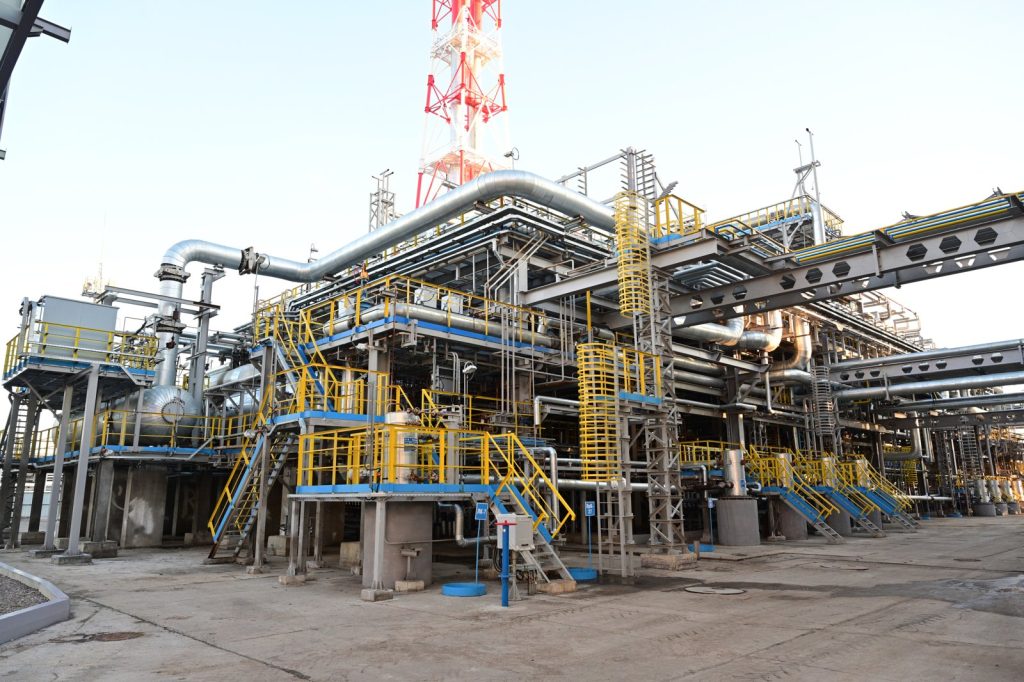
SALAVAT, July 14 — The January 29 drone strike on the Gazprom Neftekhim Salavat petrochemical complex was a logistical feat as much as a tactical one. The facility sits roughly 1,500 kilometers from Ukrainian territory, a distance that underscores the expanding reach of Kyiv’s unmanned systems. The operational and financial consequences are still being tallied, though Gazprom has publicly insisted the damage was not critical.
The mechanics here are worth parsing. This is not a small refinery on the outskirts of a border town.
The Salavat complex, established in 1948 as a petroleum refinery and expanded into petrochemicals in the 1950s, is one of Russia’s largest and oldest such facilities. It sprawls across over 1,000 hectares in Bashkortostan, deep in the Volga-Urals region. Its refinery alone has a capacity of 8.4 million tons per year, and in 2023 it processed about 6.5 million tons of crude oil.
The complex also produces ethylene, propylene, and polyethylene — basic building blocks for the automotive, construction, and defense industries. It employs approximately 10,000 people.
For the city of Salavat and the wider republic, it is a major economic driver. Gazprom, the state-controlled energy giant that produced 412.9 billion cubic meters of natural gas in 2023, can absorb a temporary disruption. The regional economy is a different matter.
The catch is that this strike was not an isolated event. Ukrainian drones have previously targeted similar petrochemical facilities in Tatarstan and Samara Oblast in 2024. The pattern is clear: hit the industrial infrastructure that feeds both civilian industry and the defense supply chain.
The Salavat complex’s products are used in the defense sector. On closer reading of Gazprom’s post-strike statements, the phrase “no critical damage” leaves a great deal of room for interpretation.
Critical damage would mean a total loss of the facility. But a strike that shuts down specific production lines, damages power distribution, or forces a safety shutdown for weeks is not “critical” in the corporate sense — yet it is operationally disruptive. The company has not released detailed production figures since the incident.
What to watch next is whether the 2025 pattern repeats. The Salavat strike demonstrated that no location in the European part of Russia is out of range.
If Ukrainian drone production and targeting capability continue to improve, the next target may not be a refinery at all — it could be the pipelines, storage depots, or rail links that move the output. That would turn a one-time operational headache into a systemic logistics problem for Gazprom.




