
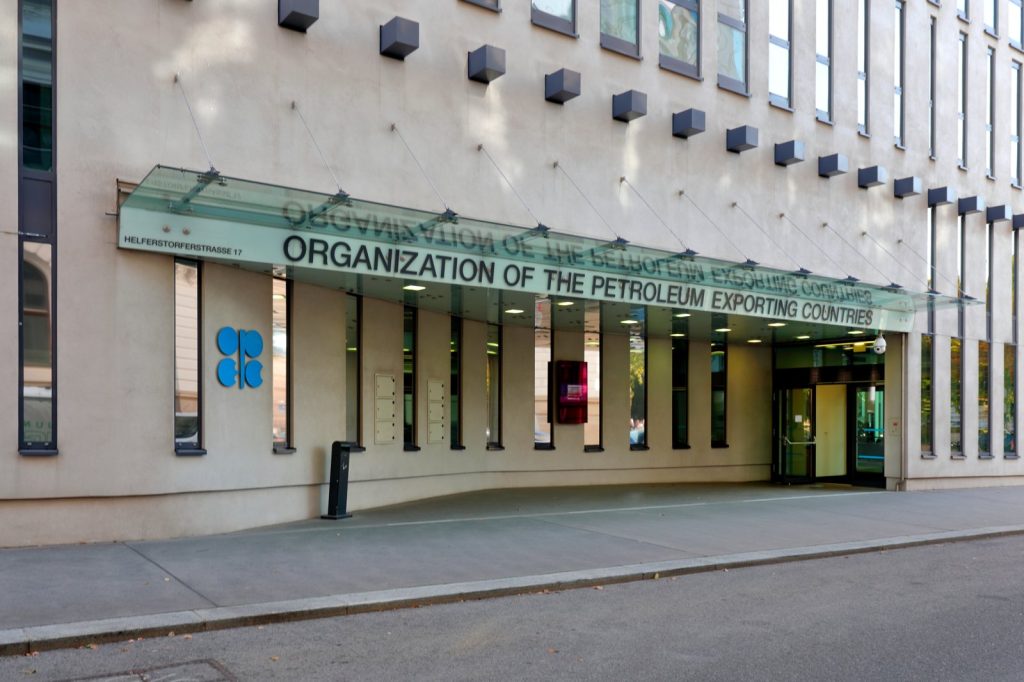
VIENNA, Aug. 1 — A conflict involving Iran that escalates into an energy crisis would put the Organization of the Petroleum Exporting Countries and its allies, the expanded group known as OPEC+, at the center of the global response. That bloc, which includes Russia, collectively controls more than 40 percent of world oil production, according to the record, and holds the majority of proven reserves. Its decisions on output levels would be critical.
The historical precedent cuts both ways.
During the 1990–1991 Gulf War, Saudi Arabia and other Gulf states significantly increased production to offset the loss of Iraqi and Kuwaiti oil. That was market stabilization in textbook form. The record also shows a more recent pattern: in April 2023, OPEC+ decided to cut output by 1.16 million barrels per day, and then extended those cuts. The preference in recent years has been to defend prices rather than chase supply. Internal disagreements and competing geopolitical allegiances have repeatedly complicated any attempt at unified action.
Strategic reserves and the IEA
The International Energy Agency, established in 1974 after the first oil shock, operates as the energy watchdog for its 31 member countries, principally industrialized nations. Its core function is coordinating the release of strategic petroleum reserves when supply is disrupted. That machinery was tested in March 2022, after Russia’s invasion of Ukraine, when IEA members agreed to release a record 120 million barrels over six months.
A new crisis in the Persian Gulf would likely trigger similar, potentially larger, coordinated releases. The mechanism exists. The scale would be the test.
The G7’s limited reach
The Group of Seven – Canada, France, Germany, Italy, Japan, the United Kingdom and the United States – would also move into action. As major energy consumers and economic powers, they would coordinate diplomatic efforts, potential sanctions, and financial aid for affected countries. Officials confirmed the group’s approach in December 2022, when it imposed a price cap on Russian oil: a measure designed to limit Moscow’s revenue while keeping barrels flowing to global markets.
That same collective weight would shape the international response to any Iranian supply shock. The sober caveat, officials acknowledge, is that even the G7’s combined capacity to fully offset a massive disruption from the Persian Gulf is limited by the sheer scale of the potential shortfall.
What to watch in the coming weeks: whether OPEC+ chooses to open the taps or hold production down, whether the IEA moves early on reserve releases, and whether the G7 can maintain a unified line. Russia’s seat at the OPEC+ table adds its own tension, since the bloc’s largest producer is itself the target of Western restrictions. The pieces for a coordinated response are all in place. The variable is whether they move together.




