
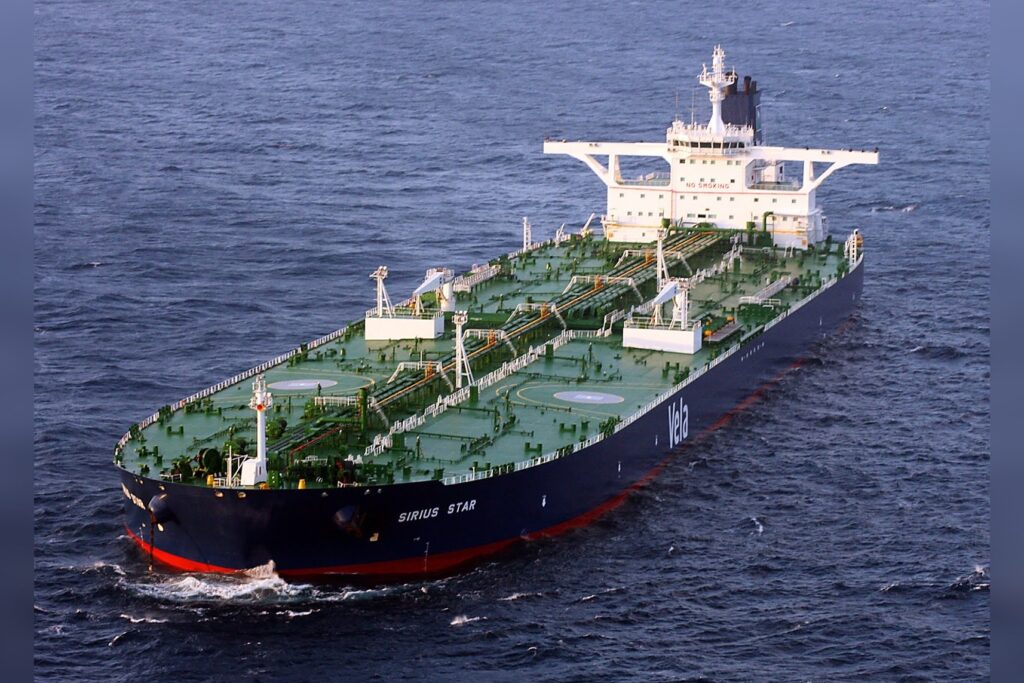
DUBAI, July 10 — Approximately 21 million barrels per day of crude oil and petroleum products transited the Strait of Hormuz in 2022, according to the U.S. Energy Information Administration (EIA). That volume represents about 20% of the world’s petroleum passing through a waterway approximately 33 kilometers wide at its narrowest point. The strait connects the Persian Gulf to the Gulf of Oman, bordered by Iran to the north and the United Arab Emirates and Oman to the south.
It remains a critical chokepoint for global oil shipments, a fact that has drawn repeated threats from Tehran. Iran has periodically threatened to close the strait in response to international sanctions or conflicts, most notably during the Iran–Iraq War from 1980 to 1988, and again in 2011–2012 over disputes surrounding its nuclear program.
The U.S. Navy’s Fifth Fleet, based in Bahrain, patrols these waters to ensure freedom of navigation. In 2019, a series of attacks on tankers near the strait heightened tensions, and the U.S. formed the International Maritime Security Construct (IMSC) to protect shipping. The strait’s strategic importance is underscored by its role in supplying crude oil to Asia, particularly China, Japan, India, and South Korea.
Any disruption could cause significant oil price spikes and economic instability globally. For Chinese refiners, the Strait of Hormuz is not merely a geopolitical flashpoint but a supply-chain reality.
According to the EIA data, the daily flow of 21 million barrels per day through the strait includes crude oil and petroleum products. A disruption would force buyers to seek alternative supplies, potentially at higher costs. The formation of the IMSC in 2019 reflected Washington’s assessment that the threat to shipping was no longer hypothetical.
The coalition includes naval assets from several states, and its mandate is to protect shipping in the region. Iran’s threats to close the strait are not new. During the Iran–Iraq War, both sides targeted oil tankers and commercial shipping.
More recently, in 2011–2012, Tehran warned it could block the waterway in response to tightened Western sanctions over its nuclear enrichment activities. Those threats did not materialize into a full closure, but they did spike insurance rates for tankers and push crude prices higher.
The 2019 attacks on tankers near the strait heightened tensions. The United States blamed Iran for the tanker attacks, a charge Tehran denied. The IMSC was established shortly afterward.
The narrow width of the strait, at approximately 33 kilometers, means that any disruption can effectively halt traffic in both directions. Tankers must pass through Omani and Iranian territorial waters, a legal and navigational constraint that complicates any effort to bypass the chokepoint.
For global markets, the key variable is whether Iran will attempt a blockade or a series of harassing attacks on commercial shipping. The EIA data makes clear the scale of what is at stake: 21 million barrels per day, every day. A disruption of even a few days would ripple through global supply chains, pushing up fuel costs for consumers and industrial users alike.
The Pentagon has stated that it will keep the Fifth Fleet at a high state of readiness, and the IMSC continues to coordinate patrols. Shipping companies have adjusted their routing and insurance protocols, but no alternative route exists that can replace the strait’s capacity. The approximately 33-kilometer waterway remains the world’s most vital energy artery, and the threats to it show no sign of abating.




