
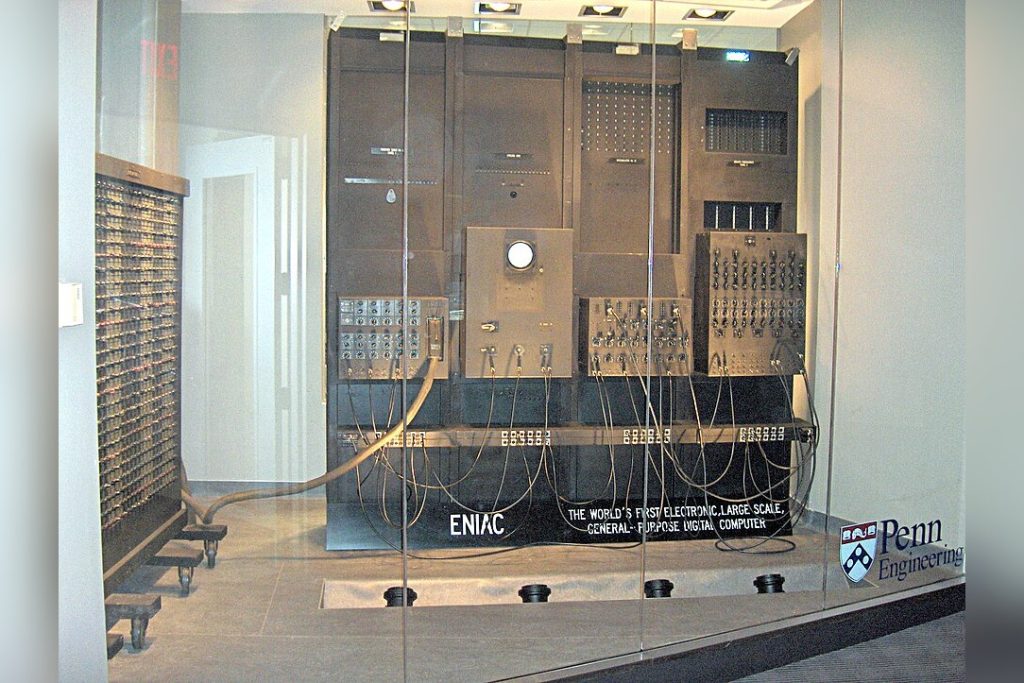
The ENIAC filled a room. Forty feet long, eight feet high, it weighed thirty tons. In a University of Pennsylvania basement, that machine became the first general-purpose electronic computer.
Philadelphia gave America that. It also gave the country its first stock exchange, its first public library, its first zoo.
The list runs seventy-six items long now, cataloged in a new exhibit opening this week at the city’s historical society. But the exhibit does something more than count achievements. It traces the argument.
The same city that housed the first computer also housed the first African American church, Mother Bethel AME. The same blocks where the Declaration was signed saw the first modern American political convention, in 1848, where the Free Soil Party built a coalition against slavery.
The city’s historical society curators are not polishing a monument. They are laying out a record of contradictions. The modern American labor movement found its voice here in 1835, with the first general strike.
That strike was an unruly argument about what America should be. The scene on South Street today — folding chairs, coolers, neighbors calling across the asphalt — feels like an extension of that argument. Residents describe a different Philadelphia now, one that has quietly reshaped American life.
The cracked Liberty Bell is not the point. The quieter innovations might surprise you.
The first medical school. The first public library. The cheesesteak, the hoagie, the water ice.
These are edible landmarks, sure. But they are also evidence of a city that fed the nation’s body and its imagination.
The exhibit’s curators argue that Philadelphia’s real gift is something harder to name. By nightfall, the museum will host a walking tour. That tour traces fault lines through the city’s grid.
The grid itself is a product of Philadelphia’s planning, but the fault lines are older. They run from the sanctuary of Mother Bethel AME to the basement where ENIAC hummed. The exhibit does not shy from the city’s sharp edges.
It documents the Free Soil Party’s convention. It notes the founding of the African American church in the shadow of the nation’s founding contradictions.
This is not a simple story. The block party on South Street spills into the intersection. Tourists mix with lifelong residents.
The heat presses down. This is how the city celebrates itself, on the ground, in the heat.
The exhibit upstairs catalogs the inventions and movements that flowed from these streets. The list is staggering in its range. The first stock exchange opened here.
The first computer came to life here. The first general strike found its voice here. Seventy-six ways.
That is what the exhibit counts. But the counting is not the point.
The point is that the same city that gave America its first computer also gave it the first public library. The same city that held the Free Soil Party’s convention also held the first African American church. The same city that signed the Declaration also built the first zoo.
The contradictions are not flaws. They are the record.
The museum will open the exhibit this week. The walking tour will follow. On South Street, the block party continues.
The neighbors call across the asphalt. This is Philadelphia, still arguing with itself, still reshaping American life in ways far beyond the cracked Liberty Bell.




