
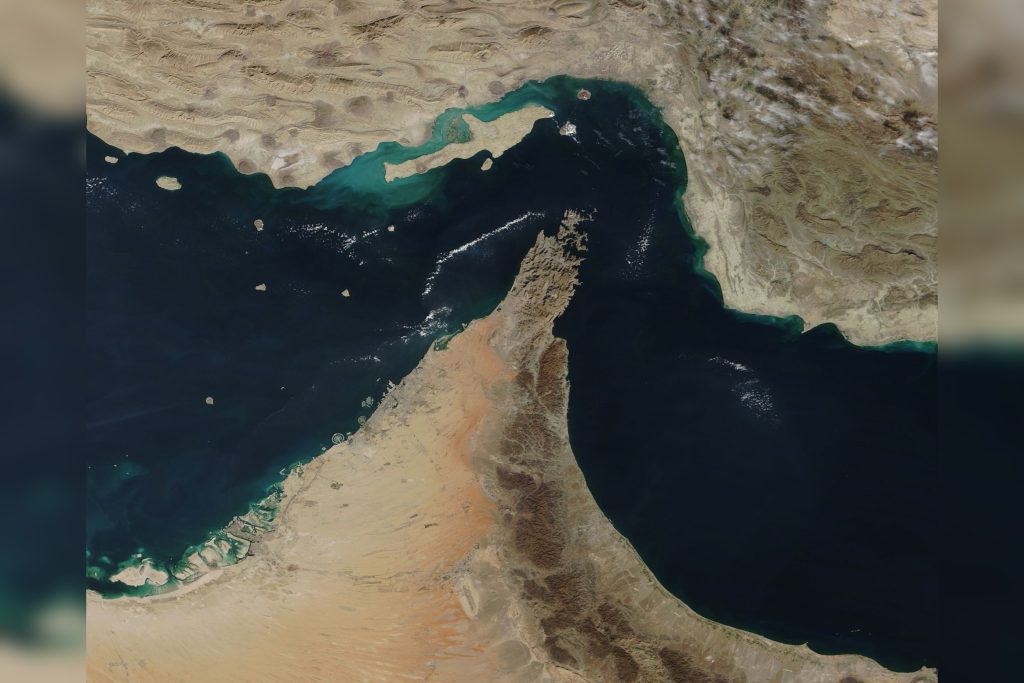
LONDON, July 8 — For all the noise around the geopolitics of the Persian Gulf, the salient point for global energy markets is a narrow body of water. The Strait of Hormuz sees the transit of roughly 17 million barrels of oil per day. Analysts at the U.S. Energy Information Administration and the International Energy Agency have modelled what happens when that flow is interrupted.
The scenarios are not hypothetical. A partial closure, triggered by something like the mining of the strait or attacks on a few tankers, could reduce oil flow by 25 to 50 percent for weeks, according to the modelling.
A full closure—an Iranian blockade, for instance, or open conflict—would cut off all 17 million barrels per day. In that case, a 2019 analysis by the RAND Corporation projected oil prices exceeding $150 per barrel. The numbers are stark, but they rest on assumptions about how long any disruption would last and how quickly the world could adapt.
The United States holds strategic petroleum reserves of about 700 million barrels, a figure from 2022. That stockpile could cover U.S. imports for roughly 150 days.
Other major consumers, notably Japan and South Korea, hold strategic reserves covering 90 to 180 days of imports. The IEA requires its member countries to hold reserves equivalent to 90 days of net imports. The military options are well-rehearsed.
During the so-called Tanker War of the 1980s, the U.S. deployed naval minesweepers and aircraft to clear the strait. Similar assets could be used again. The diplomatic track runs through Tehran.
Negotiations with Iran, possibly involving sanctions relief, remain a theoretical avenue, though the record of such talks is mixed. The UN Security Council has passed resolutions on the matter—Resolution 598, adopted in 1987, called for freedom of navigation in the region.
What is less often discussed is the lag between a disruption and its full economic effect. A week-long closure would be painful but manageable, given strategic reserves. A month-long closure would be a different matter entirely.
The IEA’s 90-day reserve requirement is designed for precisely such contingencies, but it assumes coordinated releases and functioning supply chains beyond the strait. The Strait of Hormuz is not the only vulnerability in global oil infrastructure, but it is the most concentrated.
The 17 million barrels per day that pass through it represent about a fifth of global oil consumption. No single alternative route exists. Pipelines across Saudi Arabia and the UAE offer some redundancy, but their capacity is limited.
For all the modelling, the actual outcome of a closure would depend on factors that are hard to quantify: the speed of diplomatic resolution, the willingness of Iran to escalate, the readiness of naval forces, and the behaviour of oil markets themselves, which have a tendency to price in worst-case scenarios before the facts on the ground justify them.




