
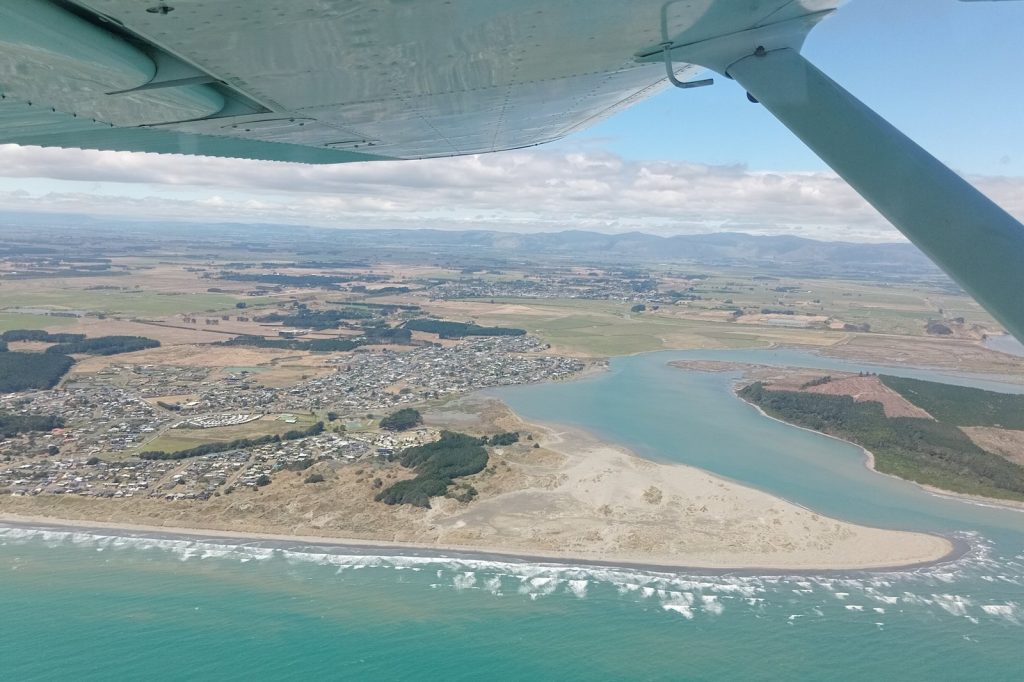
The Pacific and Australian tectonic plates have been grinding against each other beneath New Zealand for millions of years. Sunday’s magnitude 5 earthquake, recorded 65 kilometres west of Foxton Beach, is just the latest tremor in that long, violent history. The U.S. Geological Survey logged the quake at 11:04 UTC.
It hit at a depth of 81.184 kilometres. That depth matters.
Shallow quakes — those closer to the surface — tend to rattle buildings and crack roads. Deep ones, like this one, spread their energy through a wider column of rock. The shaking gets diluted.
Less damage on the ground, but the tremor is felt over a broader area. At least one person reported feeling it.
The USGS data shows that. One person is not a crowd. But in seismic monitoring, even a single report helps scientists map how the energy travelled.
No tsunami warning came. That is standard for a magnitude 5 quake at that depth. Tsunamis require vertical displacement of the seafloor, usually from shallow, large-magnitude events.
This one did not fit the profile. Seismologists call magnitude 5 quakes moderate.
They can knock things off shelves. They can crack plaster. They rarely flatten buildings.
The real threat in this region is not the moderate ones. It is the big ones.
The USGS records show 127 earthquakes of magnitude 5.0 or greater within about 300 kilometres of this location over the last 20 years. That is more than six a year on average. The biggest was a magnitude 7.8 in 2016.
That one caused widespread damage. It killed people. It reshaped the coastline in places.
Sunday’s quake was substantially smaller. But it happened in the same tectonic neighbourhood.
New Zealand sits on a convergent plate boundary. The Pacific Plate dives under the Australian Plate. That subduction zone generates frequent earthquakes.
It also builds the mountain ranges. It drives the volcanic activity.
The same forces that created the Southern Alps also produce the tremors that rattle the North Island’s west coast. Aftershocks are likely. Seismologists say that pattern is well established.
A magnitude 5 quake can trigger smaller follow-up events for days or weeks. The precise timing and size are uncertain. The general behaviour is not.
The ground adjusts. Stress redistributes along the fault.
More shaking comes. For people living near Foxton Beach, the advice is simple: be prepared. Have a plan.
Secure heavy furniture. Know where to go when the ground moves.
These are not alarmist instructions. They are routine in a seismically active country. The region has seen worse.
It will see worse again. The plates keep moving. The stress keeps building.
Sunday’s quake was a release of that stress — a small one, deep underground, far from major population centres. It was a reminder, not a catastrophe.
No damage has been reported. No injuries. Just one person who felt the ground roll and reported it.
That is how these events often go. A brief disturbance.
A data point. Then life resumes.




