
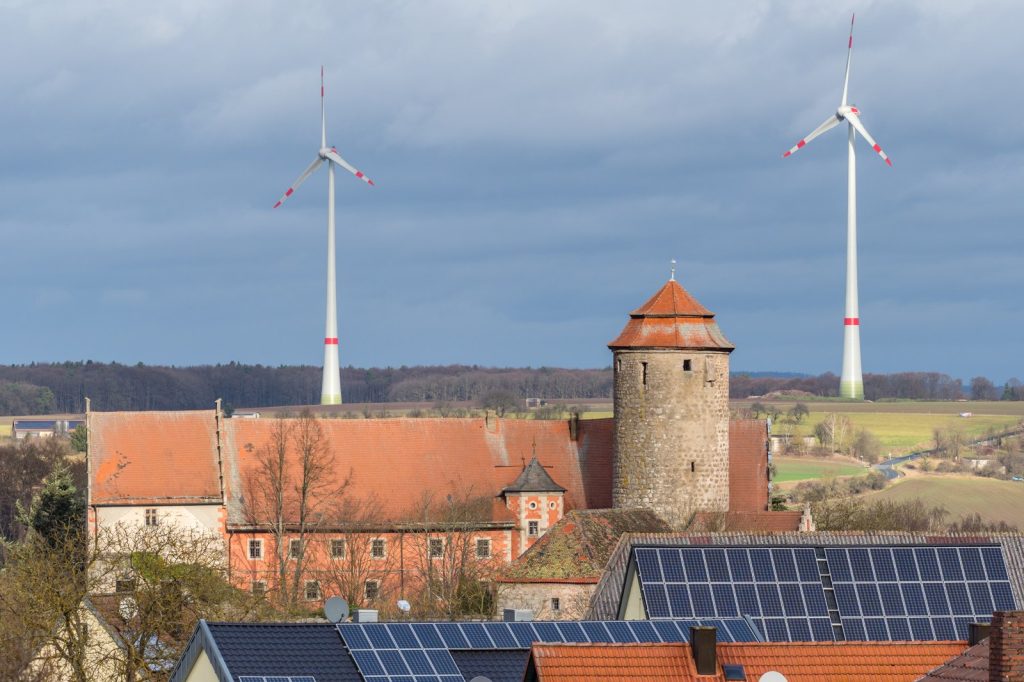
Berlin’s Easter package is a 600‑page legislative document that also functions as a political declaration of war — not against a foreign army, but against bureaucratic red tape. The German Cabinet adopted it on April 8, 2022. Its central aim is to end the country’s reliance on Russian energy by replacing imported gas with domestically generated wind and solar power.
To achieve this, the package declares renewable energy projects an “overriding public interest.” This legal classification allows planners to sidestep the layers of permission and review that have historically slowed Germany’s green transition. By giving wind and solar installations priority in legal disputes, the government intends to clear the path for rapid construction.
The numerical targets laid out in the document are striking. Germany presently operates less than eight gigawatts of offshore wind capacity. The plan calls for thirty gigawatts by 2030 — a near quadrupling in eight years.
The ambition grows thereafter, with forty gigawatts targeted for 2035 and seventy gigawatts for 2045. Onshore wind and solar goals are described as equally aggressive, although the text does not give specific figures for those sectors.
The overarching objective is to produce almost all of Germany’s electricity from renewable sources by 2035, which would more than double the current share within thirteen years. Looking further ahead, the package sets a long‑range goal of net‑zero greenhouse‑gas emissions by 2045. These benchmarks are described as crash‑program numbers, reflecting a belief that the government has run out of time to act.
The immediate catalyst for this urgency is the war in Ukraine. The conflict revealed a fundamental vulnerability: Europe’s largest economy had depended on Russian natural gas to heat homes and power industry, turning that reliance into a strategic liability.
Economy and Energy Minister Robert Habeck presented the Easter package as a direct response to that reality, saying it will lead to a significant increase in renewable energy generation. The underlying message is clear: imports from hostile nations are no longer acceptable, and the package seeks to shield the power grid from geopolitical shocks. Beyond the immediate crisis, the document also addresses a longer‑term impediment to Germany’s renewable expansion. Offshore wind growth had stalled because of complex regulations, shifting subsidy schemes, and years of permitting delays.
Local opposition and environmental lawsuits further hampered onshore projects. By declaring renewable energy an overriding public interest, the Easter package cuts through those obstacles, instructing bureaucracy to step aside.




