
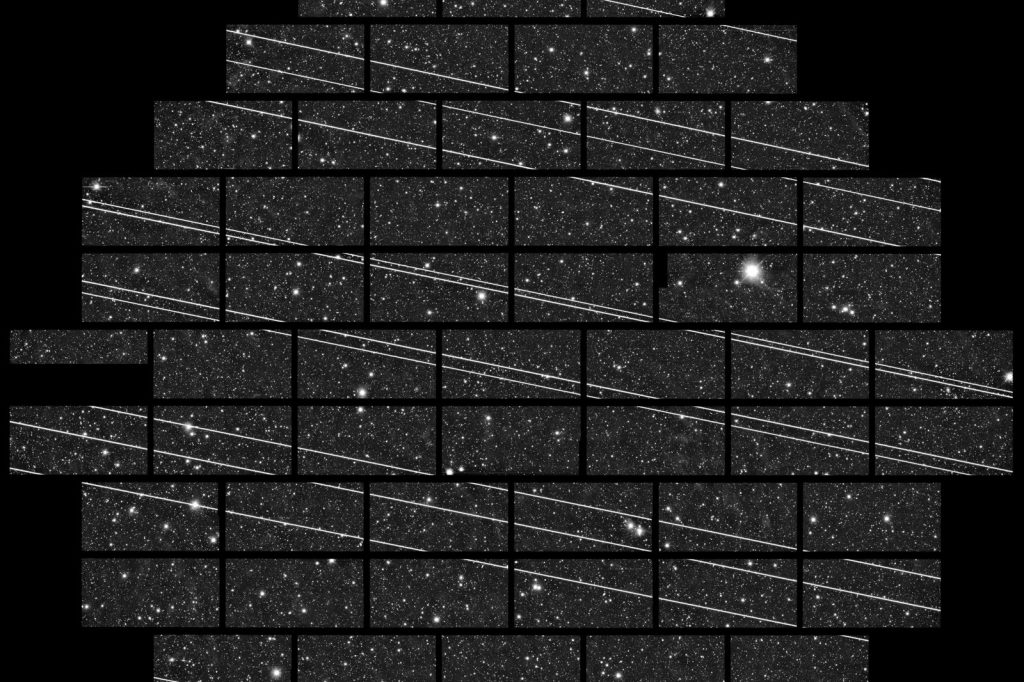
On August 21, 2026, the Asia-Pacific region is grappling with a growing concern: the potential for thousands of satellites to disrupt the night sky. According to records from the Asia-Pacific Regional Space Agency Forum (APRSAF) and the Asia-Pacific Space Cooperation Organization (APSCO), discussions around satellite light pollution have intensified in recent years. The issue centers on projects like SpaceX’s Starlink, which has already deployed 700 satellites as of August 2020, with plans to expand to 42,000.
These constellations, alongside Amazon’s Kuiper project, which aims to launch 3,236 satellites, are raising alarms about their impact on astronomy, wildlife, and human health. Starlink’s 2019 launch of 60 satellites marked a pivotal moment in the debate.
While the initial batch was relatively modest, the project’s rapid scaling has drawn scrutiny. Astronomers warn that the increasing density of satellites could overwhelm the night sky, making it difficult to observe celestial phenomena. This is not just a theoretical problem.
The light emitted by these satellites, even when dim, accumulates as their numbers grow. For regions in the Asia-Pacific, where clear skies are prized for both scientific research and cultural heritage, this poses a tangible threat.
The source notes that a statement from the APSRAF emphasized “the night sky is a shared resource,” though the exact wording of the filing remains unspecified in the source material.
Light Pollution and Environmental Impact
The environmental consequences of satellite constellations extend beyond the loss of starlight. Light pollution from these satellites could interfere with nocturnal wildlife, disrupting migration patterns and breeding cycles. Marine species, in particular, rely on natural light cycles for navigation.
Human communities, too, face indirect effects. Excessive artificial light at night has been linked to sleep disorders and reduced visibility for outdoor activities.
The APSCO, in its 2020 discussions, highlighted these ecological risks, emphasizing the need for coordinated research to assess long-term impacts. However, no specific studies or data on wildlife effects were cited in the source, leaving the scope of the problem partially undefined. Space governance in the Asia-Pacific has become a focal point for addressing these challenges.
The 2019 APSRAF forum included sessions on sustainable space activities, where experts debated regulations to mitigate satellite debris and radiofrequency interference. These conversations, however, were framed within the broader context of space safety rather than specifically targeting light pollution.
The APSCO’s 2020 meetings expanded this discourse, proposing collaborative frameworks for space research and development. Yet, the source material does not detail any concrete agreements or policy proposals emerging from these discussions. The lack of binding commitments underscores the difficulty of balancing technological ambition with environmental preservation.
Regulatory Challenges and Regional Collaboration
The Asia-Pacific’s approach to space governance remains fragmented. While organizations like the APSRAF and APSCO advocate for sustainable practices, no unified regulatory body exists to enforce standards. Countries in the region vary in their stance, with some prioritizing economic growth through satellite launches and others emphasizing environmental safeguards.
This divergence complicates efforts to establish cohesive policies. The source notes that discussions have intensified in recent years, but it does not specify which nations are leading these talks or what specific measures are under consideration.
SpaceX and Amazon’s projects exemplify the tension between innovation and regulation. Both companies operate with minimal oversight, relying on self-regulation to manage their satellite constellations. Critics argue that this model is insufficient to address light pollution.
However, the growing number of satellites in orbit suggests that the lack of strict governance is already having measurable effects. As of 2020, over 700 Starlink satellites were in orbit, with thousands more expected in the coming decade.
The timeline of this issue reveals a pattern of rapid expansion. In 2019, Starlink’s initial launch of 60 satellites sparked limited public concern. By 2020, the project’s scale had grown exponentially, prompting the APSRAF and APSCO to address the environmental implications.
This progression highlights a critical gap in preparedness. The Asia-Pacific region, while active in space discussions, has not yet implemented measures to curb the proliferation of satellites. Without proactive policies, the risk of irreversible light pollution increases.
Looking ahead, the next phase of space governance in the Asia-Pacific will likely hinge on the ability of regional organizations to translate discussions into action. The APSRAF and APSCO have laid the groundwork for dialogue, but their effectiveness depends on member states’ willingness to adopt binding agreements.
The source does not indicate any immediate plans for new regulations, but the ongoing debates suggest that the issue remains unresolved. As satellite constellations continue to expand, the pressure to act will grow. For now, the night sky over Asia-Pacific remains a contested space—both literally and figuratively.




