
BEIJING, July 14 — The rare earth industry’s dirty secret is not the metals themselves, but the radioactive baggage that comes with them. Ores containing these coveted elements — essential for everything from smartphone screens to electric vehicle motors — also hold thorium and uranium. When miners dig up the rare earths, they dig up the radioactivity too.
How it works is straightforward geology. Rare earth deposits formed in the same geological processes that concentrated uranium and thorium, so the two are nearly impossible to separate at the mining stage.
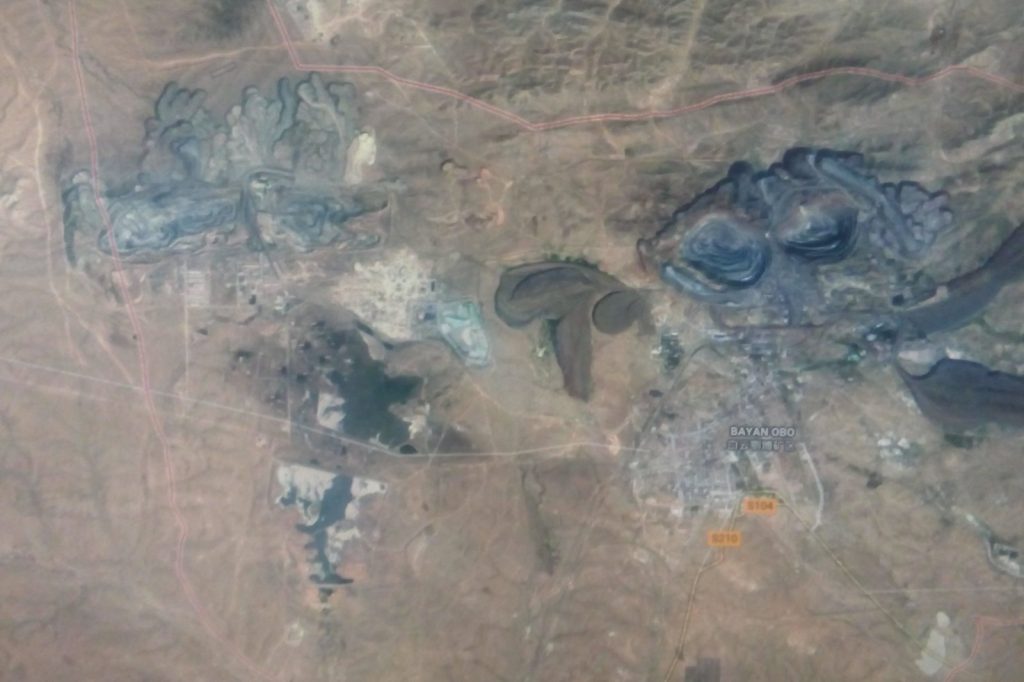
The result is a waste problem that has left scars on three continents. The Bayan Obo mine in Inner Mongolia, China, is the world’s largest rare earth deposit. According to a 2019 study in the journal Environmental Science & Technology, the site generates an estimated 100,000 metric tons of radioactive waste annually.
Chinese government studies have linked that contamination to elevated cancer rates in surrounding communities, where soil and groundwater have been polluted. In Malaysia, the Lynas processing plant in Kuantan has been a flashpoint for public anger since 2012.
The dispute centres on storage of low-level radioactive waste. The Malaysian Atomic Energy Licensing Board renewed Lynas’s licence in 2023, but attached a condition: the company must build a permanent disposal facility by March 2026. America has not been immune.
The Mountain Pass mine in California, once the world’s leading rare earth source, suffered a pipeline rupture in 1998 that released 1.2 million gallons of radioactive wastewater into the Mojave Desert. The EPA fined the operator $1.4 million. The mine shut down from 2002 to 2017, largely because of the cost of cleaning up the environmental damage.
In 2020, MP Materials settled with the EPA for $2.5 million over Clean Water Act violations. The U.S. Environmental Protection Agency regulates rare earth mining under the Resource Conservation and Recovery Act and the Clean Water Act.
The International Atomic Energy Agency has published guidelines for managing the radioactive byproducts, but enforcement varies widely by country. Intriguingly, there is a cleaner path forward, though it remains barely trodden. Recycling rare earths from end-of-life electronics and electric vehicle batteries could reduce the need for new mining.
The U.S. Department of Energy’s Critical Materials Institute at Ames Laboratory in Iowa is researching recycling technologies. Yet global rare earth recycling rates remain below one percent, according to a 2022 United Nations Environment Programme report.
What researchers found, in short, is that the technology to recover these metals from old products exists but has not scaled. The economics are tricky: virgin ore is cheap, and separating rare earths from a tangled mix of other metals in a discarded circuit board is expensive. The question now is whether the mounting environmental costs of mining will shift the calculus.
With the Lynas deadline looming in Malaysia and the legacy of contamination at Bayan Obo and Mountain Pass still unresolved, the pressure is building. The science behind recycling is sound. Whether the industry will adopt it at scale remains to be seen.




