
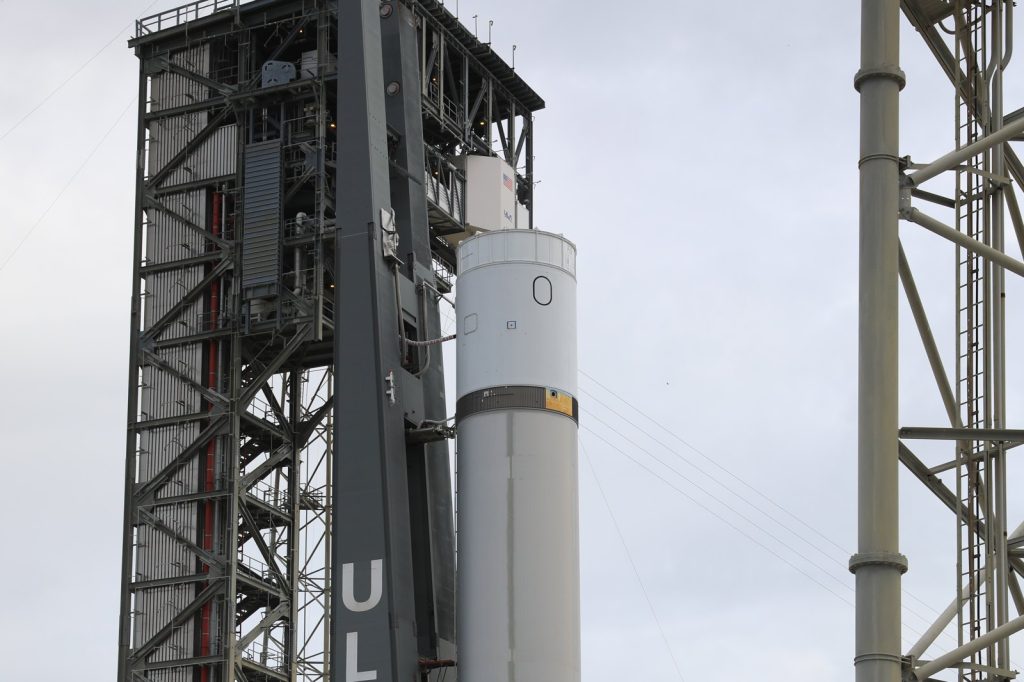
CAPE CANAVERAL, July 14 — For communities across Asia and the Pacific, the rockets that lift off from Florida’s Space Coast are more than just American hardware. They carry the satellites that beam television signals into Manila living rooms, connect farmers in rural Indonesia to weather forecasts, and link families in Bangkok with relatives overseas. United Launch Alliance, the joint venture formed by Boeing and Lockheed Martin in December 2006, has been a quiet but steady hand in this global infrastructure.
Over nearly two decades, its Atlas V and Delta IV rockets have completed more than 140 missions for the U.S. government — many of them carrying payloads that serve allies and partners across the Indo-Pacific region.
A new chapter with Vulcan Centaur
ULA’s work is now entering a new phase. The company’s newest rocket, the Vulcan Centaur, made its first flight on January 8, 2024. That launch marked a significant shift in how the company approaches spaceflight.
The Vulcan Centaur uses the BE-4 engine, built by Blue Origin, and introduces a novel approach to reusability called SMART — short for Sensible Modular Autonomous Return Technology. Instead of recovering an entire rocket booster, the SMART concept focuses on reusing just the engines.
After separation, the engines detach and deploy a heat shield and parachute, descending back to Earth for capture and refurbishment. It is a different philosophy from the full-booster landings pioneered by SpaceX, but it aims to achieve similar cost savings. ULA’s CEO, Tory Bruno, has said that the Vulcan Centaur is designed to reduce launch costs by 30% compared to the Atlas V.
For a region where every dollar counts in expanding digital access and disaster monitoring, that cost reduction could mean more launches, more satellites, and more services for communities that still lack reliable connectivity.
Competition and choice
The arrival of Vulcan comes at a time when the launch market is more competitive than ever. SpaceX, led by Elon Musk, has dramatically reshaped the industry with its reusable Falcon 9 rockets and aggressive pricing. For ULA, the response has been to innovate — not just in engineering, but in business models.
The company’s long history of national security launches gives it a unique position. These missions require extreme reliability, and ULA’s record of over 140 successful flights provides that assurance.
For governments in Asia that partner with the United States on space-based security and communications, that track record matters. Closer to home, the competition between ULA and SpaceX has a direct impact on how quickly and affordably new satellite constellations can be deployed. More launch options mean lower prices, which in turn means more capacity for projects that serve ordinary people — from precision agriculture in the Philippines to cyclone tracking in the Bay of Bengal.
What it means for people
For families across the region, the technology inside these rockets is invisible but essential. The satellites they carry enable mobile banking in remote villages, connect students in Timor-Leste to online classes, and help fishermen in Vietnam avoid dangerous weather. Every launch that succeeds strengthens this web of services.
The BE-4 engine at the heart of the Vulcan Centaur burns liquefied natural gas, a fuel that is cleaner than the kerosene used in many older rockets. That matters for communities living near launch sites and for a planet where space activities are growing rapidly.
ULA’s approach to reusability, while different from its competitors, still aims to reduce waste and lower the environmental footprint of each mission. As the company moves past its 140th mission and into the Vulcan era, the stakes are high. The rocket’s success will determine whether ULA can remain a major player in a market that is no longer dominated by a single provider.
For the millions of people across Asia who depend on space-based services, that competition is a quiet but powerful force for progress. The next few years will show whether the Vulcan Centaur can deliver on its promises.
If it does, the benefits will not stay in Florida — they will reach communities from Jakarta to Tokyo, one satellite at a time.




