
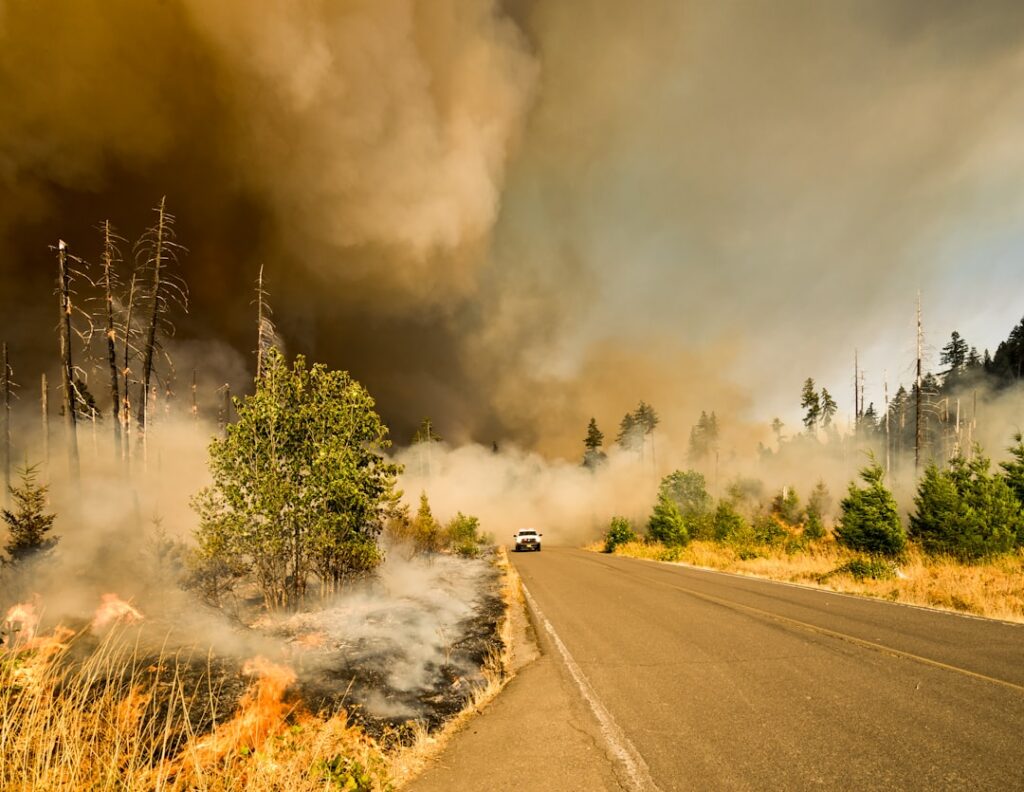
On 7 December 2025, the worst‑case scenario that Fire and Rescue NSW trains for unfolded across New South Wales and Tasmania. The infernos ripped through communities, destroying dozens of homes and resulting in the death of a firefighter.
Fire and Rescue NSW fields 6,800 professional firefighters operating from 335 stations. In a disaster of this magnitude, the agency also leans on its network of community fire unit volunteers—local residents equipped with hoses and radios who protect their own neighborhoods. While these volunteers are not career firefighters, they become indispensable when the scale of a blaze exceeds the capacity of the professional force.
Scientists studying fire seasons say the intensity of the December fires was not unexpected. Years of drought have left vegetation—grass, brush and timber—extremely dry, turning it into fast‑burning fuel. When combined with extreme weather—high temperatures, low humidity and strong winds—the result is fire behavior that can overwhelm even well‑trained crews.
The loss of a firefighter underscores the inherent danger of the job. Personnel follow strict safety protocols, receive regular briefings and have backup plans, yet none can guarantee a safe return home. Families of the fallen understand the risk, but that knowledge does not lessen the tragedy of the news.
Residents faced rapid evacuation orders, often with only minutes to gather belongings. Many were forced to leave behind photographs, heirlooms and furniture passed down through generations, taking only children, pets and the essentials with them. While containment lines have held in some sectors, shifting winds have broken others, allowing the fire to advance further.
Firefighters rotate continuously, sleeping in shifts, surviving on cold meals, and returning to the front line as soon as they are able. The current effort mirrors the response to the 2019‑2020 bushfire season, which saw millions of hectares burned, numerous fatalities and widespread property loss. The memory of that summer remains fresh, and the December blaze has revived the same grief and questions about preparedness.
Prevention remains a critical, though less visible, component of fire management. Controlled burns, firebreaks, land‑management practices and public education are designed to reduce fuel loads and mitigate future outbreaks. These measures require significant time and funding and often only attract attention when they fail.
For now, the priority is containment and protection of remaining assets. Efforts focus on keeping firefighters safe, supporting displaced families and preserving what structures are still standing. Ecological recovery will be a longer‑term concern, as burned landscapes can take years to regenerate and some species may never return.
The fireline is currently held by a combination of professional crews and community volunteers, backed by the broader emergency network. As of the latest reports, the death toll stands at one firefighter, with dozens of homes reduced to ash. The flames continue to burn, and containment work persists across the affected regions.




