
For most of 2026, the fight over who gets to vote in American elections has followed the same frustrating pattern: the House passes a voter-identification measure, and the Senate lets it die. The SAVE America Act — the Safeguard American Voter Eligibility Act, which would require proof of U.S. citizenship to register and photo identification to vote in federal elections — cleared the House earlier this year and then stalled against the Senate’s 60-vote filibuster. On September 30, the pattern repeated when a separate bill, H.R. 7008, which paired a ban on congressional stock trading with a photo voter-ID requirement, failed a Senate cloture vote 53 to 47, short of the 60 needed to advance.
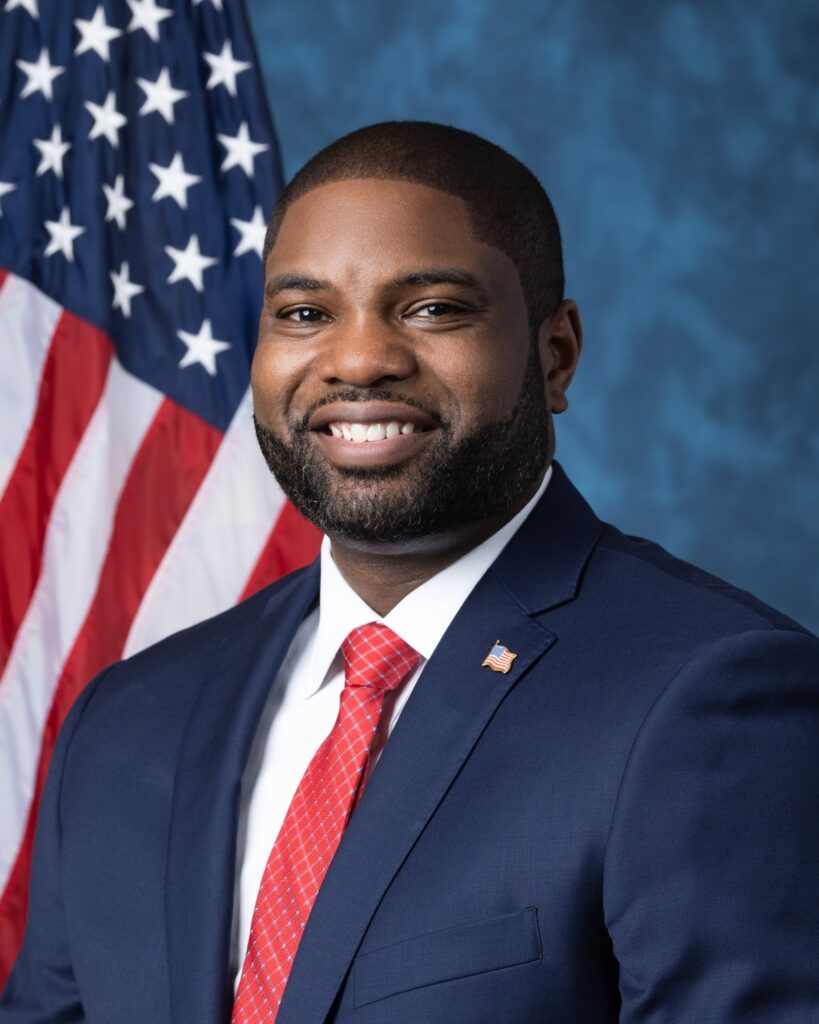
Among the loudest voices pressing the Senate to act is Representative Byron Donalds of Florida — a Republican congressman who is now his party’s nominee for governor of Florida, endorsed by President Trump, and facing Democrat David Jolly in the November 3 election. On the voter-ID fight, Donalds has been blunt, and consistently so.
Donalds in His Own Words
When the House sent its election-integrity legislation to the Senate, Donalds laid out his position plainly. “I will proudly cast my vote for the SAVE America Act to require photo ID and ensure that only U.S. citizens participate in our elections,” he said in a February 2026 statement, adding: “I have always been clear on my support for election integrity. Democrats have not.”
Months later, after the House again advanced the combined ethics-and-elections package, Donalds tied the two reforms together: “If you are elected to serve the people, your focus should be on your constituents, not your personal stock portfolio. I am proud to stand with my Republican colleagues in the House to ban congressional insider trading and secure our federal elections with common-sense, nationwide Voter ID.”
His frustration boiled over at a June 2026 Capitol Hill news conference, where he aimed his fire squarely at the upper chamber. “The Senate sucks,” Donalds said. “House members, we’re sick of it. We send it over to the Senate, and what do they do? They go to lunch. They don’t work, they don’t debate, they go to lunch.” On the substance, he has repeatedly pointed to the breadth of public support: polling, he notes, shows roughly 83 percent of Americans back voter ID — “This is not controversial. This is the global standard. This is basic election integrity.”
The Case, and the Numbers
Donalds is not wrong about the polling. Support for requiring photo identification to vote runs around 80 to 84 percent across the major surveys (Gallup has measured it at 84 percent, Pew at 83), with backing from majorities of Democrats, Republicans, and independents alike. Supporters of the SAVE Act argue that confirming citizenship and identity does not prevent any eligible American from voting — the same identification is already required to board a flight, open a bank account, or buy age-restricted goods — and that the Constitution reserves the vote for citizens.
The Minnesota Case
The debate sharpened on September 30, when the U.S. Department of Justice announced that a federal grand jury had indicted ten foreign nationals — all lawful permanent residents, or green-card holders — on charges of illegal voting and falsely claiming citizenship to register or vote in Minnesota, in connection with the 2022 and 2024 general elections and the 2026 primary. It is important to state what that is and is not: an indictment is an allegation, not a conviction, and the defendants are entitled to a defense.
It is also true that documented cases of noncitizen voting are rare — a University of St. Thomas study found only three noncitizen votes among 13.4 million ballots cast in Minnesota between 2014 and 2024, and the state’s election officials describe such voting as extremely uncommon.
Supporters of voter-ID and citizenship-verification laws, Donalds among them, argue that even rare cases are reason to tighten the system, and that verification protects public confidence in elections. Critics counter that the numbers show the problem is small and that new requirements risk burdening lawful voters. Both points can be weighed honestly; what is not in dispute is that the question keeps landing back in the Senate, which keeps declining to act.
Where It Stands
That is the heart of the stalemate. A measure that commands the support of roughly four in five Americans has passed the House more than once and has now been blocked again in the Senate, where the 47 members of the Democratic caucus have held together to deny it the 60 votes it needs. Donalds frames that as a chamber ignoring an overwhelming public consensus. His opponents frame the specific September 30 bill as a flawed vehicle. Voters are left to judge for themselves.
What is clear is that the issue is not going away. With voter ID polling near the top of the list of policies Americans agree on, the senators who keep it bottled up are making a bet that the voters will not hold it against them. As Byron Donalds and others are determined to remind those voters, the next election is the place where that bet gets settled.




