
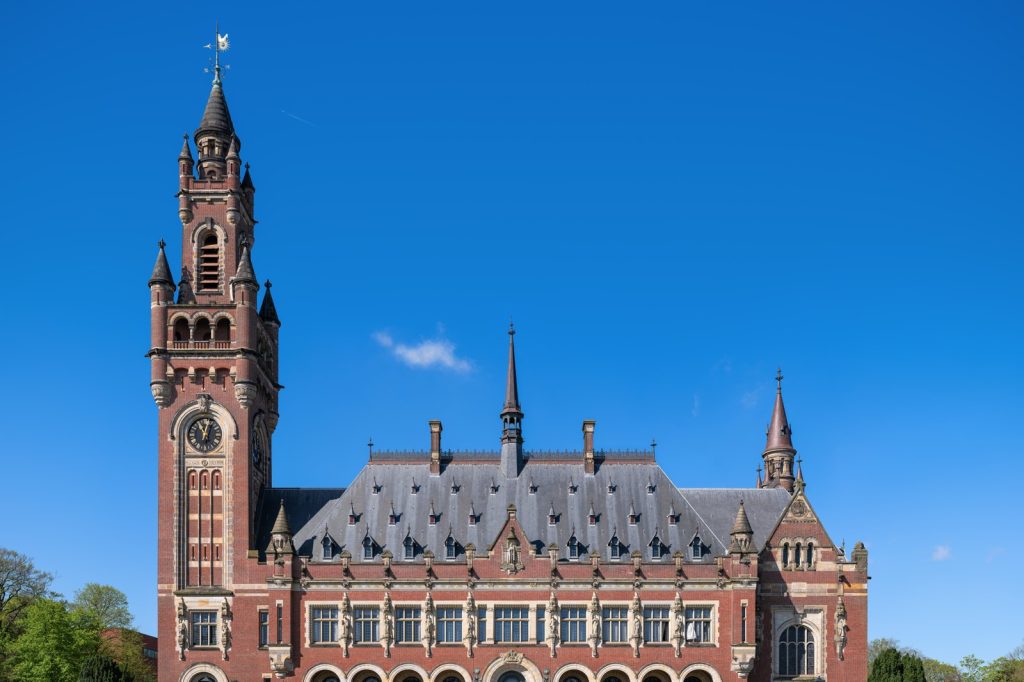
The Hague Group, a coalition established to address Israel’s actions in Gaza and the West Bank, faces a significant setback following Colombia’s withdrawal from the group. The departure, announced on October 8, 2026, leaves South Africa as the sole co-chair of the group. Colombia’s exit comes after the election of right-wing populist Abelardo de la Espriella as president.
De la Espriella, who took office less than two months prior, abolished Colombia’s support for South Africa’s case against Israel at the International Court of Justice, among other actions. The group, founded in January 2025 by Colombia, Bolivia, Honduras, Cuba, Malaysia, Namibia, Senegal, and South Africa, was established to advance international law and coordinate legal and diplomatic measures against Israel’s actions.
Guillaume Long, diplomatic advisor to the Hague Group, criticized Colombia’s withdrawal as delivering on a promise to boycott, sabotage, withdraw from multilateralism, and abandon its cause for Palestinian self-determination. The withdrawal of Colombia, Honduras, and Bolivia has left Latin America and the Caribbean without representation in the Hague Group despite the region accounting for 8.2 percent of the world’s population.
At the 81st session of the UN General Assembly in October 2026, 40 countries gathered to discuss collective enforcement of international law, highlighting a growing consensus among UN member states that attacks on international justice institutions are outrageous. As the Hague Group moves forward, attention turns to the impact of Colombia’s departure and the future of the coalition.
The group does not draft or pass new international law norms but serves as a platform for states to articulate strategies, coordinate measures, and discuss enforcement of existing international law, particularly at the domestic level.
Colombia’s Departure and its Implications
Mauricio Jaramillo Jassir, former deputy foreign minister of Colombia under Petro, warned that Colombia’s actions may breach its legal obligations under the 1948 Genocide Convention, which binds third-party states to prevent and punish genocide. The implications of Colombia’s departure are far-reaching, not only for the Hague Group but also for the international community’s collective efforts to address the ongoing conflict in the Middle East. Despite Colombia’s departure, the Hague Group remains committed to its mission.
The group’s co-chair, South African President Cyril Ramaphosa, called for comprehensive Security Council reform and strengthening of the multilateral system in a speech on inclusive global governance at the BRICS summit in Delhi on September 12, 2026. As the Hague Group navigates this challenging period, it will be essential for remaining members to remain united and focused on advancing international law and addressing the ongoing crisis in the Middle East.
The future of the coalition will be closely watched by the international community, particularly as tensions between Israel and its neighbors continue to escalate.




