
Japan’s Earthquake Legacy: How a Seismic Powerhouse Built Resilience
Japan’s earthquake warning system recently triggered a false alarm for what would have been the strongest quake in recorded history—a glitch that exposed the country’s deep reliance on precision technology to survive its volatile geography. But the incident also underscored a truth Japan has lived with for centuries: its survival depends on mastering the forces beneath its feet.
Located in the Pacific Ring of Fire, Japan sits atop four tectonic plates, making it one of the most seismically active nations on Earth. The consequences of this geology are written into its history: cities rebuilt after devastation, buildings designed to sway without collapsing, and a public trained to react in seconds. The country’s earthquake legacy is not just a record of disasters but a blueprint for how nations can turn natural threats into strengths.
For Japan, earthquakes are not a distant risk but a constant companion. The 1995 Great Hanshin earthquake in Kobe, with 6,400 deaths, forced a reckoning on building codes that still shape global construction standards today. And the 2011 Tōhoku earthquake—magnitude 9.0—triggered a tsunami that crippled the Fukushima nuclear plant, displacing hundreds of thousands and leaving scars that persist.
Each disaster has left its mark, not just in rubble but in innovation. Japan’s response has been systematic: advanced early warning systems like the Hi-net seismograph network, which detects tremors in seconds and broadcasts alerts before shaking begins. Its architecture incorporates base isolation and dampers to absorb seismic waves, while regular drills and public education ensure citizens know exactly what to do when the ground moves.
The economic and human cost of earthquakes has driven Japan to lead in seismic technology. But the lessons extend far beyond its borders. From the U.S. to China, countries with active fault lines now study Japan’s methods—its warning systems, its building standards, even its cultural preparedness. The question is no longer whether Japan will face another major quake, but how its solutions will shape the world’s next generation of disaster resilience.
—
A Nation Built on Shifting Ground
Japan’s earthquake history begins with its geography. The archipelago straddles the boundary of the Eurasian, Pacific, Philippine Sea, and North American plates, where collisions and slippage create frequent tremors.
But it was the 1923 Great Kantō earthquake—magnitude 7.9—that became a turning point. The quake exposed vulnerabilities in urban planning and emergency response, lessons that would later inform Japan’s modern disaster strategies.
Decades later, the 1995 Great Hanshin earthquake in Kobe—magnitude 6.9—proved that even a moderate quake could devastate a major city. Over 6,400 people died, and the collapse of elevated highways and older buildings revealed flaws in construction standards. In response, Japan tightened building codes, mandating stricter seismic resistance in new structures. The changes were so effective that when the 2011 Tōhoku earthquake struck—one of the strongest ever recorded—modern buildings in Tokyo swayed but stood.
The 2011 disaster, however, brought a new challenge: the tsunami and subsequent nuclear crisis at Fukushima. The triple threat—earthquake, wave, and meltdown—forced Japan to rethink its energy policies and coastal defenses. Today, seawalls and tsunami-resistant infrastructure are standard along vulnerable coastlines, while nuclear safety regulations have been overhauled.
Each quake has not only tested Japan’s resilience but also refined it. The country’s ability to recover quickly—rebuilding ports, restoring power, and relocating displaced populations—has become a model for post-disaster management. The economic cost of these events is staggering, but the long-term investment in preparedness has paid off in saved lives and reduced damage.
—
Technology That Saves Seconds
Japan’s approach to earthquake preparedness is rooted in technology. When a quake begins, the system calculates its epicenter and magnitude within seconds, then broadcasts warnings via television, radio, and smartphone apps.
The early warning system has saved countless lives. In 2011, the Tōhoku earthquake’s tsunami struck minutes after the quake, but the warning gave coastal communities critical seconds to evacuate. Studies show that even a few seconds of advance notice can reduce casualties by up to 30% in urban areas. The system is now being adopted by countries like Mexico and Turkey, where seismic risks are similarly high.
Beyond warnings, Japan’s buildings are designed to absorb, rather than resist, seismic forces. Techniques like base isolation—where a building’s foundation is decoupled from its structure—allow skyscrapers to sway without collapsing. Dampers, which dissipate energy, are standard in modern construction. The results are visible in cities like Tokyo, where high-rises remain intact even during strong tremors.
But technology alone cannot prevent disasters. Japan also invests heavily in public education. Schools conduct drills monthly, teaching children to “drop, cover, and hold on” during an earthquake. Workplaces and public spaces have emergency plans, and citizens carry disaster kits with food, water, and first-aid supplies. The culture of preparedness is ingrained—because in Japan, the question is not *if* an earthquake will strike, but *when*.
The economic impact of these measures is clear. For businesses, the cost of retrofitting buildings and training employees is outweighed by the protection it provides. Insurance premiums reflect the reduced risk, and global investors take note: Japan’s ability to mitigate seismic threats makes it a more stable market in a volatile region.
—
Global Lessons from Japan’s Earthquake Playbook
Japan’s earthquake history is not just its own story—it is a case study for the world. Countries with active fault lines, from California to Indonesia, now look to Japan’s models for early warning systems, building codes, and disaster response. The 1995 Kobe earthquake, for instance, led to stricter seismic regulations in the U.S., while the 2011 Tōhoku disaster influenced tsunami preparedness in Chile and the Philippines.
The economic stakes are high. Japan’s investments in resilience—from reinforced infrastructure to public drills—have reduced its average annual losses to around $10 billion, a fraction of what less-prepared nations face. For businesses operating in seismic zones, Japan’s approach offers a template: prevention is cheaper than recovery.
Culturally, Japan’s relationship with earthquakes is unique. Rather than fear, there is acceptance—even a sense of shared experience. The country’s art, literature, and festivals often reference seismic events, turning disasters into part of its national identity. This psychological resilience is as important as the physical preparations. When a false alarm recently warned of Japan’s “strongest ever” earthquake, the public reacted with practiced calm, a testament to decades of training.
The global influence of Japan’s earthquake strategies is growing. The United Nations has cited Japan’s early warning system as a best practice, and international aid organizations now recommend its disaster management techniques. Even in less seismic regions, the principles—redundant infrastructure, public education, and rapid response—are being adopted.
Yet Japan’s challenges are not over. Aging infrastructure, a shrinking workforce, and the threat of future megathrust earthquakes along its coasts remain concerns. But the country’s ability to innovate in the face of disaster ensures that its lessons will continue to shape how the world prepares for the next big shake.
For nations watching, Japan’s earthquake history is more than a record of tragedy—it is proof that even the most powerful natural forces can be met with ingenuity, discipline, and foresight.
Sources
- Japan
- Disney Imagination Revealed as the First Disney Cruise Ship to Sail from Japan
- US forces launch Japan patrols to "reduce Risk" after Marine murder arrest
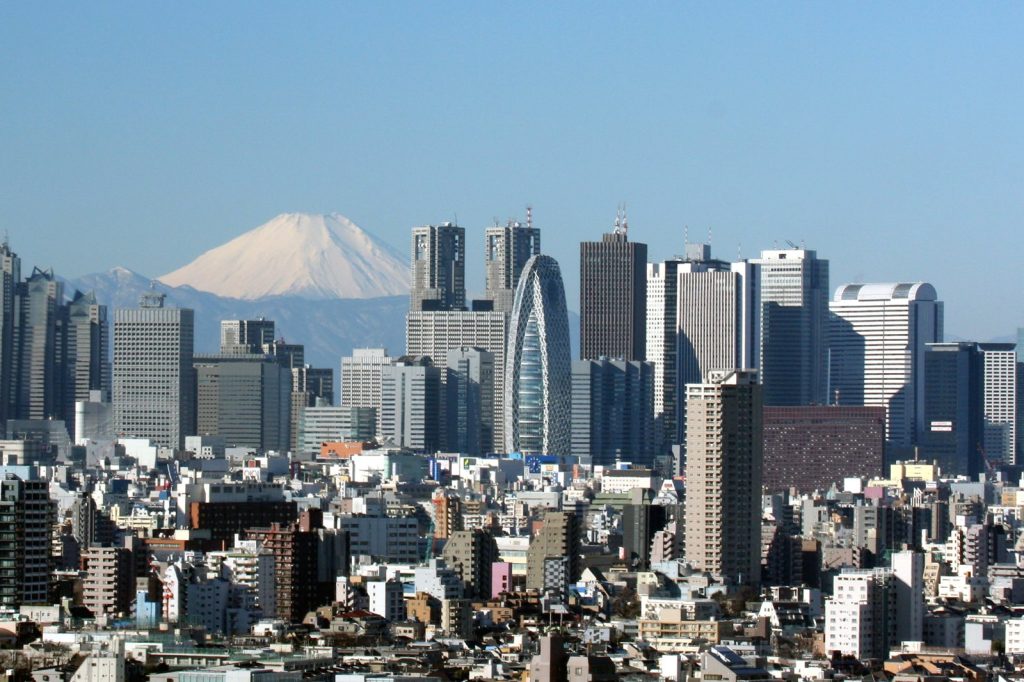
Photo: User:yukichi99 (CC BY-SA 3.0)




