
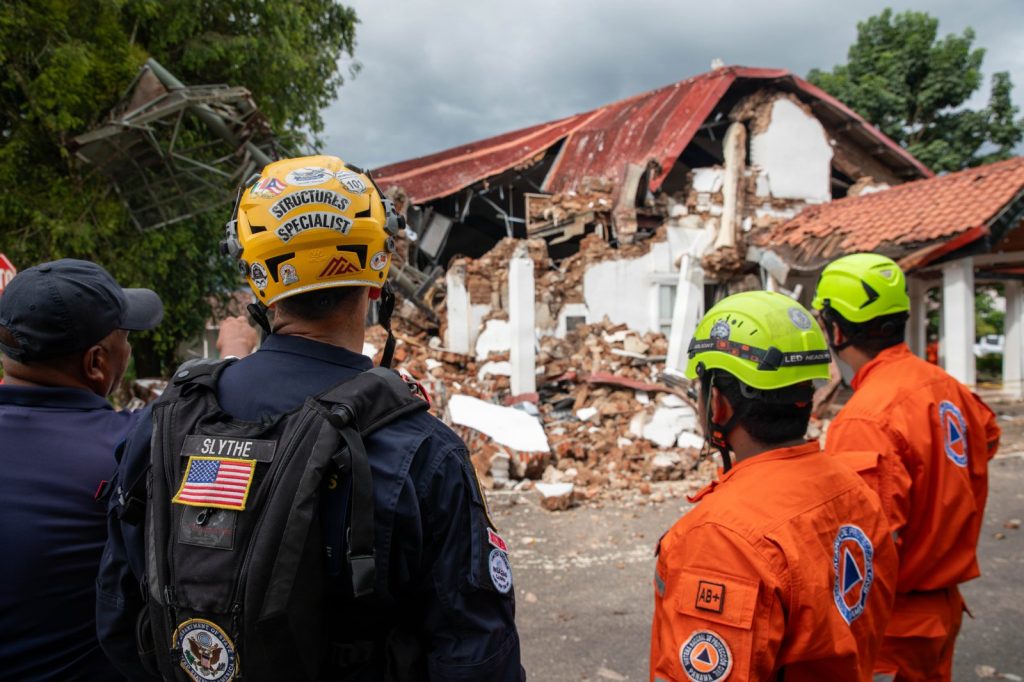
How Panama’s Aftershocks Reshape Infrastructure and Risk Future Rebuilding in Central America
PANAMA CITY, October 17, 2026 — The 746 aftershocks following Panama’s 7.5-magnitude earthquake have exposed a seismic paradox: the longer tremors linger, the more costly and uncertain recovery becomes. For Central America, where trade routes, energy grids, and migration corridors cross fault lines, the quake’s lingering effects are forcing a reckoning over how to rebuild—and whether the region’s fragmented approach to disaster resilience can survive another shock.
The economic stakes are clear. Panama’s Pacific coast, home to ports, pipelines, and the Darién Gap’s migrant routes, sits atop the Cocos Plate subduction zone, a hotspot where tectonic plates grind together at shallow depths. The October 9 quake struck less than 10 kilometers below the surface, amplifying ground shaking and coastal vulnerability. Now, scientists predict aftershocks could persist for another month as tectonic blocks adjust, delaying infrastructure repairs and forcing engineers to account for ongoing seismic activity.
For neighboring countries, the ripple effects are just as tangible. Costa Rica’s 2021 World Trade Organization dispute with Panama over agricultural trade—still unresolved—has already strained regional cooperation. Now, a power-sharing standoff between presidents José Raúl Mulino of Panama and Laura Fernández of Costa Rica has halted electricity exports, exposing how disasters can fracture interdependent systems. Meanwhile, Colombia’s Darién border region, shared with Panama, lacks seismic monitoring, leaving critical infrastructure and migrant paths exposed to secondary hazards like landslides.
—
The Cost of Waiting: Why Aftershocks Derail Recovery
Time is money in seismic zones, and Panama’s aftershock cluster is proving that. The University of Panama’s Institute of Geosciences estimates that strengthening the country’s seismic monitoring network would require 150 new instruments—a fraction of the 700 sensors needed for a nationwide early-warning system. But even basic monitoring is delayed while engineers assess whether land uplift, receding shorelines, and grayish coastal waters signal new fault movements.
Residents of Isla Canas in Los Santos province reported the island may have split due to fractures, a claim geologists will investigate. If confirmed, it would suggest the quake’s fault system extends farther than initially mapped, complicating rebuilding plans. The Institute’s director, Nestor Luque, noted that aftershocks typically weaken over time, but unpredictable surges can derail timelines. Historical patterns show gradual magnitude decline, yet secondary hazards—liquefaction, landslides—often emerge as the ground continues to shift.
For contractors and insurers, the uncertainty translates to higher costs. Seismic-resistant construction—reinforced foundations, flexible pipelines—requires upfront investments that may not pay off if aftershocks subside sooner than expected. Panama’s Institute of Geosciences has not yet quantified the economic drag, but delays in repairing ports, roads, and energy infrastructure will ripple through Central America’s supply chains. The region’s lack of unified seismic standards means each country adapts independently, increasing fragmentation risks.
Costa Rica’s licensed taxi fleet has already shrunk by nearly half since Uber arrived in 2015, a cautionary tale about how unregulated competition can erode public services. Now, with seismic recovery demanding coordination, the region’s patchwork approach—where Panama, Costa Rica, and Colombia operate under different building codes and disaster protocols—could leave gaps in critical infrastructure. The Darién Gap, a no-man’s-land for migrants and smugglers, is particularly vulnerable, with no seismic monitors in place to assess risks to roads, bridges, or water supplies.
—
Coastal Changes Force a Rethink of Infrastructure Siting
The Pacific coast’s transformation is rewriting the rules for where and how to build. Exposed rocks, receding shorelines, and discolored water—reported by residents from Chiriquí to Bocas del Toro—suggest fault movements or mineral upwellings triggered by the quake. Luque of the Institute of Geosciences said chemical tests are needed to confirm whether underground water mixed with minerals released during the tremor.
For ports and pipelines, the implications are immediate. Land uplift or subsidence can alter drainage patterns, increasing flood risks. The Panama Canal Authority has not yet commented on adjustments, but any shift in coastal topography could require rerouting pipelines or reinforcing docks. The Darién’s mangrove forests, already stressed by climate shifts, may face additional strain if seismic activity destabilizes sediment.
Geologists will examine whether Isla Canas’s reported fractures reached the sea, a sign the quake’s impact extends beyond initial estimates. If the island’s split is confirmed, it could force a reassessment of coastal development zones. Panama’s Pacific provinces—Chiriquí, Veraguas, and Los Santos—are already high-risk areas, but the quake has revealed how little is known about secondary fault lines. Without updated geological maps, future infrastructure projects risk overlooking hidden dangers.
The economic cost of misjudging these risks is clear. A 2023 study by the Inter-American Development Bank estimated that Central American countries lose an average of 2% of GDP annually to disaster-related disruptions. For Panama, where the Canal accounts for nearly 5% of GDP, even minor delays in port repairs could dent trade flows. The region’s reliance on U.S. and Chinese investors for reconstruction funds adds another layer of pressure: donors will prioritize projects with clear seismic safety guarantees.
—
Regional Tensions Undermine Shared Resilience Efforts
Central America’s seismic risks are shared, but its response is not. The 266-kilometer border Panama shares with Colombia is a case in point: while presidents Mulino and Abelardo de la Espriella claim a “very good relationship,” the Darién Gap remains a monitoring blind spot. Colombia’s foreign ministry has not addressed seismic vulnerabilities in the region, leaving migrant routes and critical infrastructure exposed.
Costa Rica’s trade dispute with Panama—centered on strawberry, dairy, and meat bans—has already diverted political attention from disaster preparedness. The World Trade Organization’s 2024 ruling against Panama’s agricultural restrictions remains unresolved, and commerce minister Julio Moltó has signaled no willingness to back down. Meanwhile, Fernández of Costa Rica has vowed to press ahead, framing the standoff as a matter of national sovereignty. The electricity grid conflict, where Panama has halted power exports, shows how easily disasters can exacerbate preexisting tensions.
The lack of a unified seismic strategy is costly. Panama’s early-warning system would require 700 sensors, a figure that dwarfs the 150 monitors proposed for basic seismic monitoring. Without cross-border coordination, neighboring countries risk duplicating efforts or leaving gaps. Costa Rica’s 2021 WTO case highlights how trade disputes can overshadow regional cooperation—especially when both nations face overlapping seismic threats from the same fault systems.
For investors, the message is clear: Central America’s disaster resilience is only as strong as its weakest link. The Darién Gap’s lack of monitoring is a warning sign. If another major quake strikes, the region’s fragmented approach could leave ports, power grids, and trade routes vulnerable. The economic fallout would extend beyond borders, affecting global supply chains that rely on Panama’s Canal and Costa Rica’s agricultural exports.
—
The Long-Term Trade-Off: Aid vs. Seismic-Resistant Rebuilding
The choice facing Panama and its neighbors is stark: prioritize short-term aid to repair damaged infrastructure, or invest in seismic-resistant rebuilding that will cost more upfront but save lives and money in the long run. Data shows that reinforced foundations and flexible pipelines reduce damage during earthquakes, but the higher initial costs can deter governments and donors.
Panama’s Institute of Geosciences has not yet outlined a funding plan for the proposed 150 seismic monitors, but the delay in deploying them reflects a broader regional challenge: balancing immediate recovery needs with long-term resilience. The World Bank and Inter-American Development Bank have historically funded post-disaster reconstruction, but their support often comes with strings attached—such as adopting standardized building codes or improving early-warning systems.
For Central America, the trade-off is especially acute. The region’s reliance on U.S. and Chinese aid means seismic projects must compete with other priorities, from migration control to infrastructure megaprojects. The Darién Gap’s lack of monitoring is a symptom of this fragmentation: without clear ownership of the region’s risks, no single government is incentivized to invest.
Yet the economic case for resilience is undeniable. A 2022 study by the Global Facility for Disaster Reduction and Recovery estimated that every dollar spent on earthquake-resistant construction saves $4 in potential damages. For Panama, where the Pacific coast is a seismic hotspot, the math is simple: the longer aftershocks persist, the higher the cost of rebuilding without accounting for future shocks.
The question now is whether Central America’s leaders will treat seismic resilience as an investment—or another item on a growing list of deferred priorities. The answer will determine whether the region’s infrastructure can withstand the next tremor, or if the next disaster will come with an even higher price tag.
Sources
- Panama and Its Neighbours in Central America
- Costa Rica's Licensed Taxi Fleet Has Shrunk by Nearly Half Since Uber Arrived
- Panama records 746 aftershocks following magnitude 7.5 earthquake
Photo: Michael Mulford / Unsplash (Unsplash License)




