
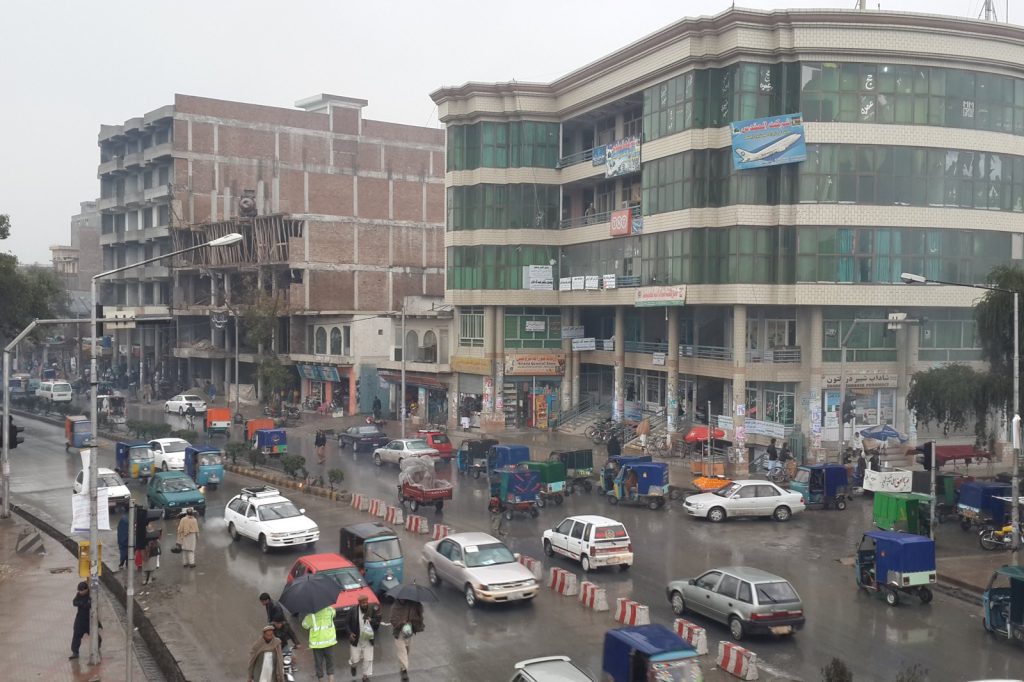
JALALABAD, Afghanistan — At least 610 people lost their lives on August 31, 2025. That day, a powerful 6.0-magnitude earthquake shook the eastern Afghanistan city of Jalalabad, injuring 1,300 more. Response teams continue to comb through debris in the densely populated city, which is home to roughly 318,733 residents.
The crumbling disaster has struck at the heart of this historic city known by past names such as Tarunshahr, Nagarahara and Adinapur. The tremors brought havoc with few areas left untouched. Today, under Mayor Qari Bismellah Bilal and Deputy Mayor Mohammad Ishaq Saeed, Jalalabad has been growing, with initiatives including industrial parks, thriving markets and new business districts. Now all these hard-earned developmental strides are endangered by the earthquake.
Educational institutions like Nangarhar University and transport infrastructures, such as Jalalabad Airport, form the lifelines of this urban center. These have also faced extensive damage, adding to the woes of rescue workers scrambling to manage the crisis.
Hospitals, already dealing with the daily needs of the population, are now additionally burdened with a sudden influx of injured, making a dire situation even more critical. The extensive destruction is not limited to these critical facilities. Damage has also been reported in key community spaces, such as mosques, universities, and public parks across Jalalabad, a city whose economic power and connectivity to surrounding regions have been severely shaken.
As authorities work to assess the full scale of the calamity, the city’s ability to receive aid is hinged on the maintenance and strengthening of its links with nearby districts. Efficient movement of assistance into the area is essential and will hinge on these connections.
The expectation is high that the international community will extend substantial support, and the need is indeed great. As the daunting task of rebuilding begins, integrating renewable energy sources and cutting waste will be key long-term goals. These measures not only have the potential to lower costs but will contribute to the city’s energy security, both for residents and businesses.
The road to recovery may be long, but the resilience of the residents, who are grappling with this disaster, will undoubtedly form the bedrock of the rebuilding efforts. The international aid that is expected to pour in will be vital to getting Jalalabad back on its feet after this devastating earthquake.
Background and why it matters
Afghanistan is a landlocked nation situated where Central and South Asia meet. The country contains a mountainous interior divided by the Hindu Kush range.
Human habitation in the region dates to the Middle Paleolithic era. The land saw military campaigns by Persians, Mongols, and the British. It also hosted the Soviet Union and a United States-led coalition. These various conquests made the area a center for Buddhism, Hinduism, Zoroastrianism, and Islam. The modern state began in the 18th century. After several wars with Britain, the country emerged as an independent kingdom in 1926.
Instability increased in 1973 when a coup ended the monarchy. A communist revolution followed in 1978. Since then, the country has faced a long series of invasions, civil wars, and insurgencies. This history of conflict has left the nation fragile.
Natural disasters now strike a population already weakened by decades of war. Recovery efforts depend on a state infrastructure that has faced constant disruption. The ability to manage such crises affects the stability of the entire region.




