
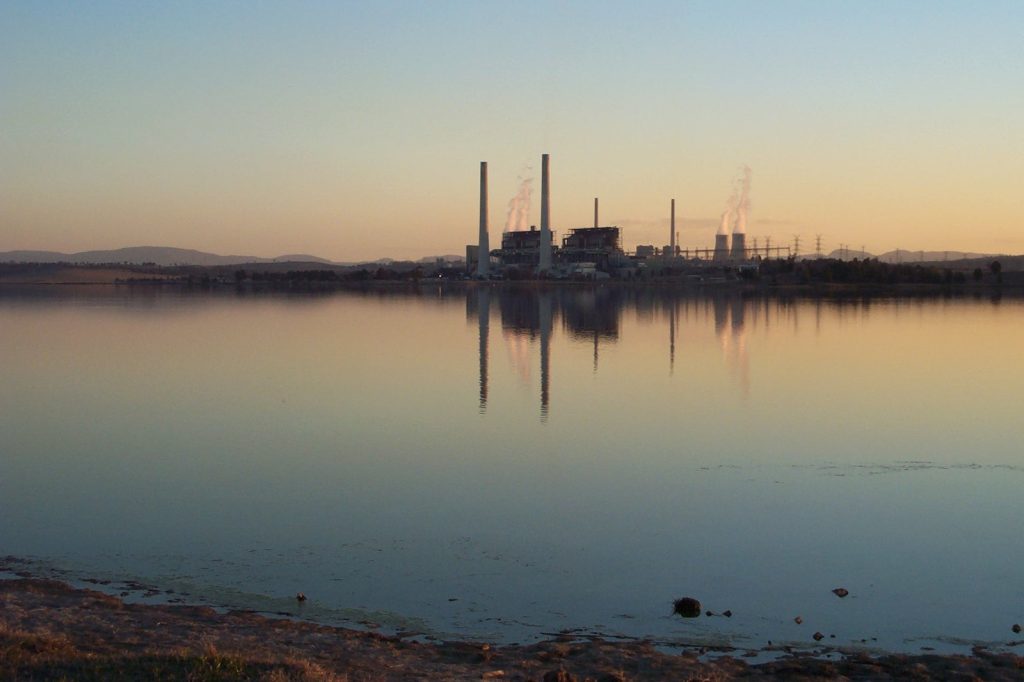
Hundreds of small charges, packed into holes drilled around the base of each chimney, did the job in seconds. On Tuesday AGL set them off, and the two concrete stacks at Liddell power station, each 168 metres tall, came down in the direction planned for them.
Liddell stands near Muswellbrook in the Upper Hunter. For more than half a century it burned coal to supply New South Wales. It closed in April 2023, and AGL, the owner, said the aged plant had become unreliable and was breaking down without warning.
Matthew Currie, AGL’s chief operations officer, said the demolition went off safely. Crews cut away a section at the foot of each stack so it would topple on a set line.
“We know that the Liddell power station holds deep significance for the local community, employees and families, who worked at or were connected to the site,” Currie said. “The demolition was not just a technical event, but an opportunity to acknowledge its important legacy.”
What replaces the coal
Currie said clearing the stacks frees the land for new uses that could bring jobs and regional growth. AGL has marked the site as one of its lower-carbon “energy hubs”, places where former coal sites can offer land, water and a grid connection to new industries. A 500-megawatt battery with two hours of storage started operating there earlier this year. An eight-hour pumped hydro project is planned close by.
“The demolition will pave the way for the continued transformation of the site,” Currie said.
The wider picture for coal
Coal has carried Australia’s electricity market for decades, but its remaining years are limited. Over half of the coal generators still running on the eastern seaboard are due to close by 2035, as ageing, high-emission units lose ground to cheaper renewables.
AGL has pulled forward the retirement of its last two coal stations. Bayswater in New South Wales will shut no later than 2033. Loy Yang A in Victoria was moved up by as much as 10 years, to 2035. The company’s own build target is 12 gigawatts of backed-up renewables over the decade.
There are early signs of relief on bills. Renewables and batteries supplied more than 50 per cent of the main national grid over the past six months, a first. The Australian Energy Regulator said on Tuesday that this had helped push wholesale electricity costs sharply lower, and that households and businesses would see the benefit in retail bills from July.
The rollout still trails what experts say is needed to cover further coal closures without risking price spikes or blackouts. Wind, solar and transmission projects have hit years-long permitting delays, rising construction costs and equipment shortages. Rural and regional communities have pushed back too, worried about farming, property values and the environment. The Australian Energy Market Operator and industry leaders say investment must lift quickly.
“Australia is at a pivotal moment,” said Jackie Trad, chief executive of the Clean Energy Council, which represents renewable energy builders and investors. “Concerted action from all stakeholders is required, and it is required now.”




