
Artemis II Sets New Deep‑Distance Mark While Testing Orion’s Core Systems
The four astronauts flying on Artemis II have moved farther from Earth than any humans before them, reaching a peak separation of 406,778 kilometres on June 9. While the number itself draws attention, NASA officials stress that the true purpose of the flight is to demonstrate that the Orion spacecraft can operate reliably in the deep‑space environment that future lunar missions will encounter.
This distance surpasses the previous record of 400,171 kilometres established by the Apollo 13 crew in 1970. The Apollo 13 mark was set under emergency conditions after an oxygen‑tank explosion forced the crew to loop around the Moon to return home. In contrast, the Artemis II achievement was obtained by design, with the capsule deliberately sent to its farthest point before beginning the return leg. During the roughly ten‑day mission, which follows a lunar‑loop trajectory without a landing, the crew has been exercising the spacecraft’s systems where they matter most—far from Earth’s protective magnetosphere.
Navigation performance, communication links, and the heat shield that must survive re‑entry are all under scrutiny. None of these functions can be fully validated in low Earth orbit; deep‑space exposure is required to reveal how they behave.
The data collected will directly inform the next phase of the Artemis program, a crewed lunar landing that remains uncrewed at present. Engineers need to know whether Orion’s navigation drifts, whether communications experience latency or dropouts, and how the heat shield performs under realistic re‑entry profiles before committing astronauts to a surface mission. The Artemis II crew is actively running those checks.
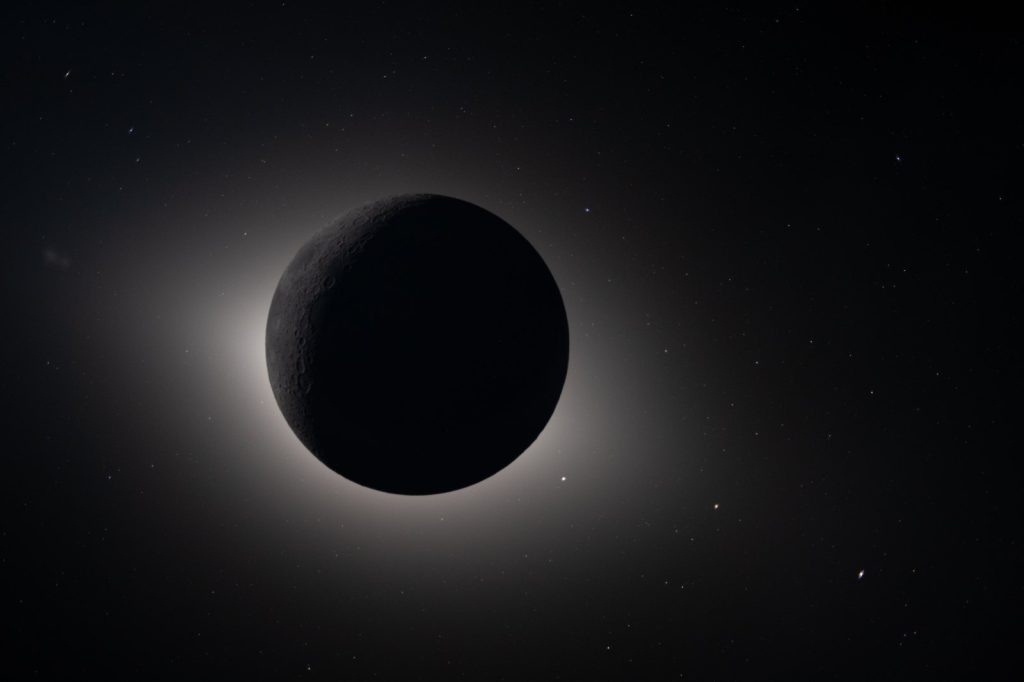
An additional scientific by‑product of the flight is the first ever capture of a total lunar eclipse viewed from the far side of the Moon by a crewed spacecraft. The imagery provides a perspective never seen by human eyes and offers a valuable data set, while also underscoring that human‑operated cameras have returned to a region not visited since the Apollo era.
The Apollo program ended in 1972, leaving a gap of 52 years during which no human ventured beyond low Earth orbit. Artemis II’s record breaks that hiatus in a concrete, measurable way. NASA officials describe the milestone as a symbolic reminder that exploration is once again pushing past the boundaries set half a century ago, but they emphasize that the practical work underway is what truly matters.
The Artemis initiative is not focused on a single flight; it aims to build a lasting capability to place humans on the Moon and, eventually, to support missions toward Mars. Every system test performed on this mission contributes to that long‑term goal.
Heat‑shielding results will shape future re‑entry trajectories, navigation checks will refine the flight software for landings, and communication tests will reveal where improvements are needed. Although the mission spans only about ten days and the crew is already on its return path, the effort does not end at splashdown. NASA analysts are already reviewing the results and looking ahead to the next steps in human spaceflight planning, with the ultimate goal of a crewed lunar landing.
The distance record serves as a marker along the road rather than the destination itself. For the four astronauts aboard, the achievement becomes a line in the history books.
For the engineers and controllers monitoring from the ground, it represents confirmation that the hardware functions as required in the environment where it will be needed. That validation is the real consequence of Artemis II, and the subsequent mission will have to travel even farther.




