
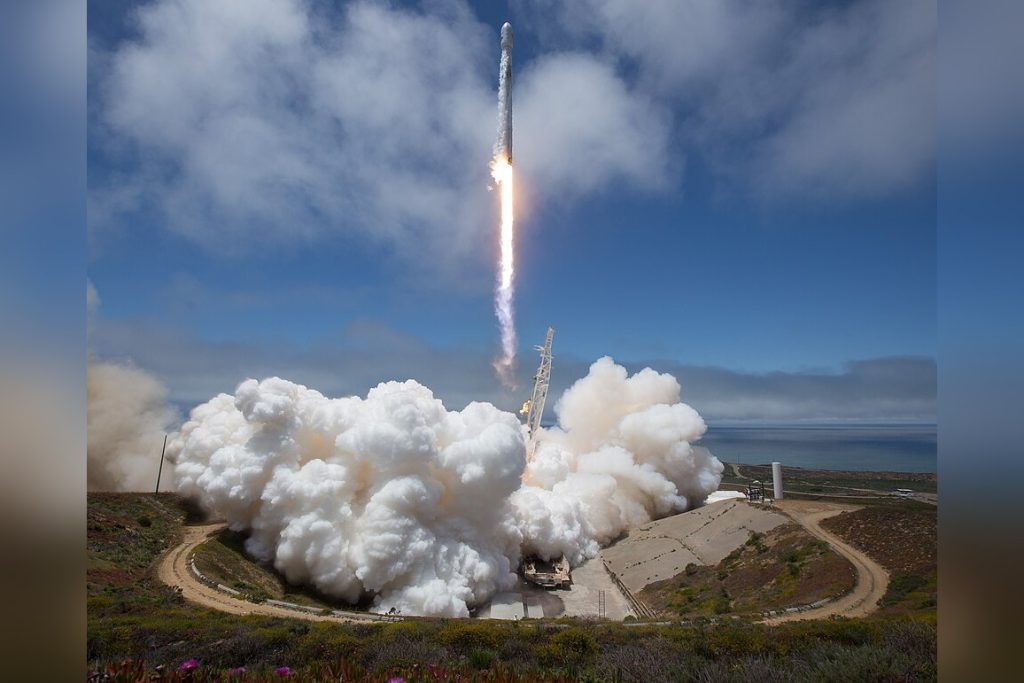
ROME, July 8 — Against this backdrop of a rapidly crowding celestial sphere, the race to build vast satellite constellations is no longer the preserve of a single American company. While SpaceX’s Starlink has captured the public imagination, a new generation of competitors — from Amazon to Beijing — is quietly assembling the infrastructure for a future in which low Earth orbit is transformed into a global communications grid. The scale of what is at stake is staggering.
Industry estimates project that the total number of satellites in low Earth orbit could exceed 100,000 by 2030 if all planned constellations are built. That figure, if realised, would represent a multiplication of the current orbital population by an order of magnitude.
Yet for all the ambition, one question remains conspicuously unanswered: what happens when these thousands of machines reach the end of their lives? Amazon’s Project Kuiper received approval from the US Federal Communications Commission in 2020 to deploy 3,236 satellites in low Earth orbit. The company has signalled plans to begin launches in 2025 and aims to have half of its constellation operational by 2026.
It is a deliberate, phased approach — but one that still commits to periodic replacement of every satellite in the fleet. OneWeb, the British company backed by the UK government and Bharti Global, has already deployed 648 satellites in low Earth orbit as of 2024.
Its service is operational in northern latitudes, offering connectivity to regions that have long been underserved by terrestrial infrastructure. OneWeb’s constellation is smaller than its American rivals, but it represents a significant European stake in the new orbital economy. The wider picture, however, extends far beyond the Atlantic.
China is planning its own megaconstellation, known as Guowang, which would consist of over 13,000 satellites. Initial launches are expected in 2025. For Beijing, this is not merely a commercial venture; it is a strategic play for control over the data and communications architecture of the 21st century.
The European Union, meanwhile, is developing the IRIS² constellation. Approved in 2024, this multi-orbit network of 290 satellites is designed to provide secure connectivity for governments and critical infrastructure.
It is a modest number by the standards of Starlink or Guowang, but it reflects a distinctly European approach: smaller, more targeted, and focused on institutional rather than consumer markets. All these constellations share a common and largely unexamined problem. Every satellite in low Earth orbit has a finite operational life.
When it ends, the satellite must be deorbited — guided to burn up in the atmosphere. The cumulative environmental impact of deorbiting tens of thousands of satellites each year has not been formally assessed by any government agency.
That fact, buried in the fine print of a dozen regulatory filings, is the quiet anxiety haunting this entire enterprise. The mechanics of reentry are brutal. A satellite plunging from orbit at speeds of several kilometres per second encounters atmospheric friction that vaporises most of its structure.
The resulting particles — aluminium oxides, other metal compounds, and assorted debris — are deposited in the upper atmosphere. What these particles do once they are there, how they interact with the ozone layer, and whether they alter the chemistry of the stratosphere are questions that remain unanswered. In the corridors of space agencies and environmental ministries, the absence of a formal assessment is beginning to attract attention.
The European Space Agency has long warned about the risks of orbital debris, but the focus has been on collision hazards rather than atmospheric pollution. The distinction matters: one is a problem for spacecraft, the other for the planet’s atmosphere.
The periodic replacement requirement compounds the issue. A constellation of 10,000 satellites with a five-year design life would require the deorbiting of 2,000 satellites every year, year after year. Multiply that across all the planned constellations — Starlink, Kuiper, Guowang, OneWeb, IRIS² — and the annual burn-up rate could reach tens of thousands of satellites within a decade.
Against this backdrop, the regulatory frameworks that govern these constellations appear strikingly incomplete. The FCC approved Project Kuiper in 2020 without requiring an environmental impact statement for the constellation’s end-of-life phase.
The UK government backed OneWeb without a public assessment of the atmospheric consequences of its deorbiting plan. The European Union approved IRIS² without commissioning a study on the cumulative effects of reentry pollution across all constellations. What is at stake is not just the viability of satellite internet, but the integrity of the environment through which these satellites travel.
The upper atmosphere is a delicate system, and the introduction of millions of kilograms of vaporised metal each year may have consequences that are not yet understood. The wider picture, then, is one of extraordinary technological ambition shadowed by a regulatory and scientific gap. The constellations are being built.
The satellites are being launched. The deorbit plans are being filed.
But the question of what all this burning metal does to the atmosphere remains, for now, unanswered. Looking forward, the next few years will be decisive. If the planned launch schedules hold, 2025 will see the first Kuiper and Guowang satellites reach orbit, adding to the thousands already in place.
By 2026, when half of Project Kuiper is meant to be operational, the pace of deorbiting will begin to accelerate. And by 2030, if the industry estimates prove accurate, the number of satellites in low Earth orbit will have passed the 100,000 mark.




