
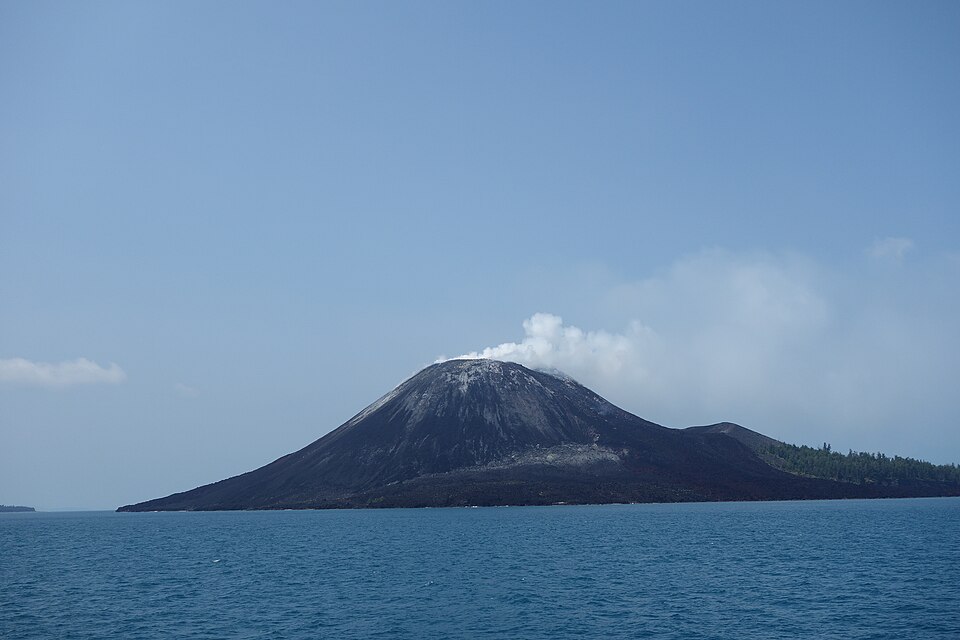
Anak Krakatau spent more than 24 hours in continuous explosive eruption in early September 2026. The blast sent gas and ash high into the sky, disrupted thousands of flights and fouled the air in parts of Indonesia, Jakarta included.
Anak Krakatau is a small volcano in the strait between Java and Sumatra. It erupts regularly, and most of the time the activity is mild. Now and then it turns violent.
Ash to 15,000 meters
NASA satellites caught the eruption on September 5. One image from the Landsat 8 satellite shows a white plume of volcanic gas rising over a brown ash cloud. A wider view from the Suomi NPP satellite shows the material spreading across a large area.
By September 6, Indonesia’s meteorological agency said, ash had reached 6,000 meters (20,000 feet) to the east of the volcano and 15,000 meters (50,000 feet) to the west. Eight airports on Java and Sumatra closed temporarily. News reports put the number of disrupted flights at nearly 3,000.
Ashfall in Jakarta
The Indonesian Humanitarian Coordination Platform reported that ash fell on populated areas, mainly east of the volcano in Jakarta and other parts of West Java. Volcanic ash can irritate the respiratory tract, eyes and skin. The platform noted that it is a different hazard from the smoke of peatland fires elsewhere in the country, with different particles, dispersal patterns and protection measures.
The continuous eruption eased on September 6, though the volcano kept rumbling. It went back to Strombolian activity, intermittent spurts of ash and volcanic material. Airports had reopened by September 8. Anak Krakatau stayed at the second-highest alert level on the national scale, where it has been since early July.




