
China plans to launch two spacecraft toward Mars in 2028 and bring back at least 500 grams of the planet’s surface. If Tianwen-3 works, it would be the first Mars sample return in history.
A September 9 article in Space carried the headline “China on track to launch Mars sample-return mission in 2028: ‘If accurate, this represents a Sputnik moment.’” Samples are due back on Earth by 2031.
Two launches, two spacecraft
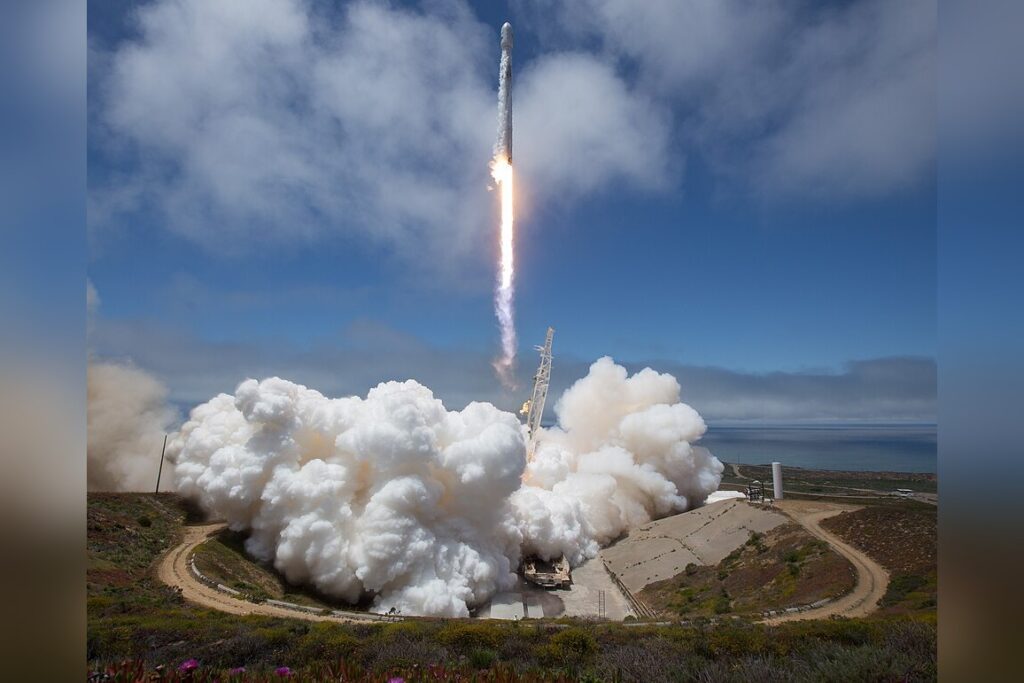
The China National Space Administration (CNSA) has planned the mission around two vehicles: an orbiter that will also carry the samples home, and a lander paired with an ascent vehicle. Each goes up on its own Long March 5 rocket from the Wenchang Space Launch Site. The target is the December 2028 to January 2029 Mars launch window. The design echoes China’s lunar sample missions, Chang’e 5 and Chang’e 6.
On Mars, the lander will gather surface material with a drill and possibly with a multi-legged autonomous robot. After several months it will store the samples, and the ascent vehicle will lift off from the lander’s top and meet the waiting orbiter. The orbiter then heads for Earth, and the samples come down in a reentry vehicle. Early plans also mentioned a helicopter and a crawling robot, but neither has been confirmed.
What it is looking for
Scientists want to study the Martian atmosphere and geology and look for biosignatures that would point to past life. In 2024 researchers identified 51 candidate landing sites that fit the mission’s engineering limits: 1 in Amazonis Planitia, 12 in Utopia Planitia, and 38 in Chryse Planitia or Arabia Terra. The mission includes measures to prevent forward contamination.
On March 11, 2025, CNSA opened the mission to international partners. Teams could propose piggyback payloads or independent instruments, with 15 kilograms of mass set aside on the Earth-return spacecraft and 5 more on the Mars orbiter. Proposals were due by June 30, 2025, final selection was targeted for October 2025, and hardware for chosen payloads is to be delivered in 2027.
Track record and rivals
Tianwen-3 will be China’s third Mars mission. The first, the Yinghuo-1 orbiter in 2011, failed. Tianwen-1, an orbiter, lander and rover, has been successful since 2020. Sun Zezhou, chief designer of Tianwen-1, laid out the two-launch plan at a deep space exploration forum at Nanjing University in summer 2022.
The NASA and European Space Agency Mars Sample Return effort remains uncertain.




