
Lettuce started as medicine and oil, not lunch. On Egyptian tomb walls from about 2500 B.C.E., the plant appears as a long stem topped with a tuft of elongated bluish-green leaves, its lower leaves stripped away and marked. Researchers read those carvings as a plant grown for pressed seed oil and for its milky sap, not for anything a modern diner would call salad.
The wild ancestor, a prickly and bitter plant of the Mediterranean and Middle East, held a milky secretion that the Egyptians prized as an aphrodisiac. They dedicated the plant to Min, god of fertility. Rebecca Rupp, writing in National Geographic, notes that romaine, the cos lettuce of the ancient Greek island of Cos, reaches back at least to the third millennium B.C.E., when artists thought enough of it to carve it into bas-reliefs.
Sleepy greens
The latex had a second job. It carried terpene-based alcohols potent enough to make diners drowsy, so Romans served lettuce at the end of feasts, a crunchy sedative before bed. As growers bred tamer varieties, the plant moved to the start of the banquet, where it worked as an appetite opener. An encyclopedia history traces the later travels from Egypt around the Mediterranean and east to China, with Herodotus mentioning the plant in 550 B.C.E. as it spread into Persia, Greece, Rome and Sicily.
A weedy Cinderella
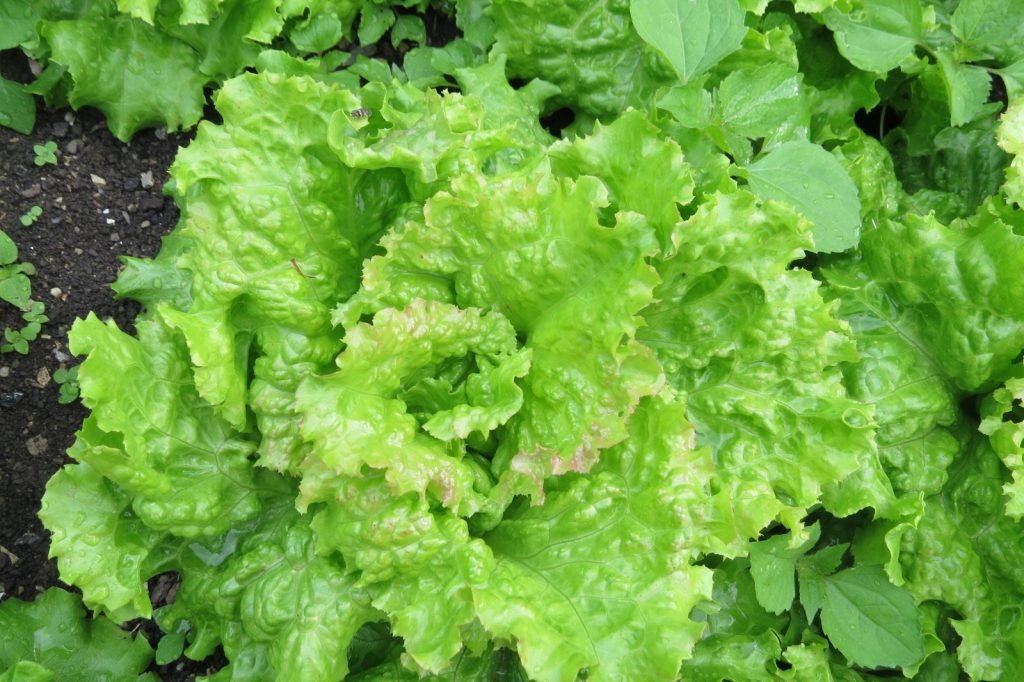
Botanist T. W. Whitaker called lettuce a “weedy Cinderella” in 1974; a year later Franklin W. Martin and Ruth M. Ruberte named it the “queen of the salad plants”. Both descriptions fit. The plant, Lactuca sativa, milk-forming and common, now comes in crisphead, butterhead, loose-leaf, romaine, stem and oilseed forms, and it relates to sunflowers, artichokes, asters and chrysanthemums. Seeds of the primitive oilseed type run about 50 percent larger than those of cultivated lettuce, and Egyptians still press them for cooking oil in the twenty-first century.
Space salad
The newest chapter left the planet. Astronauts on the International Space Station ate romaine grown in a collapsible chamber nicknamed Veggie, sprouting from “rooting pillows” under red, green and blue LEDs, served with oil and vinegar. Their verdict: “awesome”. The cultivar, a bright-red romaine called Outredgeous, got the ticket because it grows fast, tastes good and carries low natural microbial levels, and its anthocyanins, the compounds behind red and purple coloring, may help against cancers and cardiovascular disease. Tomatoes are next on the station’s growing list.
An American head
Columbus carried lettuce to the Americas on his second voyage in 1494. California now grows 75 percent of the United States crop, most of it crisphead, the tightly packed, shippable type that Rupp calls the least tasty of the four. Romaine keeps an old job as an edible scoop: William Weaver’s vegetable history records that growers in Syria perfected the leaf for scooping up tabbouleh. From Egyptian seed press to orbital garnish, the plant keeps trading one use for a better one.
Sources
- From Ancient Egypt to Outer Space, the Delicious History of Lettuce | National Geographic
- Lettuce | Encyclopedia.com




