
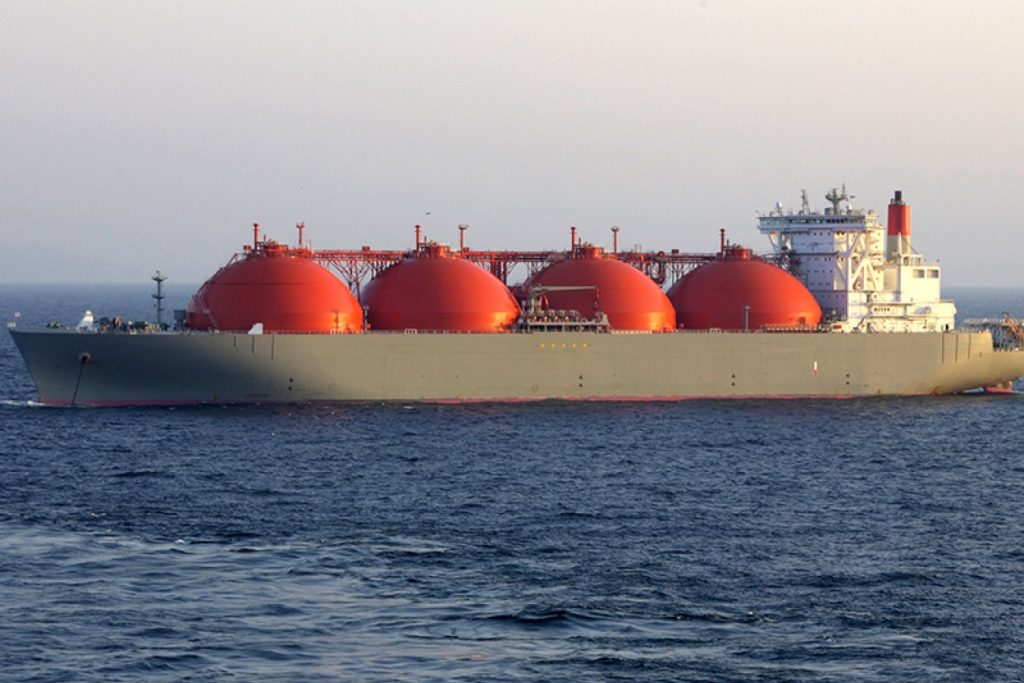
SINGAPORE, 6 Apr 2022 , Asia is racing ahead with more than US $350 billion of new liquefied natural gas terminals, pipelines, and gas-fired power plants, tripling Europe’s planned spending and igniting a fresh fight over how much longer fossil fuels should anchor the world’s most populous region. Governments from Beijing to Manila argue the build-out will let them shutter older coal units and cut local air pollution.
The arithmetic looks simple: burning gas emits roughly half the CO₂ of coal, and turbines can ramp up quickly to balance grids that are still adding variable wind and solar. Yet analysts warn that any new pipeline or regasification terminal approved today will probably still be operating in 2050, long after the UN says global emissions must reach net-zero.
“These assumptions are outdated or will be long before the end of a 20-year LNG contract,” said Robert Rozansky, research analyst at Global Energy Monitor, the non-profit that compiled the project list as of June 2021. If every proposal is completed, world LNG import capacity would surge 50 %, locking customers into decades of carbon-intensive fuel and tying up capital that could otherwise fund renewables and storage.
China alone is constructing 30 LNG import terminals and has another three dozen on the drawing board, the largest single-country build-out tracked by BloombergNEF. State planners see gas as a bridge to President Xi Jinping’s pledge that national emissions will peak before 2030, but the scale of investment suggests the bridge could become a permanent fixture.
Critics inside China have questioned whether provincial giants such as Guangdong Energy and State Power Investment are overstating demand to protect market share. “There definitely is a role for gas, and particularly in displacing coal,” Mark Carney, UN Special Envoy on Climate Action and Finance, told the Asia Sustainable Finance Forum in Seoul last month.
“But we always need to keep in mind the ultimate horizon for any source of energy given its carbon footprint.” Carney’s caution reflects a growing consensus that unabated gas must fall sharply after 2030 if the planet is to stay below the Paris Agreement’s 1.5 °C ceiling. The war in Ukraine has scrambled the economic case.
Spot LNG prices in Asia hit a record US $84 per million British thermal units in March, up from less than US $10 a year earlier, and forward curves show double-digit prices persisting into 2024. Cash-strapped importers such as Vietnam’s PetroVietnam and the Philippines’ First Gen Corporation have already delayed final investment decisions, citing “unfinanceable” costs.
Japanese trading houses, once eager to underwrite long-term contracts, are quietly backing away unless sovereign guarantees are attached. Even China’s central planners have told state utilities to slow non-essential purchases, fearing another energy-price driven spike in factory-gate inflation. The volatility undercuts industry claims that gas offers cheap, baseload reliability compared with solar-plus-storage combinations that continue to fall in price.
South Korean conglomerates are marketing new LNG terminals as dual-use assets that can later handle hydrogen. POSCO Energy, SK E&S, and Korea National Oil Corp argue that converting import infrastructure to ammonia or hydrogen will protect stranded-asset risk once climate policy tightens.
Engineers note the switch requires separate cryogenic tanks, different piping alloys, and upgraded safety systems, retrofits that can cost more than building from scratch. “Repurposing sounds attractive in boardroom slides, but the technical and regulatory hurdles are enormous,” said an official at Korea’s energy ministry who asked not to be named because the review is ongoing. Without clear standards for low-carbon hydrogen imports, critics say the pledge risks becoming a licence to build yet more fossil plant.
The UN Environment Programme warned in November that current national pledges place Earth on a 2.7 °C pathway, and the International Energy Agency calculates that global gas demand must fall 10 % this decade to keep 1.5 °C alive. Asia’s expansion plans collide head-on with that trajectory. Diplomats preparing for the COP27 summit in Egypt say they will press the region’s governments to strengthen 2030 targets and to spell out how any new gas infrastructure aligns with net-zero by mid-century.
Private financiers are also feeling heat: Citigroup and HSBC have promised tighter methane-emission standards for gas loans, though both remain lead arrangers for several terminals now reaching financial close. Asia’s US $350 billion dash for gas illustrates the tension between immediate energy security and long-term climate stability.
Cleaner than coal, the fuel still emits carbon and its infrastructure can last half a century, time the planet does not have. Unless governments embed sunset clauses, carbon capture, or conversion plans from day one, today’s import terminals risk becoming tomorrow’s stranded monuments to a missed opportunity.




