
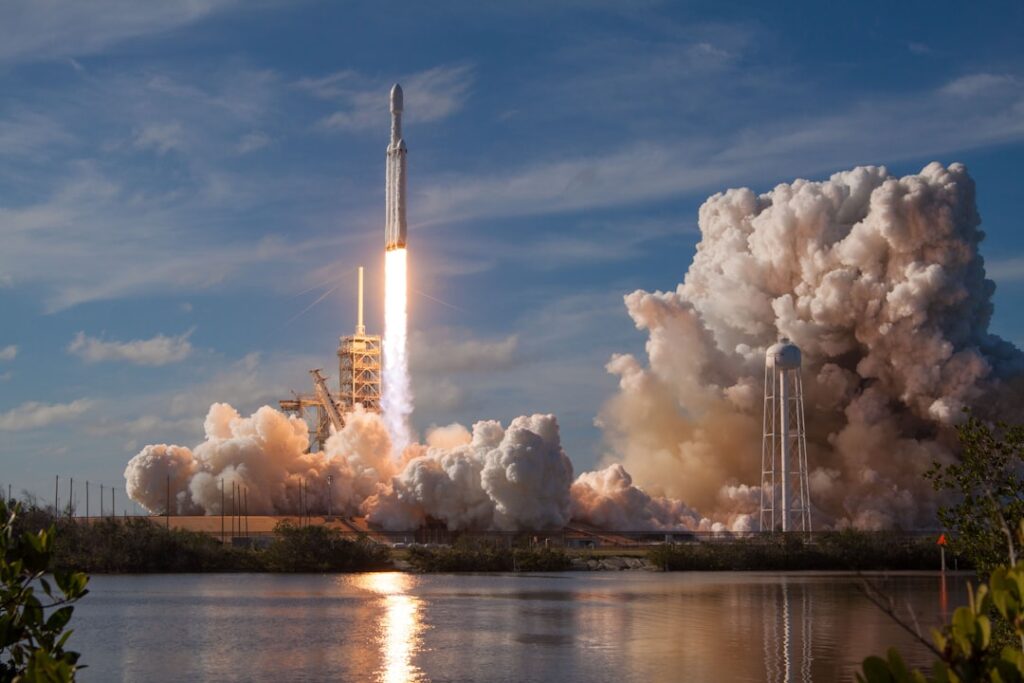
On 8 April, a SpaceX Dragon capsule lifted off with three private passengers bound for the International Space Station (ISS). Each individual paid a fee of US $55 million for a ten‑day assignment aboard the orbiting laboratory.
The trip was arranged by Axiom Space, a commercial venture that partnered with NASA to secure the seats. Michael Suffredini, co‑founder of Axiom and former head of NASA’s space‑station program, emphasized that the visitors are not “tourists.” He explained that the three participants will conduct scientific work rather than simply enjoy the view. The paying crew consists of Larry Connor of Ohio, who leads the real‑estate firm Connor Group; Mark Pathy of Montreal, founder and chief executive of Mavrik Corp.; and Israel’s Eytan Stibbe, a former fighter pilot and founding partner of Vital Capital.
Accompanying them is former NASA astronaut Michael Lopez‑Alegria, who will serve as the mission’s chaperone. All three passengers have packed a schedule of experiments, primarily in the biomedical field, to study the effects of microgravity on the human body.
Axiom describes the work as “purpose‑driven” and differentiates it from leisure travel, arguing that the substantial payment secures access for scientific investigation. This flight marks SpaceX’s first fully private charter to the ISS. Until now, the company’s Dragon spacecraft have been dedicated to transporting NASA astronauts.
The $55 million price tag places the opportunity within reach of only the very wealthy, echoing a model previously employed by Russia, which has sent paying visitors to the station for decades via Soyuz rockets. Unlike the Russian‑organized trips, the Axiom mission is American and private.
The ticket package grants the visitors access to the U.S. and European segments of the station, but entry to the Russian module requires permission from the three Russian cosmonauts currently aboard. The current ISS crew includes three Americans and one German astronaut, alongside the three Russian cosmonauts. Lopez‑Alegria, speaking after the capsule reached orbit, described the launch as “a hell of a ride” and expressed anticipation for the upcoming ten days of work.
He also indicated that the crew will steer clear of political discussions, particularly regarding the war in Ukraine, to preserve a cooperative atmosphere in the confined environment. Relations between NASA and Roscosmos have been strained by the conflict, yet day‑to‑day operations on the ISS continue unchanged.
Crewmembers of all nationalities share meals, conduct maintenance, and collaborate on scientific tasks, a dynamic the new visitors will need to respect. While Connor, Pathy, and Stibbe are not the first private individuals to visit the ISS, they are the inaugural group to travel there aboard a wholly private American spacecraft. This milestone signals SpaceX’s evolution from a NASA contractor to a commercial transport service capable of ferrying paying customers to orbit.
Axiom’s longer‑term vision includes constructing a commercial module on the ISS and eventually launching its own private space station. Demonstrating that its customers are engaged in substantive research rather than sightseeing is central to securing future contracts with NASA and attracting additional private investment.
For now, the three private participants are secured in the Dragon capsule, en route to the station with a full agenda of experiments, a $55 million invoice, and a determination to be recognized as scientists, not tourists.




