
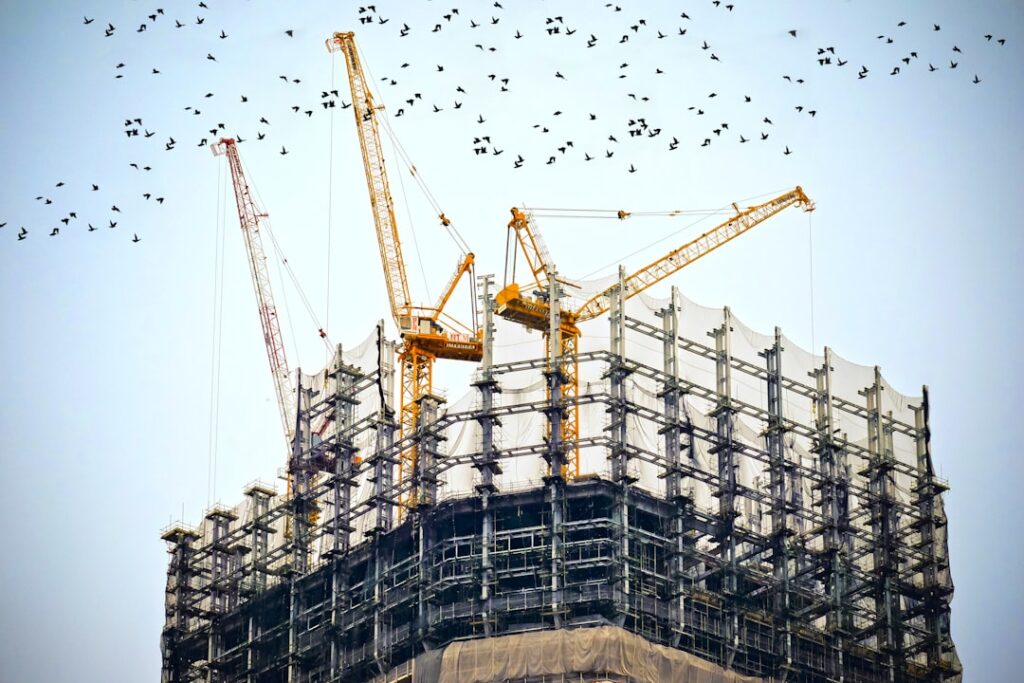
On March 28, a high‑rise office building under construction in Bangkok collapsed, killing six people and leaving more than 101 individuals missing beneath the wreckage of concrete and steel. The structure, intended to serve as a government office complex for civil servants, fell amid the city’s rapid vertical expansion.
Emergency crews have been working around the clock, sifting through a wide field of debris that stretches across the site. The scale of the collapse is slowing progress, and each passing hour reduces the chances of finding survivors. Rescuers rotate in long shifts, contending with exhaustion as they remove one slab after another, hoping each piece might reveal a living person or, tragically, another casualty.
Bangkok’s construction boom mirrors a broader trend across Asian capitals, where limited land and soaring demand for office and residential space have driven developers to erect taller structures at an accelerated pace. Steel frames and curtain‑wall façades are now commonplace, but the speed of these projects has raised concerns about whether safety standards and building codes have kept pace.
The government has announced a formal investigation into the collapse, a standard response to incidents of this magnitude. Authorities will examine the approval process for the project, the inspection regime, and the final sign‑off on the building’s structural integrity. While such inquiries can take considerable time, the immediate focus remains on the ongoing rescue effort and the families awaiting news of their loved ones.
This incident is not isolated in terms of design; the tower was typical of recent developments in Bangkok, which has taken pride in its soaring skyline. However, its failure has sparked scrutiny of the city’s broader construction practices. If a standard government office tower can collapse, questions arise about the safety of other high‑rise projects that share similar design and construction methods.
Officials and industry observers note that the integrity of steel frames and curtain‑wall systems depends on rigorous engineering, quality workmanship, and diligent oversight. Any compromise—whether through cost‑cutting, inadequate supervision, or lapses in enforcement—can lead to catastrophic outcomes, as illustrated by the current tragedy.
While the death toll stands at six, the number of missing remains over one hundred, and the final count may rise as rescue teams continue their search. The debris field remains largely undisturbed, with each removed block offering the slim possibility of uncovering a survivor.
Bangkok’s growth is unlikely to halt; the demand for new space persists. Nonetheless, the collapse may prompt a temporary pause and a reassessment of construction timelines, height limits, and regulatory enforcement. Neighboring cities in the region, facing similar pressures, are watching closely, aware that the balance between rapid development and safety is precarious.
The stark lesson from the Bangkok tower collapse is clear: when a building fails, the repercussions extend far beyond the loss of concrete and steel, affecting lives, families, and the confidence placed in urban development.




