
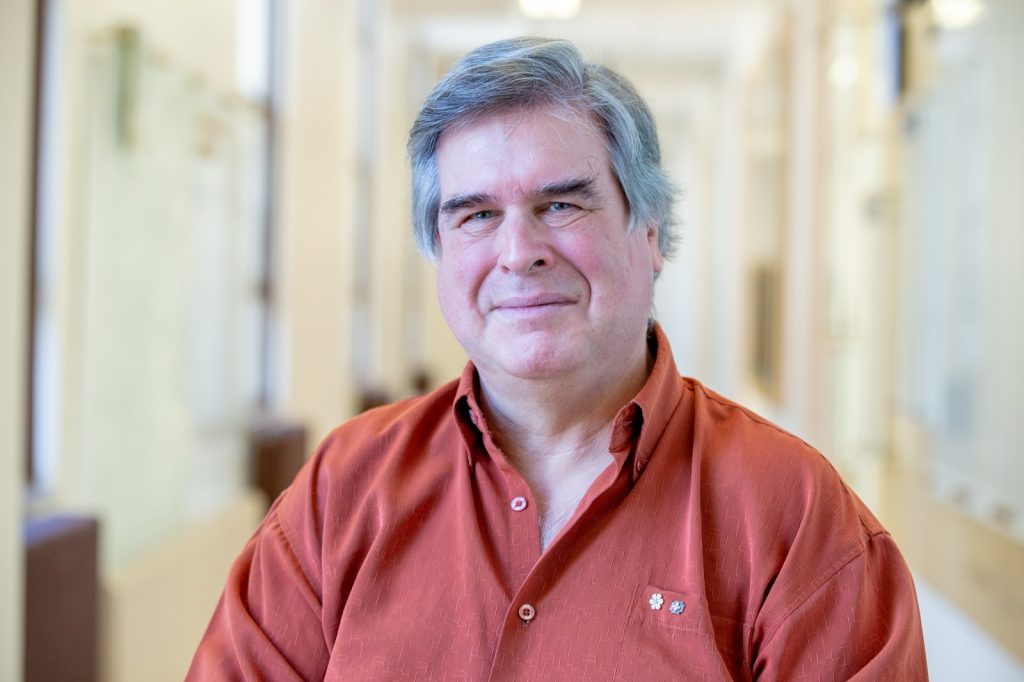
The Association for Computing Machinery has announced that Charles Bennett and Gilles Brassard will receive the 2025 Turing Award, widely regarded as the Nobel Prize of Computing. The honor recognizes their foundational contributions to quantum information science, a field that was barely recognizable when they began their collaboration.
In 1984, Bennett and Brassard published a paper proposing a method for two parties to share a secret encryption key using quantum particles. At the time, the idea appeared impractical due to weak lasers and noisy detectors, leading most to dismiss it as a theoretical curiosity. That paper, now known as BB84, introduced the first quantum cryptography protocol.
It uses individual photons to generate a shared random key. If an interceptor attempts to observe those photons, the quantum state is altered, alerting the parties that the key has been compromised.
This system is unique because its security is based on the laws of physics rather than the computational difficulty of solving a mathematical problem. The distinction is significant. Classical encryption typically relies on problems such as factoring large numbers.
A sufficiently powerful quantum computer could solve those problems with ease. Quantum cryptography offers an alternative that does not depend on assumptions about an attacker’s computing power.
Bennett, an American physicist and IBM Fellow, spent his career at IBM Research exploring the relationship between physics and information. His work with Brassard produced BB84, but his influence extends further. He formulated what are now known as the four laws of quantum information, which govern how quantum information can be manipulated, copied, and transmitted.
These principles have become a standard framework for researchers. His investigations into reversible computing—whether computation can occur without generating heat—have implications for energy-efficient processors.
His work on cellular automata examines how simple rules can produce complex behavior, linking computing to physics, biology, and philosophy. The award arrives during a period of intense investment in quantum technology. Governments and corporations are spending billions on quantum computing research. China has launched a quantum communications satellite.
Companies like Google and IBM are competing to build error-corrected quantum processors. Bennett and Brassard’s 1984 paper is now among the most cited in computer science.
The path was not straightforward. For years, quantum information theory was a niche pursuit with few researchers and even fewer who believed it would lead to practical technology. Bennett persisted, re-examining the physical basis of information and applying quantum physics to information exchange.
He helped transform an esoteric subfield into a discipline with its own journals, conferences, and academic departments. Bennett and Brassard have previously received the Breakthrough Prize in Fundamental Physics and the Wolf Prize in Physics.
The Turing Award places them alongside computing pioneers such as Alan Turing, John McCarthy, and Tim Berners-Lee. Bennett’s influence extends beyond his publications; he trained and inspired a generation of quantum information scientists, many of whom now lead their own research groups. Brassard, a professor at the Université de Montréal, continues work on quantum cryptography and communication.
Bennett, now retired from IBM, remains active in the field. The 2025 Turing Award does not mark an end but highlights how far the field has come—and how much of that progress began with a paper most people ignored.




