
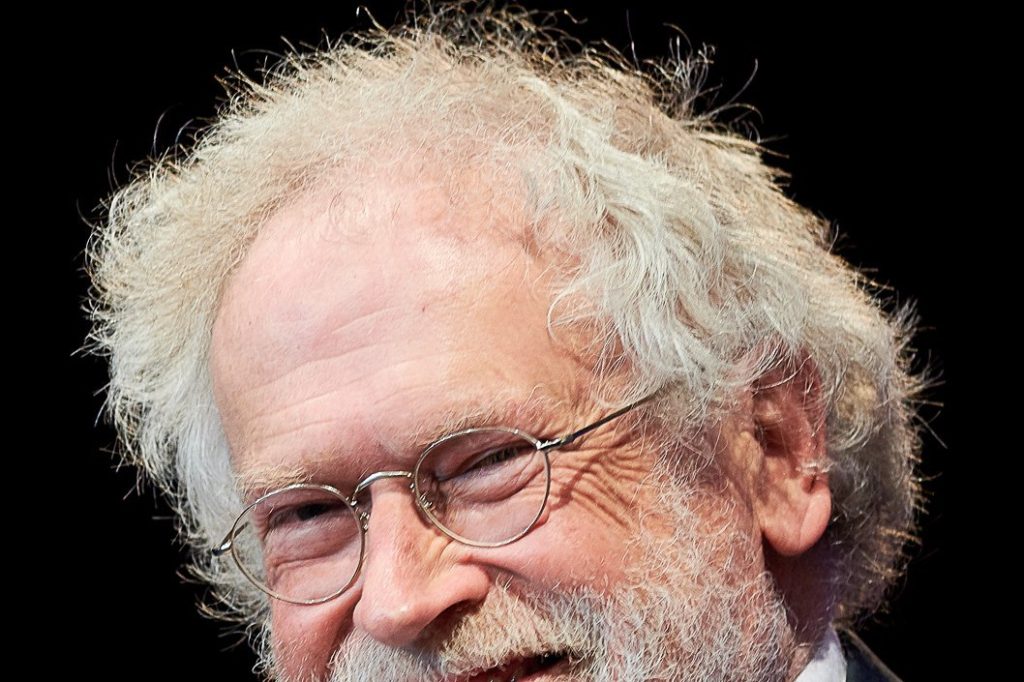
Three researchers at the University of Science and Technology of China are behind the longest fiber-based entanglement between quantum memories yet recorded: Xi-Yu Luo, Chao-Yang Wang and Ming-Yang Zheng.
Their team connected two memory units across 420 kilometers of optical fiber. The distance is more than four times what earlier experiments managed. Their account will appear in Physical Review Letters.
Alice, Bob and Charlie
Each memory is a cloud of laser-cooled rubidium atoms. The researchers call the two ends Alice and Bob. Between them sits a node named Charlie, which collects photons sent from both ends. If Charlie detects the correct interference pattern, the two distant memories are entangled.
The team says three techniques carried the experiment, each already known but refined here. They shifted the memories’ photons to telecom wavelengths to cut fiber loss. They added a stabilization system to cancel out temperature changes and vibrations. And they used a scheme in which only one photon has to make the journey.
“A more efficient quantum frequency conversion protocol helps us to reduce the fiber loss and extend the transmission distance,” the researchers write. They add that their phase stabilization scheme “can be conveniently applied to other platforms.”
What it proves
Beyond 320 kilometers, the system produced entanglement faster than any direct transmission through the same fiber could, by the measure known as the PLOB bound. The researchers did not break that limit. They showed that memory-based networks can pass it.
For the next stage, they point to the setup’s ability to generate entanglement at a high rate over roughly 100 kilometers, which is of interest for building quantum repeaters.




