
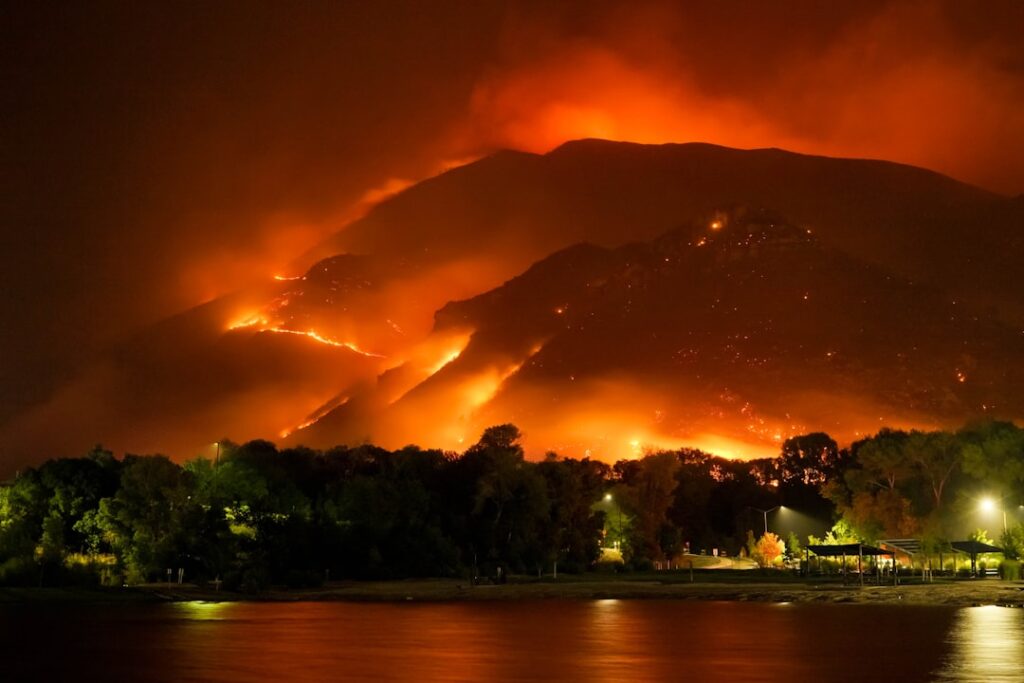
Premier David Eby declared a province-wide state of emergency on August 18, 2023, as uncontrolled blazes in the Shuswap and Okanagan regions overwhelmed local capabilities. This formal order grants the provincial government expanded legal authority to manage the crisis, allowing for the requisition of equipment and property, the restriction of travel into active fire zones, and the ability to direct local authorities to prioritize firefighting activities. The decision follows a week of rapid deterioration in conditions, culminating in the Friday announcement.
The province is currently facing a volatile situation driven by shifting winds and hot, dry weather. These factors have caused some fires to expand dramatically in size over short periods, stretching the province’s ground crews and air support resources thin.
The impact has been severe: thousands of residents have been forced to evacuate, transportation routes have been interrupted, and various structures have been destroyed. According to the Premier’s office, the state of emergency is essential for facilitating a “unified response.” By establishing a single command structure rather than a fragmented system of local improvisation, the government can deploy resources to the areas of greatest need without the delays associated with formal request processes. This legal framework is designed to bypass bureaucracy and ensure a rapid, coordinated effort across different jurisdictions.
This is not the first time British Columbia has utilized these specific emergency tools. Similar powers were deployed during the major wildfire events of 2017, 2018, and 2021.
Despite significant investments in prevention and response following those previous disasters, each new season continues to test the province’s readiness. For many residents, the current cycle of evacuation orders and uncertainty echoes the trauma of those earlier catastrophes. The efficiency with which the province now handles these declarations is a result of repetition.
The legal frameworks and personnel roles are well-established because of the recurring nature of these seasons. However, while the state of emergency provides the government with the legal authority to act, it does not guarantee the success of containment efforts.
The ultimate outcome remains dependent on wind patterns, weather, and the effectiveness of the crews working the fire lines. With forecasts predicting sustained heat, there are concerns that conditions could worsen in the coming days. While the emergency order changes the mechanism of the province’s response, the immediate reality for those in the affected regions remains centered on the movement of the fire lines and the support provided to the crews battling the flames.
The declaration ensures the government can do everything within its power, but the effectiveness of these measures will be determined by the events of the coming days.




