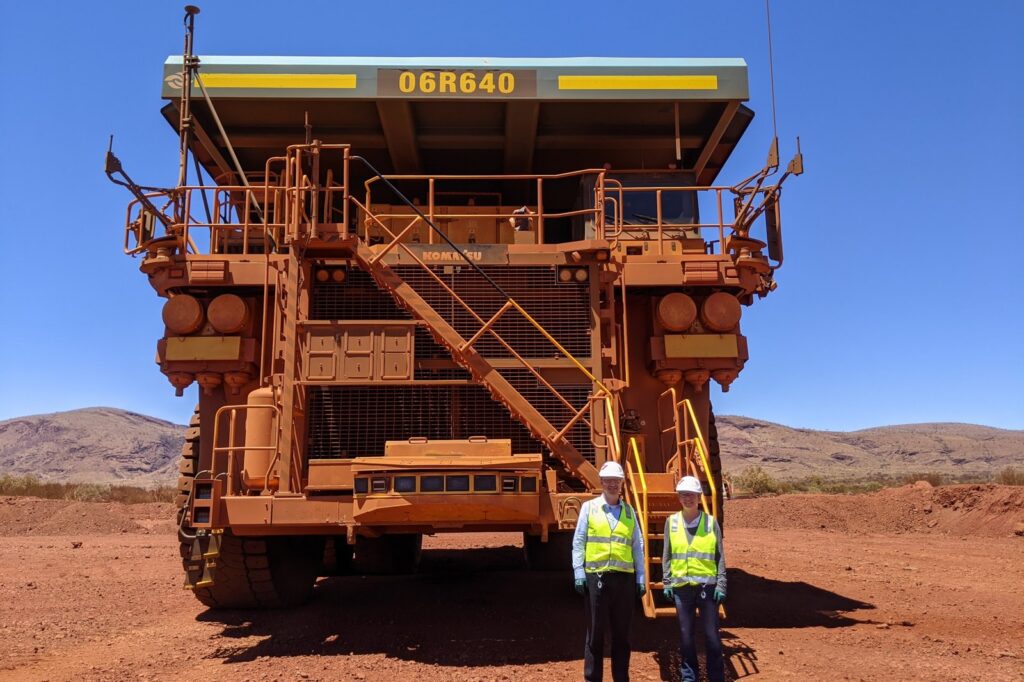
Understanding the Scale of Biomining
Recent analysis shows that biomining cuts copper emissions by only about 1.5kg of carbon dioxide equivalent per kilogram compared to traditional smelting, revealing that trade-offs in water and waste management limit its global commercial scalability. As global mining operations look for cleaner ways to extract metals from rock, early claims of massive environmental benefits are facing scrutiny against real-world operating data.
The Mechanics of Bioleaching
Biomining uses acidophilic microbes to extract metals from low-grade ore without the need for high-heat smelting. The process relies on crushed ore stacked into a large engineered pile built on a lined pad, where a weak acidic solution trickles down through the rock for months. Inside the heap, microbes that thrive in acid oxidise iron and sulphur compounds to release copper into solution. The solution drains to collection ponds, and solvent extraction and electrowinning recover the copper as cathode. Rio Tinto describes the result as a mine-to-cathode route with no concentrator, no concentrate shipping and no smelter. For refractory gold, biooxidation acts as a pretreatment for cyanidation rather than a replacement for the full recovery circuit, breaking down sulphide minerals so conventional recovery can take place.
Weighing the Carbon and Operating Numbers
Early claims of massive environmental benefits are being tested against real-world operating data from major mining companies. A cradle-to-gate life-cycle assessment put scaled bioleaching at 6.94 kg of carbon dioxide equivalent per kilogram of copper against 8.45 kg for pyrometallurgy. According to the assessment, this modest carbon gain is driven by eliminating electricity, steel-ball grinding, diesel, and waste treatment associated with high-temperature smelting. Secondary coverage of a Purdue comparative study cited a 4.09 kg figure, though that number remains unconfirmed. The 2.85 kg gap between those figures reflects differences in feed grade, electricity mix, and functional unit definitions.
Operating realities introduce significant trade-offs alongside environmental benefits. BHP cited expected recoveries of about 60 to 70 percent over 250 to 350 days for its biomining operations, listing lower recovery rates and longer processing cycles as significant drawbacks. Rio Tinto’s Nuton unit claimed up to 80 percent lower water use and up to 60 percent lower carbon emissions, though these remain operator projections that are not yet audited. Furthermore, first copper at the Nuton demonstration at Johnson Camp in Arizona was only reported on 4 December 2025, meaning early demonstration data is still emerging.
Environmental Risks and Global Scalability
Biomining does not eliminate environmental risk entirely. Instead, the process relocates environmental risk into liners, drainage collection, and closure planning rather than removing it. Diesel, electricity generation, acid manufacture, and crushing emissions remain even when the roasting step is avoided. No recent auditable operator data was found for Zijin Mining, Glencore, or gold biooxidation plants, which leaves a significant gap in market-wide assessments.
Ultimately, commercial scalability is constrained by the need for auditable data on water use and waste treatment in diverse geographies. While the process replaces a furnace with slower, acid-driven dissolution in a heap, it introduces its own specific inputs and management requirements. Operators and investors must weigh modest carbon gains against longer processing cycles and complex containment needs before applying biomining across diverse mineral extraction projects worldwide.
Examining Water Use and Containment Requirements
Operating data highlights that biomining shifts rather than eliminates resource intensity. Rio Tinto’s Nuton unit projects up to 80 percent lower water use, yet these figures remain operator estimates without third-party audit. BHP’s biomining operations cite expected recoveries between 60 and 70 percent over processing cycles spanning 250 to 350 days, acknowledging that lower recovery rates and extended timelines represent significant operational trade-offs. The 2025 cradle-to-gate life-cycle assessment confirms a modest carbon reduction to 6.94 kg CO₂e per kilogram of copper, but emphasizes that diesel, electricity generation, acid manufacture, and crushing emissions persist even when the roasting step is avoided. No recent auditable operator data was identified for major industry players including Zijin Mining or Glencore, leaving a critical gap in verifying water consumption and containment performance across diverse mining geographies.
Environmental risk is relocated into engineered liners, drainage collection systems, and long-term closure planning rather than removed entirely. The process requires acidic solutions that must be contained and managed, creating new infrastructure demands at the site level. For refractory gold ores, biooxidation functions as a pretreatment to liberate gold for conventional cyanidation, meaning any recovery gains must be evaluated against the full chemical recovery circuit including neutralization and water treatment stages. Operators and investors assessing scalability must weigh these containment requirements and management complexities against the process’s modest carbon profile, particularly as demonstration projects like Rio Tinto’s Nuton at Johnson Camp in Arizona continue to generate emerging data from real-world conditions.
Assessing Long-Term Economic and Recovery Trade-Offs
Operating data consistently highlights that biomining introduces significant economic and recovery trade-offs alongside its environmental profile. BHP’s biomining operations cite expected copper recoveries of only 60 to 70 percent over processing cycles spanning 250 to 350 days, explicitly listing lower recovery rates and extended timelines as significant drawbacks alongside reduced water and energy use. Rio Tinto’s Nuton unit projected up to 80 percent lower water use and up to 60 percent lower carbon emissions, though the company’s own timeline confirms that first copper at the Johnson Camp demonstration was not reported until 4 December 2025, meaning early performance data remains limited and un-audited. The 2025 cradle-to-gate life-cycle assessment confirms a modest carbon reduction to 6.94 kg CO₂e per kilogram of copper, yet emphasizes that diesel, electricity generation, acid manufacture, and crushing emissions persist even when the high-temperature roasting step is avoided. No recent auditable operator data was identified for major industry players including Zijin Mining or Glencore, leaving a critical gap in verifying long-term recovery economics and containment performance across diverse mining geographies.
Environmental risk is fundamentally relocated rather than eliminated, shifting from furnace emissions into engineered liners, complex drainage collection systems, and long-term closure planning. The process requires acidic solutions that must be continuously contained and managed, creating new infrastructure demands at the site level that can offset some of the carbon benefits. For refractory gold ores, biooxidation functions strictly as a pretreatment to liberate gold for conventional cyanidation, meaning any recovery gains must be evaluated against the full chemical recovery circuit including neutralization and water treatment stages, not the biological stage alone. Operators and investors assessing scalability must weigh these containment requirements and extended processing cycles against the process’s modest carbon profile, particularly as demonstration projects continue to generate emerging data from real-world conditions that may not be representative of full commercial deployment.
Sources
- Biomining's Environmental Benefits: What the Data Does and Doesn't Show
- Delhi clears â¹622cr flood-control plan, approves Yamuna wall and silt biomining | Delhi News – The Times of India
- Biomining's Environmental Benefits: What the Data Does and Doesn't Show
Photo: U.S. Consulate General Perth (Public domain)