
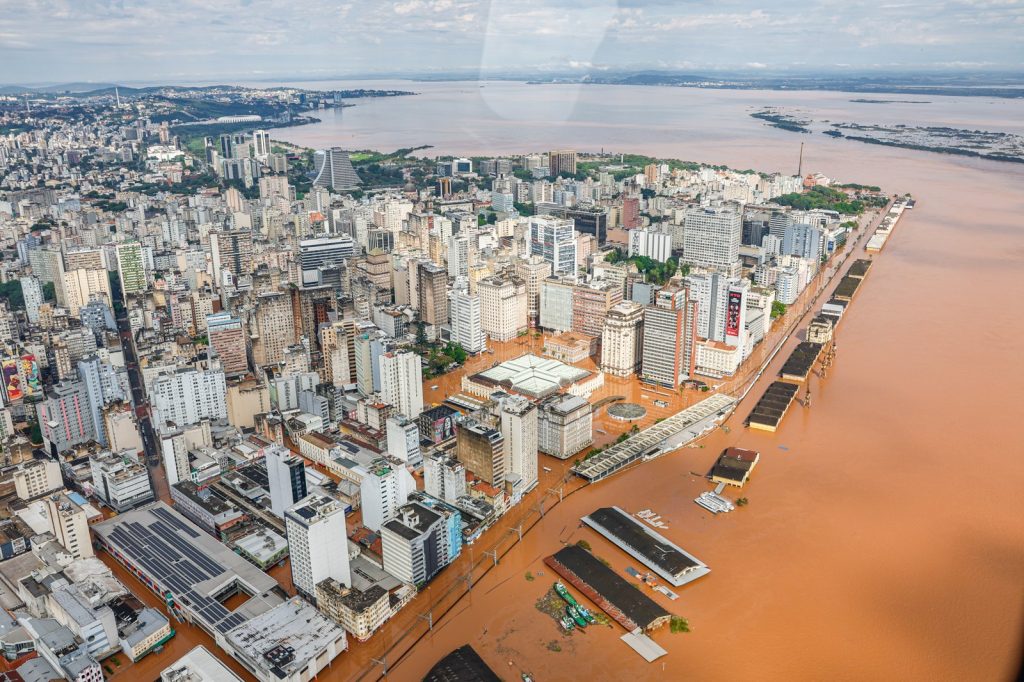
More than a week after an extratropical cyclone swept across southern Brazil, official figures record 27 fatalities and at least 1,600 people forced to abandon their homes. The numbers, drawn from government disaster reports, illustrate two distinct dimensions of the event: a death toll that captures the immediate loss of life and a displacement count that reflects the longer‑term humanitarian impact.
The storm originated from the typical mid‑latitude clash of cold and warm air masses, creating a fast‑moving low‑pressure system. Its rapid progression caught many residents off guard, turning city streets into torrents of brown water within minutes. The sudden surge left families with little time to evacuate, prompting a mass exodus rather than an organized relocation.
Urban centers in the region proved especially vulnerable. Built on river plains and uneven hillsides, these areas lacked sufficient drainage to cope with the intense, short‑duration rainfall.
As water rushed into homes, basements and ground‑floor rooms filled quickly, turning everyday spaces into makeshift waterways. Infrastructure suffered heavily. Roads were blocked by debris and mud, power lines were downed, and communication networks were disrupted, turning neighborhoods into isolated pockets of devastation. The Brazilian government has announced assistance for the affected communities, acknowledging that delivering shelter, food, clean water and medical care will be a complex logistical undertaking.
While extratropical cyclones are a common feature of weather patterns in the world’s mid‑latitudes, the severity of this particular event stemmed from its speed and the topography of the impacted region. The storm’s capacity to produce heavy rain, strong winds and rapid temperature shifts aligns with textbook meteorology, yet those scientific explanations do not convey the lived reality of families watching possessions drift out of their front doors.
Recovery efforts are ongoing. Authorities continue to tally the full extent of the damage, noting that the current figures represent a minimum. As floodwaters recede, additional casualties may be discovered, more homes will require pumping and cleaning, and further property losses are expected to emerge.
The 27 confirmed deaths are not necessarily the final count, and the 1,600 displaced individuals are likely only those identified so far. Both statistics underscore the human cost of the cyclone and the necessity for prompt, sustained aid.
In the weeks ahead, the focus will shift from the storm’s meteorological origins to the practical challenges of rebuilding. The government’s pledge of assistance marks the first step, but delivering tangible relief—temporary housing, restored utilities, and medical services—will determine how quickly affected communities can recover from the flood’s aftermath.




