
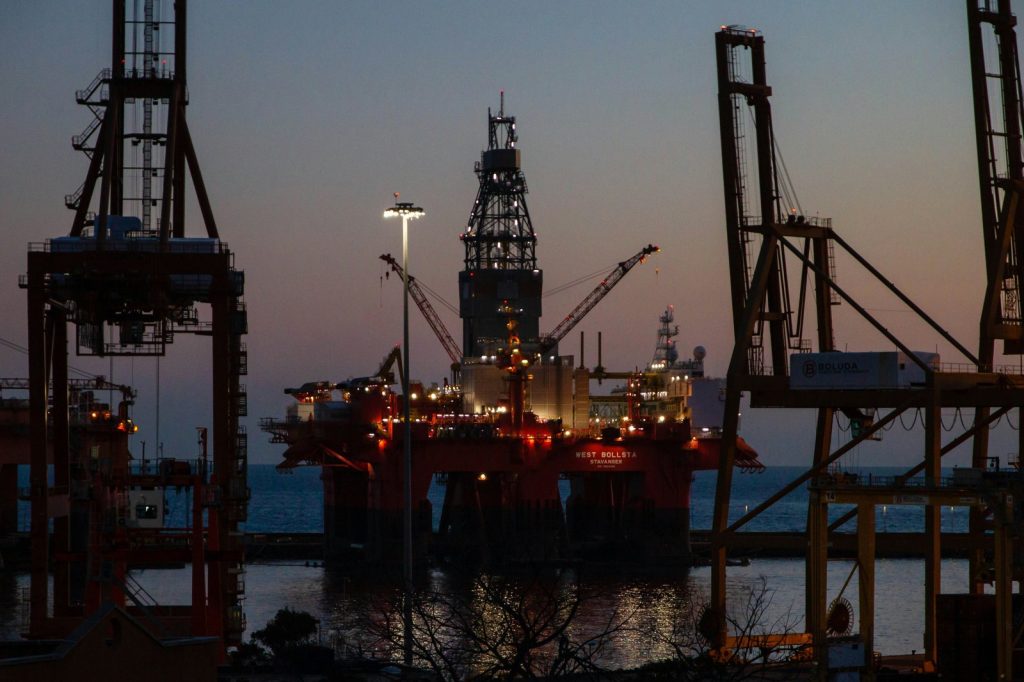
The number that governs the world’s fuel bills jumped on a Monday in late March 2026. Brent crude, the benchmark to which most internationally traded oil is priced, surged past $115 a barrel after missile attacks by Yemen’s Houthis widened the West Asian conflict, and it touched $116 as traders priced the risk to export routes and hubs. The noise around the move came from Washington: “To be honest with you, my favourite thing is to take the oil in Iran, but some stupid people back in the US say: ‘Why are you doing that?’ But they’re stupid people,” President Donald Trump told the Financial Times, adding, “Maybe we take Kharg Island, maybe we don’t. We have a lot of options,” a reference to Iran’s main oil export hub.
Under the Hood of the Benchmark
What traders call Brent is not oil from one field, and the field that named it stopped producing years ago. The original grade was a light, sweet crude first tapped in 1976 from the field that gave the benchmark its name; today the name mostly points to the ICE Brent futures contract, the financial instrument traded in London. As the Brent field’s output fell to zero in 2021, other streams joined the classification: Forties, off Aberdeen, and Norway’s Oseberg in 2002, Ekofisk in 2007, Troll in 2018, and in 2023 crude from Midland, Texas, in the Permian Basin, tying the old North Sea marker to American shale. The five-stream basket, shortened by traders to BFOET, keeps enough physical supply behind the contract that one field’s outage cannot distort the price.
Why Brent Won
The detail that matters is that most physical crude does not sell at a posted price; it sells as a differential to a benchmark, and for roughly 80 per cent of traded crude that benchmark is Brent. The dominance is geographic as much as financial: North Sea oil loads straight onto tankers, so the price suits waterborne cargoes bound for Europe, Africa, Asia or the Americas, and it is not landlocked like West Texas Intermediate, the other primary global marker. Brent rose with North Sea production in the 1980s as OPEC’s pricing power wavered, and a network effect did the rest: the more contracts that referenced Brent, the harder it became to price oil any other way. It is seen as politically neutral, priced in the open under transparent rules, and its trading day overlaps European, Asian and American hours, which made London’s futures contract the hedging tool of choice.
What a Spike Does to an Importer
For a country that imports the overwhelming share of its crude, the benchmark is a macroeconomic variable, not a market quote. India’s case, in the wake of the March spike: a higher Brent lifts the import bill almost at once, widens the current account deficit, strengthens demand for dollars and pressures the rupee, while a sustained $10 to $15 swing can move inflation, fiscal arithmetic, corporate profits and household spending power. At a briefing in New Delhi on the Monday of the spike, officials assured the public that fuel stocks were sufficient. “In the domestic market, petrol and diesel should be available in sufficient quantities and the price should not increase,” said Sujata Sharma, a joint secretary in the petroleum ministry, noting that “For this, the Indian government has reduced the excise duty on petrol and diesel as you know.” and urging people “to use petrol and diesel as required” rather than hoard on rumors.
The wry footnote to all this: the oilfield that named the world’s most-watched oil price has not produced a barrel since 2021. The benchmark outlived its own wellhead, and every missile and presidential musing about Kharg Island now moves a price built on Forties, Oseberg, Ekofisk, Troll and Texas crude instead.
Sources
- Explained | Brent At $116 BPD: Why The World’s Oil Benchmark Matters – And What The Spike Means For India
- Brent Crude Oil Price Today — Live Chart & Forecast




