
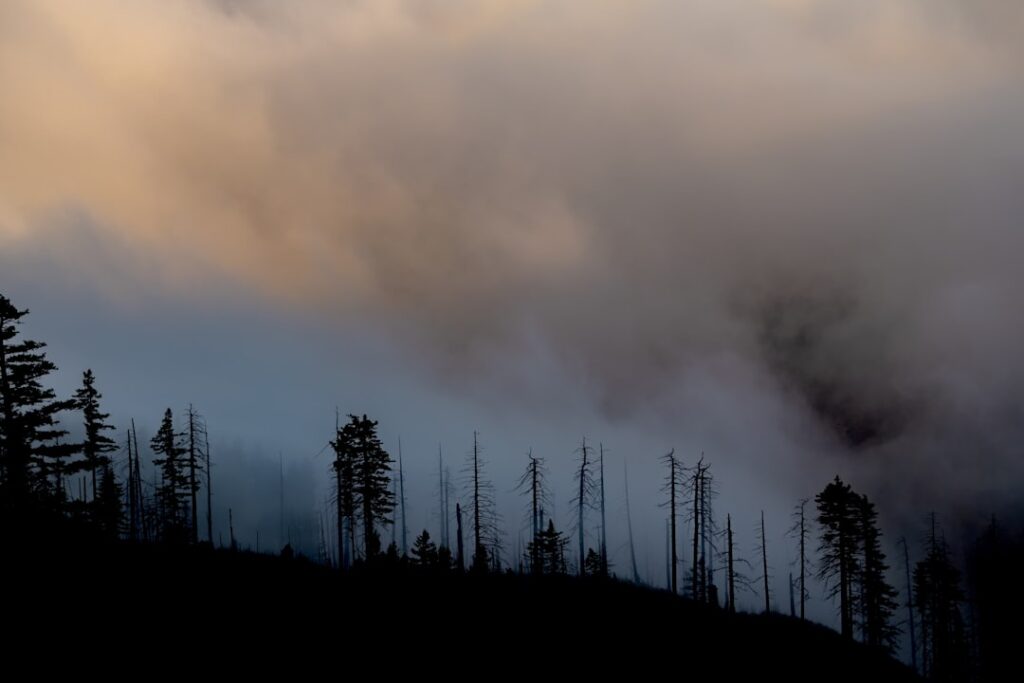
A single season has claimed roughly five percent of Canada’s entire forest area, with 6,551 fires burning through 184,961 square kilometres and more than six times the long-term average for this point in the year. The fires, which started as early as March, have affected every province and territory across the nation, leaving a visible mark from coast to coast. Alberta, British Columbia, Northwest Territories, Nova Scotia, Ontario, and Quebec have all been affected, resulting in a human cost of eight firefighters dead and thousands of people displaced.
The wildfire season, which has set records, showed an intense early push of blazes that overwhelmed resources even before summer arrived. Dry and hot conditions primed the landscape for burning.
The effects of these fires have not been limited to Canada as smoke drifted south, turning skies over New York City and Washington, D.C., orange and prompting air quality alerts across the eastern United States, forcing many Americans to confront the reality of Canadian wildfires for the first time. In response, firefighters from countries around the world have come to Canada to aid exhausted and strained local crews in their battle against the flames.
As the wildfire season is far from over, the total area burned is expected to increase before the final chapter is written. Thousands have been displaced, with 16,400 people in Halifax and 21,720 individuals in Yellowknife forced from their homes.
Nearly 30,000 people in the Kelowna and West Kelowna areas of British Columbia have also been affected, with entire neighbourhoods reduced to ash and countless families waiting to see if they still have homes to return to. While the numbers can blur, the smells, the orange sky at noon, the helicopters overhead, and the knock on the door telling people to leave will remain a stark reminder of what a record wildfire season looks like on the ground.
Eight families will never see their loved ones again, as thousands await news of their homes. For many, the international response to the fires serves as a testament to the severity of the situation as crews from other countries join the fight against blazes that have already consumed more than six times the long-term average for this point in the year. With the season far from over, more fires will ignite and more people are likely to be displaced as the record books keep being rewritten in real-time.
The human cost of these fires is evident in the eight fallen firefighters, the thousands of displaced people, and the communities that have lost their homes to the flames. From Alberta to Nova Scotia, British Columbia to Quebec, every corner of the country has felt the effects of this devastating season.
As international firefighters join the fight, the reality of the situation becomes undeniable: Canada is in the midst of a crisis that has captured the attention and concern of the entire world. The skies turned orange over New York City and Washington, D.C., and air quality alerts were issued across the eastern United States as smoke drifted south from Canada’s wildfires. The fires, which began earlier than usual in March, affected every province and territory, engulfing the country in flames and highlighting the severity of the situation.
The devastating fires haven’t only affected Canada, with the reaches of the blaze extending as far as the United States, bringing the challenges of these wildfires to the forefront for many who were previously unaware. The scene on the ground ranges from the smell of smoke to the helicopters flying overhead to the homes and lives reduced to ashes.
The stories coming out of affected areas span from the funerals of fallen firefighters to thousands of people living in evacuation centres, hotel rooms, or the spare bedrooms of strangers. This long, hot summer has led to a record-breaking wildfire season, putting Canada and its resources to the test.
Background and why it matters
Canada is a vast country in North America, encompassing a wide variety of climates and topographies, which makes forest management and wildfires a significant concern. Indigenous peoples have inhabited the land for thousands of years, but European colonization in the 16th century brought significant changes to the landscape and the country’s governance. The formation of Canada as a country in 1867 laid the groundwork for its evolution into a constitutional monarchy and parliamentary democracy. As an advanced economy with a globally high per capita GDP, the country’s forests are a crucial component of both its natural resources and economy. These forests, covering large parts of Canada’s diverse provinces and territories, are a central focus for issues like conservation, resource extraction, and, as demonstrated by the current wildfire season, disaster response.
The unprecedented scale of the current wildfire season has not only tested Canada’s emergency response capabilities but has also highlighted the ecological and economic importance of its forests. The fires have transcended national boundaries, impacting air quality and visibility thousands of miles away in the United States, and have prompted an international firefighting effort. This situation underscores the interconnectedness of environmental concerns and the need for collaborative responses to global ecological challenges. It’s also a vivid reminder of the impact climate change can have on forest management, firefighting efforts, and the livelihoods of those who depend on these natural resources. As a developed nation with a strong commitment to environmental stewardship, Canada’s experience with wildfires offers lessons and insights that resonate far beyond its borders.




