
“Associate membership does not exist.” That is the blunt verdict of Tinatin Akhvlediani, head of EU enlargement at the Brussels think tank Center for European Policy Studies, on the idea European Commission President Ursula von der Leyen floated on Wednesday: make Canada the bloc’s first “associate member.”
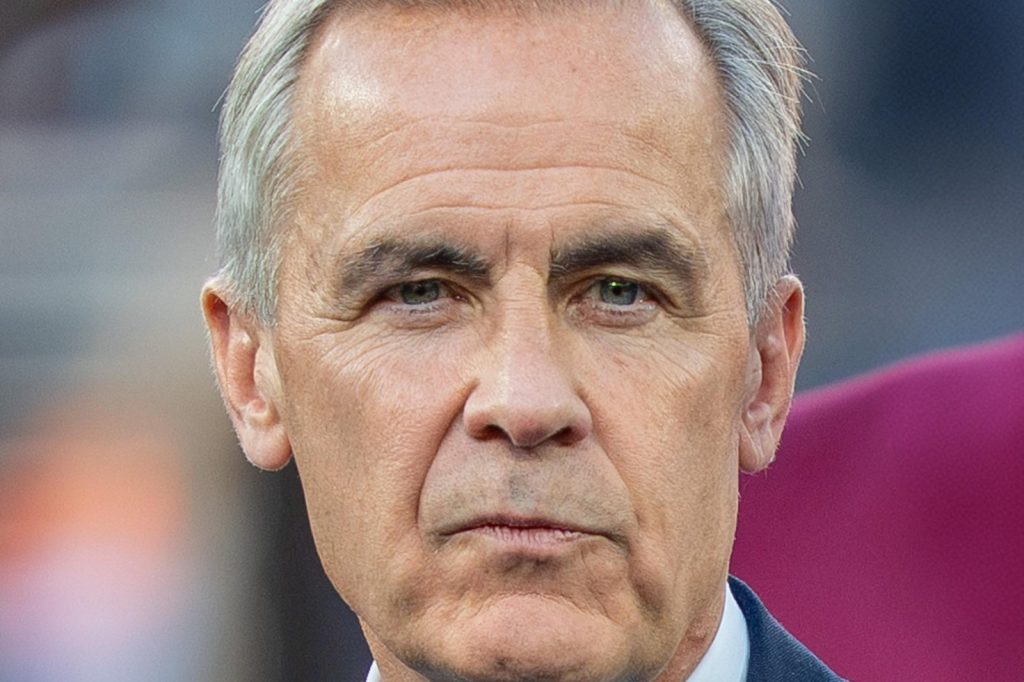
Von der Leyen made the proposal in her State of the Union address in Strasbourg, with Canadian Prime Minister Mark Carney sitting in the chamber as a guest. “In short, we want to bring the relationship with Canada to the highest level possible,” she said. Carney got a standing ovation. He had said days earlier that Canada was pursuing a “unique alliance” with the EU.
Donald Trump answered the same day. If the intention is good, he told reporters, “that’s fine.” If not, “we’ll put very heavy tariffs on Europe, which is a possibility.” He said the US could treat a new deal as a “hostile act.”
Why Canada is looking east
Canada is in a trade war with the United States, its largest trading partner, and Trump has repeatedly called for it to become the 51st state. Carney has firmly rejected that. Von der Leyen insisted the move was “not a partnership against anyone else, but for our common strength.”
What would the alliance contain? Nobody has said. The Wall Street Journal reported that officials discussed lower trade barriers, undersea cables linking Europe and Canada, pipelines redirected to give Europe Canadian gas, new AI and tech infrastructure, and even visa-free living and working rights for Canadians in Europe. Von der Leyen herself named intelligent manufacturing, defence, cyber security, energy, critical minerals and batteries. The EU’s ambassador to Canada told the Canadian Press the partnership would be unlike anything that exists.
Full membership is a hard road. A country must go through the multi-stage accession process, and every one of the 27 member states must approve its candidacy. Nine countries are already waiting in line as recognised candidates. Canada is not in Europe, though it would likely meet the political, economic and legal standards. Akhvlediani noted that Ukraine, Moldova and Georgia have “association agreements” with the EU, but those require aligning with EU law, which Canada is unlikely to want.
Not everyone is sold
Finnish President Alexander Stubb has long been friendly to the idea. “Wouldn’t it be lovely if Canada was the 28th state of the European Union rather than the 51st state of the United States?” he asked, according to the Journal. The German government questioned whether “associate member” is even the right term, though a spokesperson said Berlin was open to new partnership models, Reuters reported.
At home, an Abacus Data survey found about 80% of Canadians want deeper cooperation with the EU on foreign policy, defence and the economy, up six points since February. Nearly half, 49%, said they would back joining. Conservative leader Pierre Poilievre called Carney’s push “out of touch.” “We will NEVER be the 51st U.S. state. And we will NEVER be the 28th EU state,” he wrote on X.
The CETA trade deal, in force in large parts since 2017, still awaits ratification by 10 EU members, including France, Italy and Poland. Two-way trade in goods and services reached €130.8 billion last year.




