
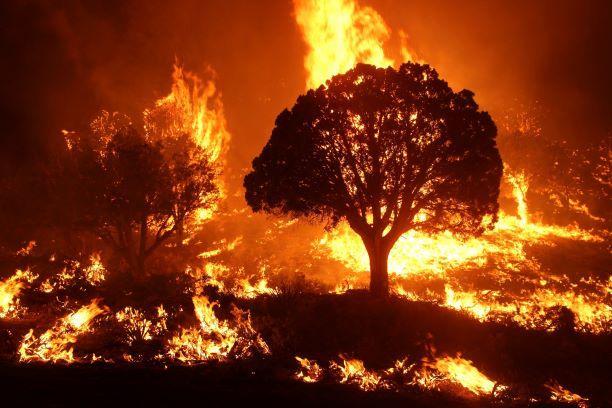
Lightning did most of the burning. Ninety-three per cent of the area charred in Canada’s record 2023 wildfire season came from fires ignited by lightning, the Canadian Climate Institute reports in a fact sheet on climate change and wildfires. Only 7 per cent traced back to human ignition.
The record itself has no precedent. Fires consumed 16.5 million hectares in 2023, a toll the institute describes as “more than double the previous record” and nearly seven times the historical average. The seasons since have not let up. 2025 burned over 8.3 million hectares, the second worst season in Canadian history, and the 2024 Jasper wildfire razed a third of that Alberta town’s structures, with insured damages of $1.23 billion.
A hotter country burns differently
Canada is warming at twice the global pace and shelters more than a quarter of all boreal forest on Earth. The fires behave accordingly. Seasons start earlier, run longer and resist containment. Zombie fires, the ones that never quite die, now “smoulder through the winter”. Research cited by the institute found that climate change has weakened the day-night cooling cycle that used to slow fires, letting them burn harder overnight and extending what scientists call burning hours. Dry, windy days have grown up to 50% more common in western Canada and doubled or tripled in the east.
The overall number of fires has not climbed. Scale is what changed: “the number and size of large and very large fires is increasing”, the institute found, along with the area burned each year.
The smoke travels
Wildfire smoke crosses thousands of kilometres. Between 2020 and 2024 it contributed to an average of 1,400 deaths a year in Canada, and smoke from the 2023 fires is estimated to have killed more than 80,000 people prematurely worldwide. A single week of June 2023 smoke cost Ontario over $1.2 billion in health impacts, from premature deaths to hospital visits.
This year the plume crossed the border. More than 120 million people in the American Midwest and Northeast faced dangerous air quality, with “alerts stretching from Minnesota to New Hampshire”.
What the 2026 season shows
More than 3 million hectares had burned by early August 2026, which triggered a Level 4 national preparedness response. Roughly 94% of that area went up in the five weeks between late June and late July, after widespread lightning storms in the week of 20 July ignited new blazes across Ontario and the Northwest Territories while existing fires expanded under heat, low humidity and dry vegetation.
World Weather Attribution, in an analysis dated August 6, concluded that “extreme fire seasons in Canada are here to stay”. Its scientists found the July fire weather in Ontario was made about 3.5 times more likely by 1.4 degrees of global warming, and that in the Northwest Territories the sustained conditions now return every few years where a 1.4°C cooler climate would have made them 50-to-100-year events.
The bill lands on people
The cost of wildfire protection has risen roughly $150 million each decade since the 1970s and now regularly tops $1 billion a year. The 2016 Fort McMurray fire cost an estimated $9 billion, destroyed more than 2,400 structures and displaced 85,000 people in the largest evacuation in Canadian history.
The burden falls hardest on First Nations. Eighty per cent of majority-Indigenous communities sit in fire-prone regions, and such communities account for over 42 per cent of all wildfire evacuations. Between 1980 and 2021, 16 communities in Canada were evacuated five or more times. All but two were First Nations reserves.
Sources
- FACT SHEET: Climate change and wildfires in Canada
- Climate change means extreme fire seasons in Canada are here to stay – World Weather Attribution




