
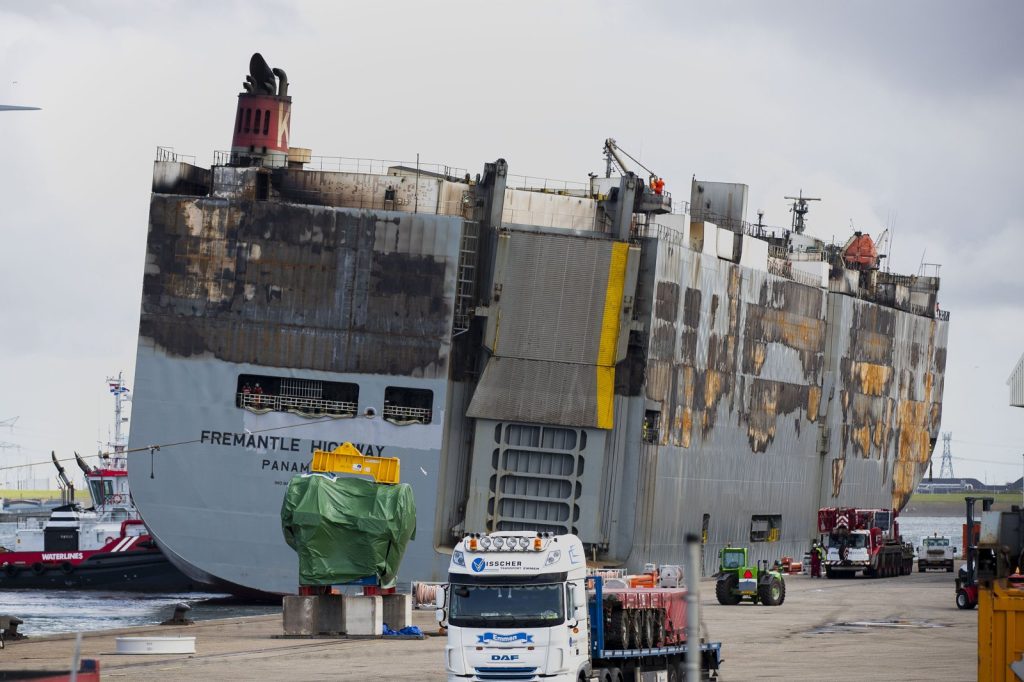
A maritime disaster off the coast of the Netherlands has sparked urgent environmental concerns after a fire broke out aboard the Fremantle Highway on July 26. The cargo vessel, owned by Shoei Kisen Kaisha, was traveling from Germany to Egypt and carrying approximately 3,000 vehicles when the blaze began near Ameland island. The incident resulted in the death of one crew member and injuries to 22 others. The ship now represents a significant ecological threat due to the nature of its cargo.
Because the vessel is loaded with thousands of automobiles—including electric vehicles—the cargo hold essentially functions as a chemical warehouse. Each car contains battery acid, fuel, and oil.
Experts are particularly concerned about lithium-ion batteries, which are notoriously difficult to extinguish, can release toxic fumes, and have a tendency to reignite when damaged. The potential for a massive pollutant leak into the North Sea grows if the ship sinks or if the hull is compromised by the heat. Because the fire is occurring in a confined space, it differs from land-based fires and may smolder for weeks.
Dutch authorities and emergency services have deployed to the site, where maritime experts are currently evaluating the damage to prevent a spill from spreading. The location of the fire increases the stakes, as the nearby Wadden Sea is a UNESCO World Heritage site.
This ecologically sensitive region serves as a vital habitat for fish, migratory birds, and seals. A chemical discharge or fuel leak could cause long-term damage to this ecosystem. Beyond the environmental impact, a major spill would also threaten shipping lanes, tourism, and local fishing grounds.
As the ship continues to burn, an investigation is being conducted to determine the cause of the blaze. The incident has placed Shoei Kisen Kaisha under scrutiny regarding its cargo handling, the training of its crew, and the overall condition of the vessel.
The disaster serves as a stress test for the safety protocols designed to prevent such occurrences within a global trade system that relies on these massive ships to transport electronics, food, and vehicles across oceans, often with minimal oversight. The consequences of the event are tangible, manifesting as toxic fumes, oil in the water, and the loss of human life. While the cleanup process could be lengthy if a spill occurs, the immediate priority remains the work of the authorities.
The final outcome remains uncertain, depending on the wind, the fire, and the integrity of the ship’s hull.




